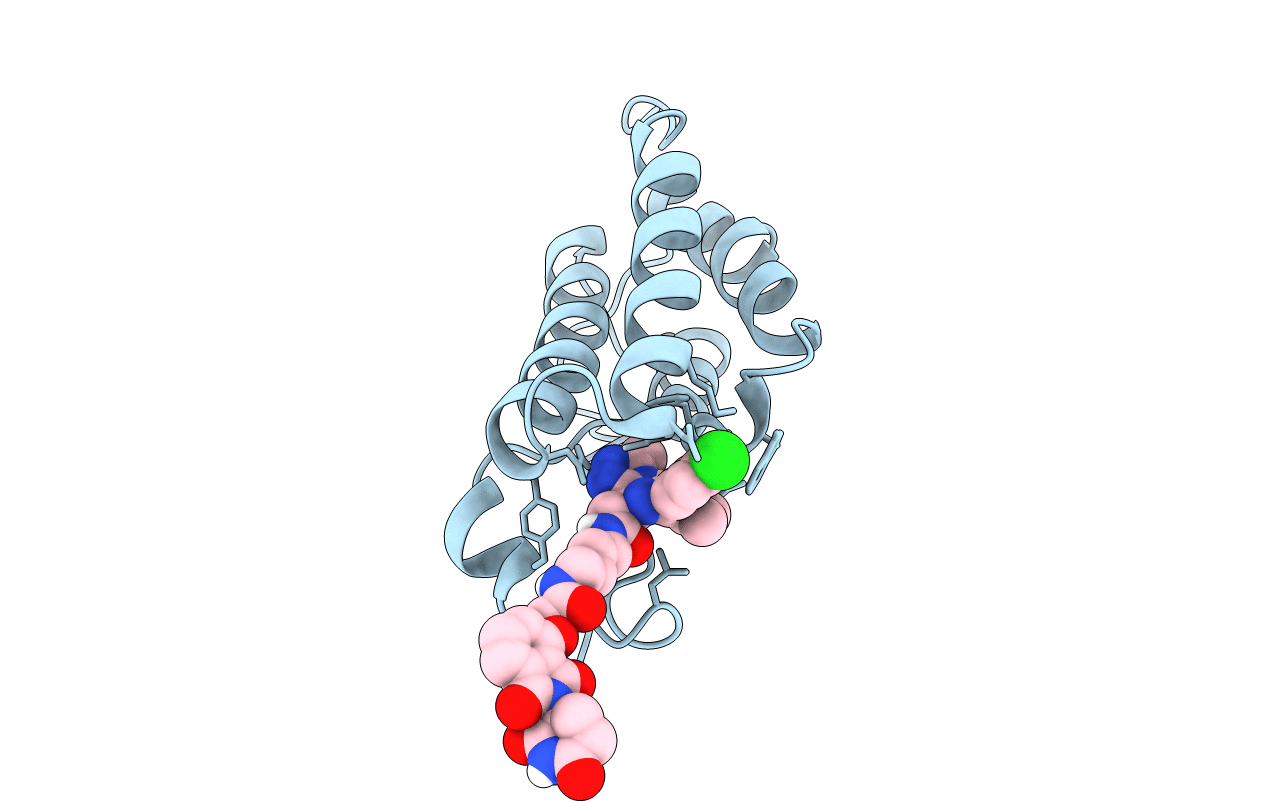
4ZC9 image
Deposition Date 2015-04-15
Release Date 2015-11-18
Last Version Date 2024-03-06
Entry Detail
PDB ID:
4ZC9
Title:
Crystal Structure of the BRD4a/DB-2-190 complex
Biological Source:
Source Organism:
Homo sapiens (Taxon ID: 9606)
Host Organism:
Method Details:
Experimental Method:
Resolution:
0.99 Å
R-Value Free:
0.14
R-Value Work:
0.14
R-Value Observed:
0.14
Space Group:
P 21 21 21

Macromolecular Entities
Structures with similar UniProt ID
Protein Blast
Polymer Type:polypeptide(L)
Molecule:Bromodomain-containing protein 4
Gene (Uniprot):BRD4
Chain IDs:A
Chain Length:127
Number of Molecules:1
Biological Source:Homo sapiens
Ligand Molecules
Primary Citation
DRUG DEVELOPMENT. Phthalimide conjugation as a strategy for in vivo target protein degradation.
Science 348 1376 1381 (2015)
PMID: 25999370 DOI: 10.1126/science.aab1433

Abstact

The development of effective pharmacological inhibitors of multidomain scaffold proteins, notably transcription factors, is a particularly challenging problem. In part, this is because many small-molecule antagonists disrupt the activity of only one domain in the target protein. We devised a chemical strategy that promotes ligand-dependent target protein degradation using as an example the transcriptional coactivator BRD4, a protein critical for cancer cell growth and survival. We appended a competitive antagonist of BET bromodomains to a phthalimide moiety to hijack the cereblon E3 ubiquitin ligase complex. The resultant compound, dBET1, induced highly selective cereblon-dependent BET protein degradation in vitro and in vivo and delayed leukemia progression in mice. A second series of probes resulted in selective degradation of the cytosolic protein FKBP12. This chemical strategy for controlling target protein stability may have implications for therapeutically targeting previously intractable proteins.

Legend

Protein

Chemical

Disease

Primary Citation of related structures
Feedback Form
Name
Email
Institute
Feedback