4Z8K image
Deposition Date 2015-04-09
Release Date 2015-08-12
Last Version Date 2023-09-27
Entry Detail
PDB ID:
4Z8K
Keywords:
Title:
Phycocyanin structure from T. elongatus at 2.5-A from XFEL using a viscous delivery medium for serial femtosecond crystallography
Biological Source:
Method Details:
Experimental Method:
Resolution:
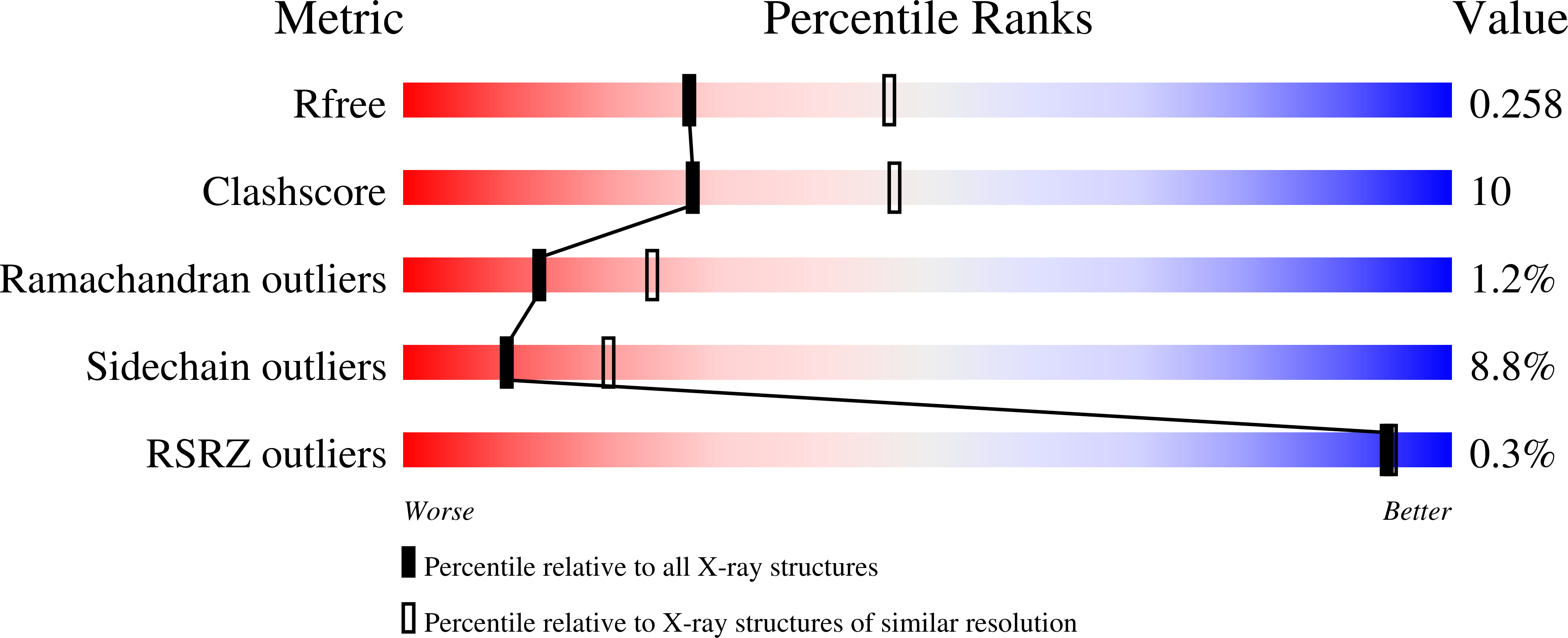
2.50 Å
R-Value Free:
0.25
R-Value Work:
0.18
R-Value Observed:
0.19
Space Group:
P 63
Macromolecular Entities
Structures with similar UniProt ID
Protein Blast
Polymer Type:polypeptide(L)
Molecule:C-phycocyanin alpha chain
Gene (Uniprot):cpcA
Chain IDs:A
Chain Length:162
Number of Molecules:1
Biological Source:Thermosynechococcus elongatus (strain BP-1)
Structures with similar UniProt ID
Protein Blast
Polymer Type:polypeptide(L)
Molecule:C-phycocyanin beta chain
Gene (Uniprot):cpcB
Chain IDs:B
Chain Length:172
Number of Molecules:1
Biological Source:Thermosynechococcus elongatus (strain BP-1)
Modified Residue
Compound ID Chain ID Parent Comp ID Details 2D Image
MEN B ASN modified residue
Ligand Molecules
Primary Citation

Abstact

Serial femtosecond crystallography (SFX) has opened a new era in crystallo-graphy by permitting nearly damage-free, room-temperature structure determination of challenging proteins such as membrane proteins. In SFX, femtosecond X-ray free-electron laser pulses produce diffraction snapshots from nanocrystals and microcrystals delivered in a liquid jet, which leads to high protein consumption. A slow-moving stream of agarose has been developed as a new crystal delivery medium for SFX. It has low background scattering, is compatible with both soluble and membrane proteins, and can deliver the protein crystals at a wide range of temperatures down to 4°C. Using this crystal-laden agarose stream, the structure of a multi-subunit complex, phycocyanin, was solved to 2.5 Å resolution using 300 µg of microcrystals embedded into the agarose medium post-crystallization. The agarose delivery method reduces protein consumption by at least 100-fold and has the potential to be used for a diverse population of proteins, including membrane protein complexes.

Legend

Protein

Chemical

Disease

Primary Citation of related structures
Feedback Form
Name
Email
Institute
Feedback