4Z19 image
Deposition Date 2015-03-27
Release Date 2015-05-20
Last Version Date 2024-10-09
Entry Detail
PDB ID:
4Z19
Keywords:
Title:
Crystal structure of beta-ketoacyl-ACP synthase III (FabH) from Yersinia pestis with acetylated active site cysteine
Biological Source:
Source Organism:
Yersinia pestis (Taxon ID: 632)
Host Organism:
Method Details:
Experimental Method:
Resolution:
1.80 Å
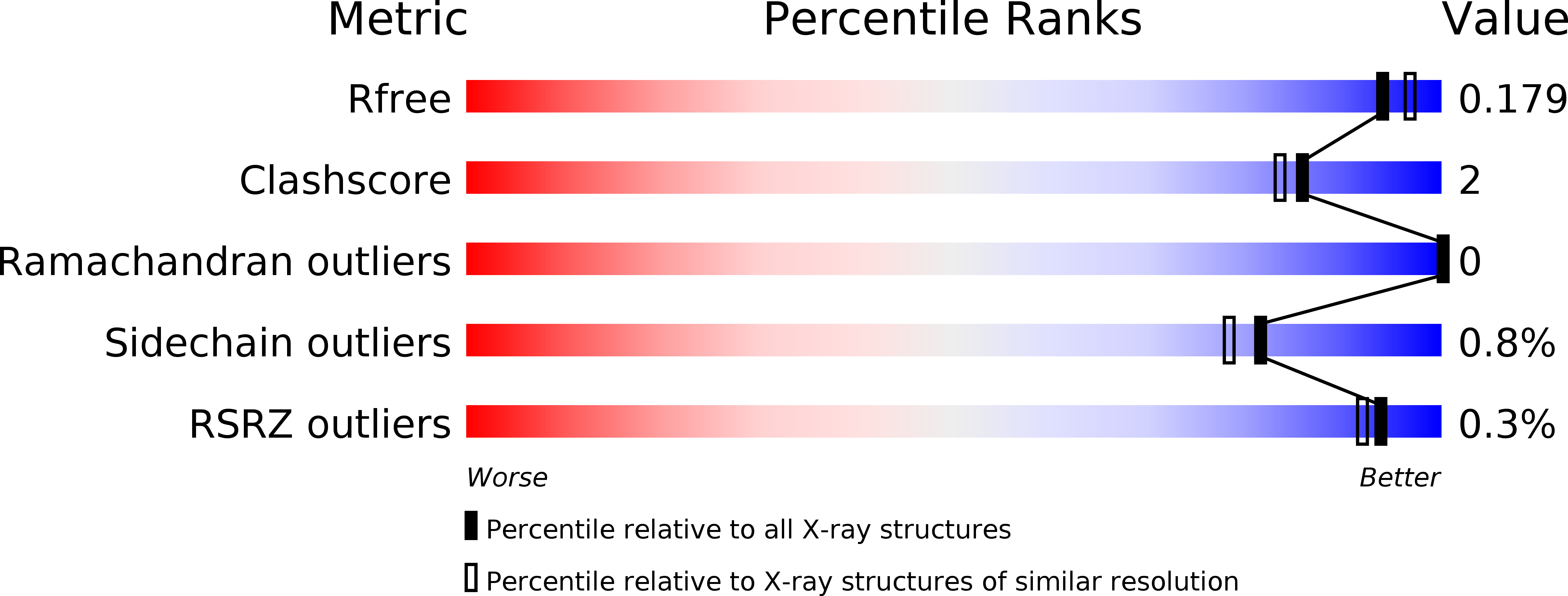
R-Value Free:
0.17
R-Value Work:
0.14
R-Value Observed:
0.14
Space Group:
C 2 2 21
Macromolecular Entities
Structures with similar UniProt ID
Protein Blast
Polymer Type:polypeptide(L)
Molecule:3-oxoacyl-[acyl-carrier-protein] synthase 3
Gene (Uniprot):fabH
Mutagens:A229V
Chain IDs:A
Chain Length:316
Number of Molecules:1
Biological Source:Yersinia pestis
Modified Residue
Compound ID Chain ID Parent Comp ID Details 2D Image
SCY A CYS modified residue
Ligand Molecules
Primary Citation
Structural Characterisation of the Beta-Ketoacyl-Acyl Carrier Protein Synthases, FabF and FabH, of Yersinia pestis.
Sci Rep 5 14797 14797 (2015)
PMID: 26469877 DOI: 10.1038/srep14797

Abstact

Yersinia pestis, the causative agent of bubonic, pneumonic, and septicaemic plague, remains a major public health threat, with outbreaks of disease occurring in China, Madagascar, and Peru in the last five years. The existence of multidrug resistant Y. pestis and the potential of this bacterium as a bioterrorism agent illustrates the need for new antimicrobials. The β-ketoacyl-acyl carrier protein synthases, FabB, FabF, and FabH, catalyse the elongation of fatty acids as part of the type II fatty acid biosynthesis (FASII) system, to synthesise components of lipoproteins, phospholipids, and lipopolysaccharides essential for bacterial growth and survival. As such, these enzymes are promising targets for the development of novel therapeutic agents. We have determined the crystal structures of the Y. pestis β-ketoacyl-acyl carrier protein synthases FabF and FabH, and compared these with the unpublished, deposited structure of Y. pestis FabB. Comparison of FabB, FabF, and FabH provides insights into the substrate specificities of these enzymes, and investigation of possible interactions with known β-ketoacyl-acyl carrier protein synthase inhibitors suggests FabB, FabF and FabH may be targeted simultaneously to prevent synthesis of the fatty acids necessary for growth and survival.

Legend

Protein

Chemical

Disease

Primary Citation of related structures
Feedback Form
Name
Email
Institute
Feedback