4Z0H image
Deposition Date 2015-03-26
Release Date 2016-04-13
Last Version Date 2024-01-10
Entry Detail
PDB ID:
4Z0H
Keywords:
Title:
X-ray structure of cytoplasmic glyceraldehyde-3-phosphate dehydrogenase (GapC1) complexed with NAD
Biological Source:
Source Organism:
Method Details:
Experimental Method:
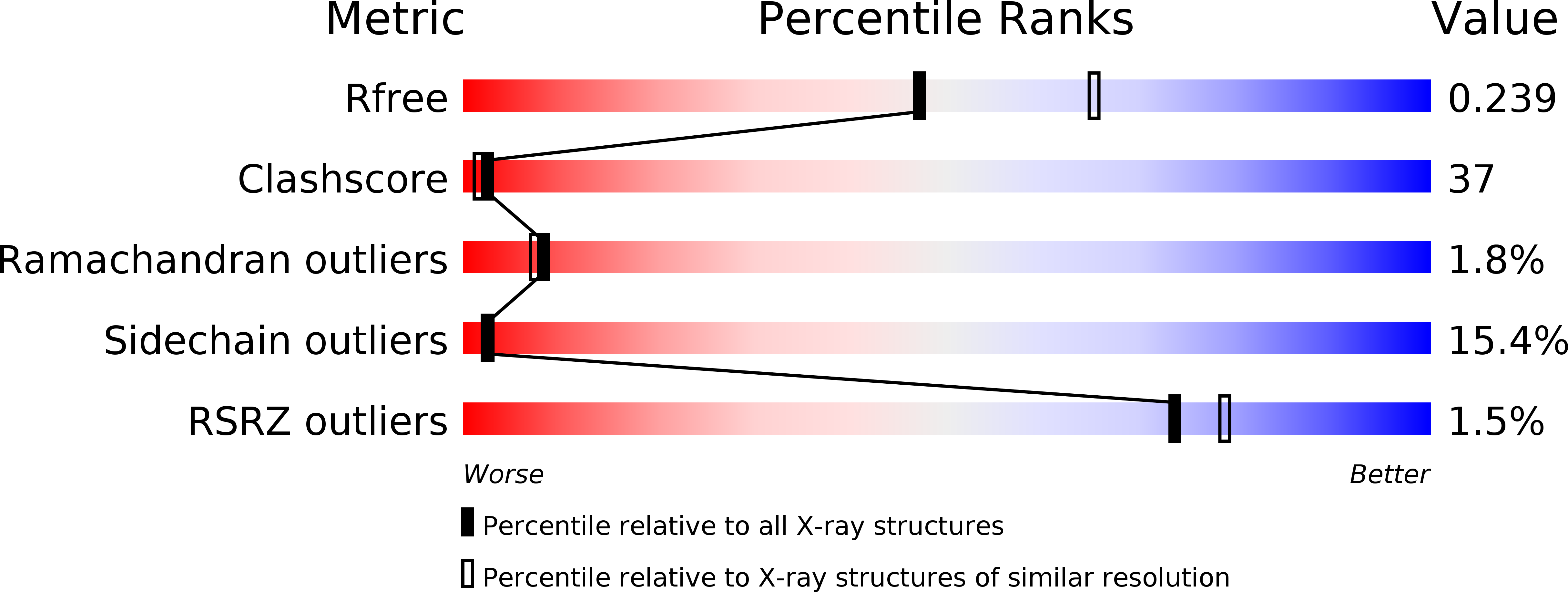
Resolution:
2.30 Å
R-Value Free:
0.27
R-Value Work:
0.24
R-Value Observed:
0.25
Space Group:
P 61 2 2
Macromolecular Entities
Structures with similar UniProt ID
Protein Blast
Polymer Type:polypeptide(L)
Molecule:Glyceraldehyde-3-phosphate dehydrogenase GAPC1, cytosolic
Gene (Uniprot):GAPC1
Chain IDs:A (auth: O), B (auth: R)
Chain Length:334
Number of Molecules:2
Biological Source:Arabidopsis thaliana
Primary Citation
Tuning Cysteine Reactivity and Sulfenic Acid Stability by Protein Microenvironment in Glyceraldehyde-3-Phosphate Dehydrogenases of Arabidopsis thaliana.
Antioxid. Redox Signal. 24 502 517 (2016)
PMID: 26650776 DOI: 10.1089/ars.2015.6417

Abstact

AIMS Cysteines and H2O2 are fundamental players in redox signaling. Cysteine thiol deprotonation favors the reaction with H2O2 that generates sulfenic acids with dual electrophilic/nucleophilic nature. The protein microenvironment surrounding the target cysteine is believed to control whether sulfenic acid can be reversibly regulated by disulfide formation or irreversibly oxidized to sulfinates/sulfonates. In this study, we present experimental oxidation kinetics and a quantum mechanical/molecular mechanical (QM/MM) investigation to elucidate the reaction of H2O2 with glycolytic and photosynthetic glyceraldehyde-3-phosphate dehydrogenase from Arabidopsis thaliana (cytoplasmic AtGAPC1 and chloroplastic AtGAPA, respectively). RESULTS Although AtGAPC1 and AtGAPA have almost identical 3D structure and similar acidity of their catalytic Cys149, AtGAPC1 is more sensitive to H2O2 and prone to irreversible oxidation than AtGAPA. As a result, sulfenic acid is more stable in AtGAPA. INNOVATION Based on crystallographic structures of AtGAPC1 and AtGAPA, the reaction potential energy surface for Cys149 oxidation by H2O2 was calculated by QM. In both enzymes, sulfenic acid formation was characterized by a lower energy barrier than sulfinate formation, and sulfonate formation was prevented by very high energy barriers. Activation energies for both oxidation steps were lower in AtGAPC1 than AtGAPA, supporting the higher propensity of AtGAPC1 toward irreversible oxidation. CONCLUSIONS QM/MM calculations coupled to fingerprinting analyses revealed that two Arg of AtGAPA (substituted by Gly and Val in AtGAPC1), located at 8-15 Å distance from Cys149, are the major factors responsible for sulfenic acid stability, underpinning the importance of long-distance polar interactions in tuning sulfenic acid stability in native protein microenvironments.

Legend

Protein

Chemical

Disease

Primary Citation of related structures
Feedback Form
Name
Email
Institute
Feedback