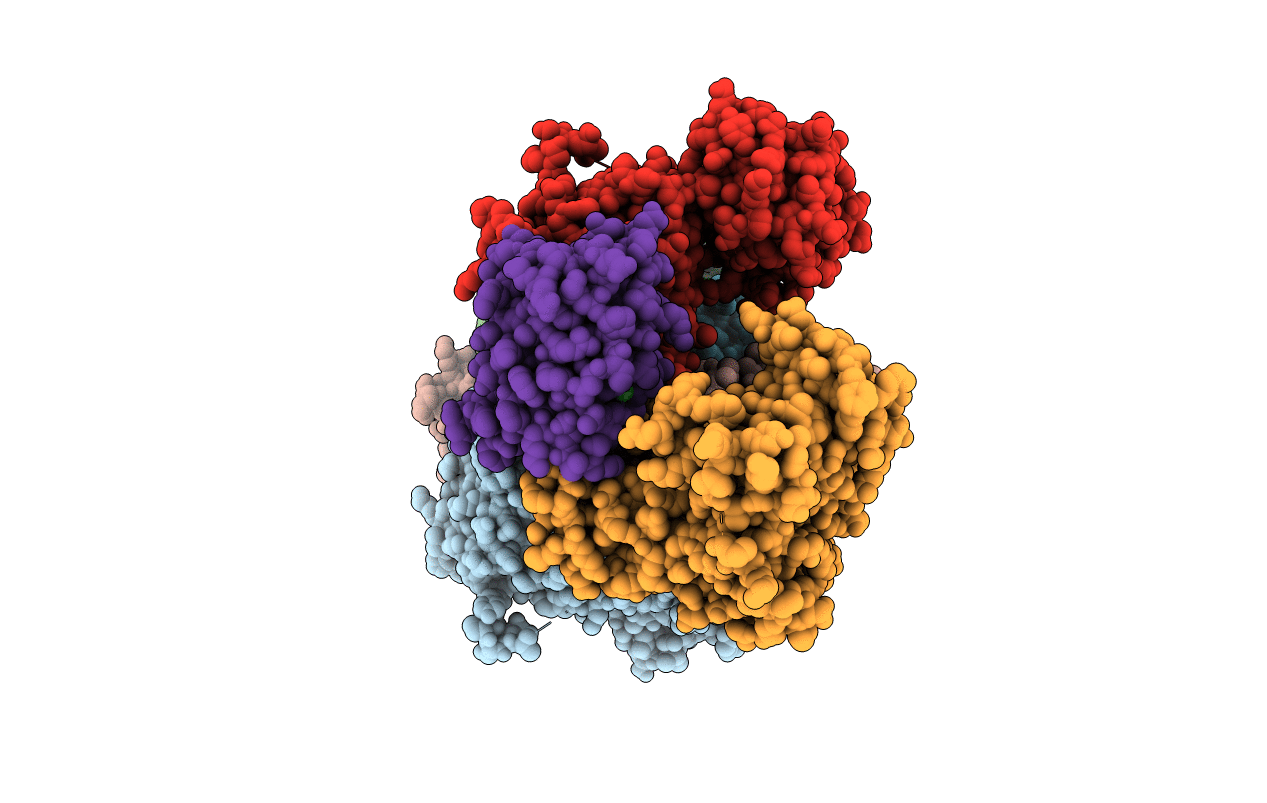
4YR8 image
Deposition Date 2015-03-14
Release Date 2016-03-16
Last Version Date 2023-11-08
Entry Detail
PDB ID:
4YR8
Title:
Crystal structure of JNK in complex with a regulator protein
Biological Source:
Source Organism:
Homo sapiens (Taxon ID: 9606)
Host Organism:
Method Details:
Experimental Method:
Resolution:
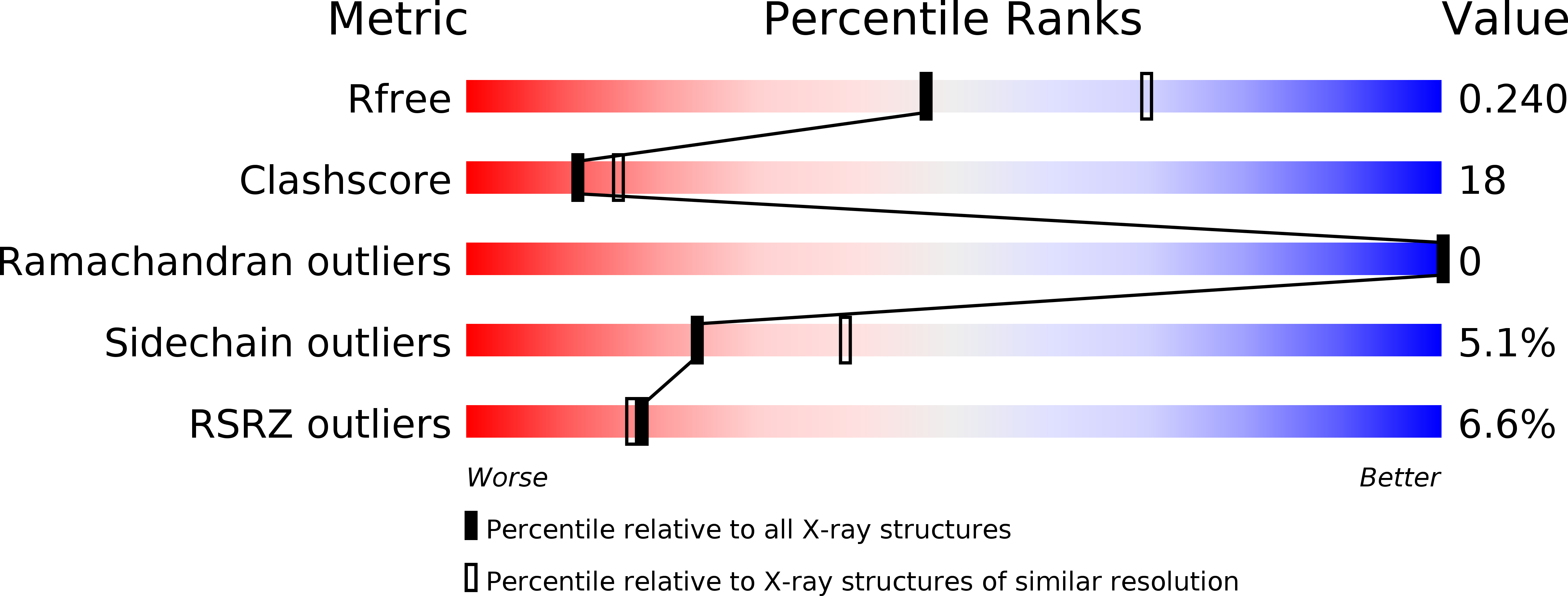
2.40 Å
R-Value Free:
0.23
R-Value Work:
0.21
R-Value Observed:
0.21
Space Group:
P 1
Macromolecular Entities
Structures with similar UniProt ID
Protein Blast
Polymer Type:polypeptide(L)
Molecule:Mitogen-activated protein kinase 8
Gene (Uniprot):MAPK8
Chain IDs:A (auth: E), C (auth: A), E (auth: C), G (auth: F)
Chain Length:371
Number of Molecules:4
Biological Source:Homo sapiens
Structures with similar UniProt ID
Protein Blast
Polymer Type:polypeptide(L)
Molecule:Dual specificity protein phosphatase 16
Gene (Uniprot):DUSP16
Chain IDs:B (auth: G), D (auth: B), F (auth: D), H
Chain Length:167
Number of Molecules:4
Biological Source:Homo sapiens
Ligand Molecules
Primary Citation
A conserved motif in JNK/p38-specific MAPK phosphatases as a determinant for JNK1 recognition and inactivation.
Nat Commun 7 10879 10879 (2016)
PMID: 26988444 DOI: 10.1038/ncomms10879

Abstact

Mitogen-activated protein kinases (MAPKs), important in a large array of signalling pathways, are tightly controlled by a cascade of protein kinases and by MAPK phosphatases (MKPs). MAPK signalling efficiency and specificity is modulated by protein-protein interactions between individual MAPKs and the docking motifs in cognate binding partners. Two types of docking interactions have been identified: D-motif-mediated interaction and FXF-docking interaction. Here we report the crystal structure of JNK1 bound to the catalytic domain of MKP7 at 2.4-Å resolution, providing high-resolution structural insight into the FXF-docking interaction. The (285)FNFL(288) segment in MKP7 directly binds to a hydrophobic site on JNK1 that is near the MAPK insertion and helix αG. Biochemical studies further reveal that this highly conserved structural motif is present in all members of the MKP family, and the interaction mode is universal and critical for the MKP-MAPK recognition and biological function.

Legend

Protein

Chemical

Disease

Primary Citation of related structures
Feedback Form
Name
Email
Institute
Feedback