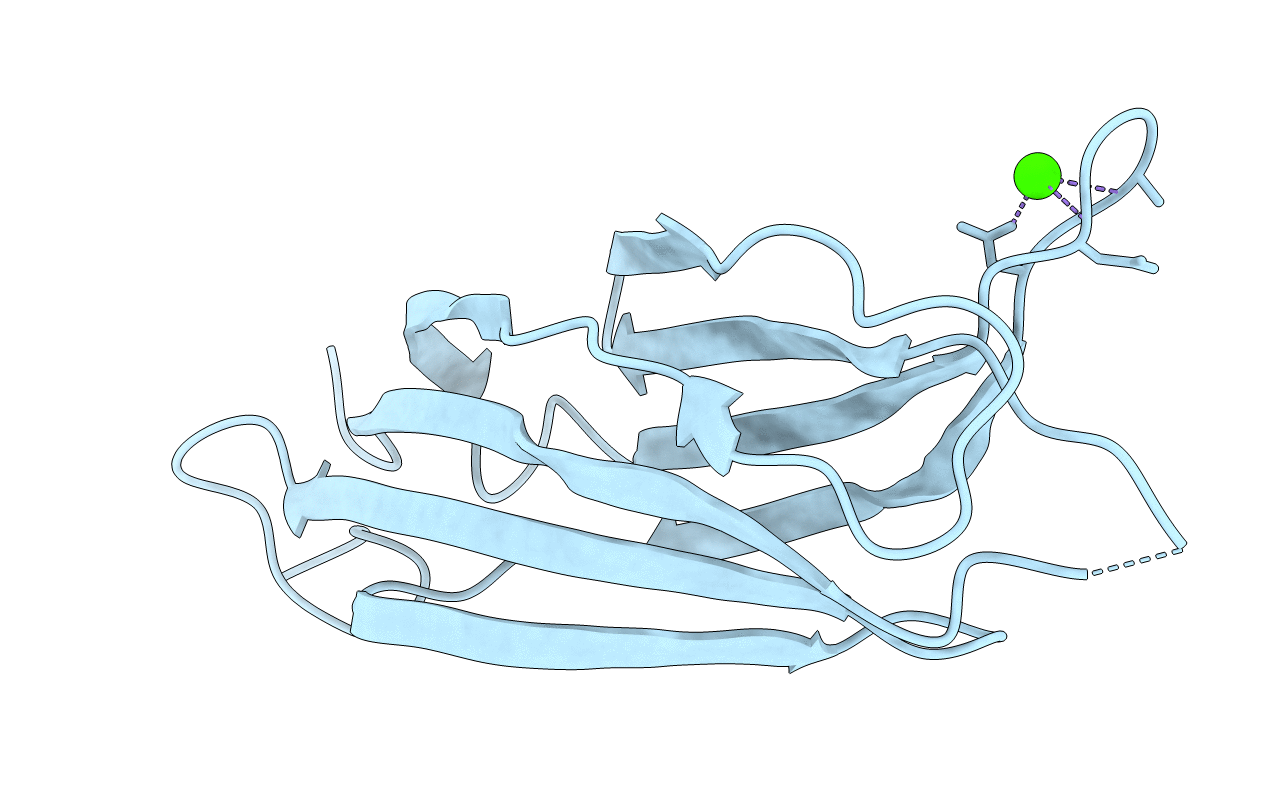
4Y1S image
Deposition Date 2015-02-09
Release Date 2015-09-02
Last Version Date 2024-11-06
Entry Detail
PDB ID:
4Y1S
Keywords:
Title:
Structural basis for Ca2+-mediated interaction of the perforin C2 domain with lipid membranes
Biological Source:
Source Organism(s):
Mus musculus (Taxon ID: 10090)
Expression System(s):
Method Details:
Experimental Method:
Resolution:
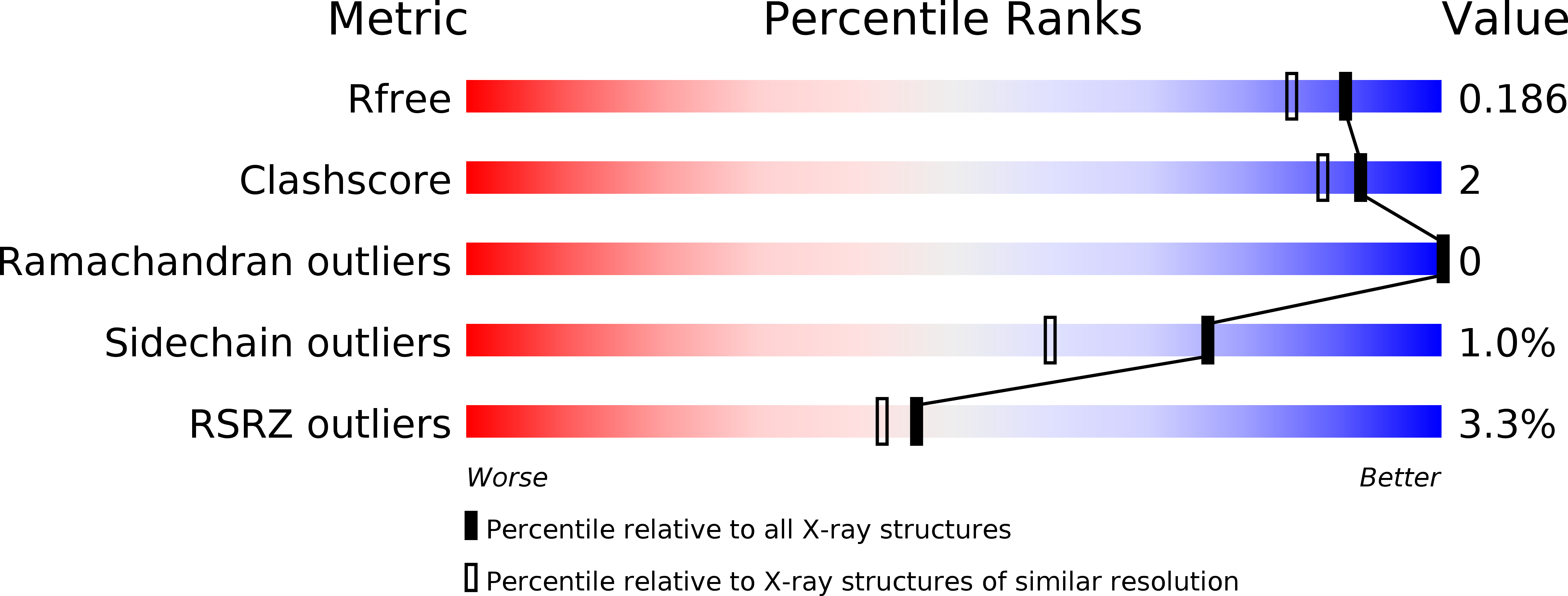
1.61 Å
R-Value Free:
0.18
R-Value Work:
0.16
R-Value Observed:
0.16
Space Group:
P 21 21 21
Macromolecular Entities
Structures with similar UniProt ID
Protein Blast
Polymer Type:polypeptide(L)
Molecule:Perforin-1
Gene (Uniprot):Prf1
Mutagens:W427A, Y430A, Y486A, W488A
Chain IDs:A
Chain Length:149
Number of Molecules:1
Biological Source:Mus musculus
Ligand Molecules
Primary Citation
Structural Basis for Ca2+-mediated Interaction of the Perforin C2 Domain with Lipid Membranes.
J.Biol.Chem. 290 25213 25226 (2015)
PMID: 26306037 DOI: 10.1074/jbc.M115.668384

Abstact

Natural killer cells and cytotoxic T-lymphocytes deploy perforin and granzymes to kill infected host cells. Perforin, secreted by immune cells, binds target membranes to form pores that deliver pro-apoptotic granzymes into the target cell. A crucial first step in this process is interaction of its C2 domain with target cell membranes, which is a calcium-dependent event. Some aspects of this process are understood, but many molecular details remain unclear. To address this, we investigated the mechanism of Ca(2+) and lipid binding to the C2 domain by NMR spectroscopy and x-ray crystallography. Calcium titrations, together with dodecylphosphocholine micelle experiments, confirmed that multiple Ca(2+) ions bind within the calcium-binding regions, activating perforin with respect to membrane binding. We have also determined the affinities of several of these binding sites and have shown that this interaction causes a significant structural rearrangement in CBR1. Thus, it is proposed that Ca(2+) binding at the weakest affinity site triggers changes in the C2 domain that facilitate its interaction with lipid membranes.

Legend

Protein

Chemical

Disease

Primary Citation of related structures
Feedback Form
Name
Email
Institute
Feedback