4Y16 image
Deposition Date 2015-02-06
Release Date 2015-06-03
Last Version Date 2024-11-06
Entry Detail
PDB ID:
4Y16
Keywords:
Title:
Crystal structure of the mCD1d/NC-aGC/iNKTCR ternary complex
Biological Source:
Source Organism:
Host Organism:
Method Details:
Experimental Method:
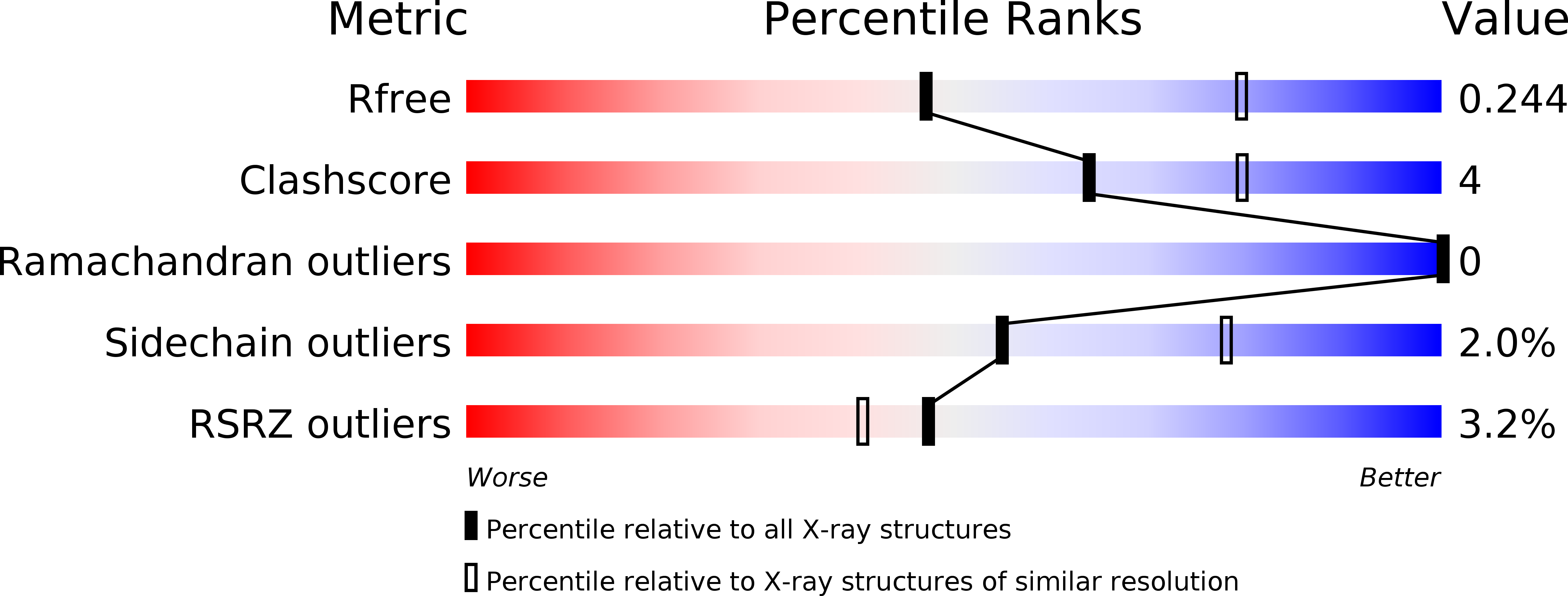
Resolution:
2.60 Å
R-Value Free:
0.24
R-Value Work:
0.21
R-Value Observed:
0.21
Space Group:
C 2 2 21
Macromolecular Entities
Structures with similar UniProt ID
Protein Blast
Polymer Type:polypeptide(L)
Molecule:Antigen-presenting glycoprotein CD1d1
Gene (Uniprot):Cd1d1
Chain IDs:A
Chain Length:285
Number of Molecules:1
Biological Source:Mus musculus
Structures with similar UniProt ID
Protein Blast
Polymer Type:polypeptide(L)
Molecule:Beta-2-microglobulin
Gene (Uniprot):B2m
Chain IDs:B
Chain Length:99
Number of Molecules:1
Biological Source:Mus musculus
Protein Blast
Polymer Type:polypeptide(L)
Molecule:Chimeric TCR Valpha14/Jalpha18 chain (mouse variable domain, human constant domain)
Chain IDs:C
Chain Length:209
Number of Molecules:1
Biological Source:Mus musculus, Homo sapiens
Protein Blast
Polymer Type:polypeptide(L)
Molecule:Chimeric TCR Vbeta8.2 chain (mouse variable domain, human constant domain)
Chain IDs:D
Chain Length:241
Number of Molecules:1
Biological Source:Mus musculus, Homo sapiens
Primary Citation
Lipid and Carbohydrate Modifications of alpha-Galactosylceramide Differently Influence Mouse and Human Type I Natural Killer T Cell Activation.
J.Biol.Chem. 290 17206 17217 (2015)
PMID: 26018083 DOI: 10.1074/jbc.M115.654814

Abstact

The ability of different glycosphingolipids (GSLs) to activate type I natural killer T cells (NKT cells) has been known for 2 decades. The possible therapeutic use of these GSLs has been studied in many ways; however, studies are needed in which the efficacy of promising GSLs is compared under identical conditions. Here, we compare five unique GSLs structurally derived from α-galactosylceramide. We employed biophysical and biological assays, as well as x-ray crystallography to study the impact of the chemical modifications of the antigen on type I NKT cell activation. Although all glycolipids are bound by the T cell receptor of type I NKT cells in real time binding assays with high affinity, only a few activate type I NKT cells in in vivo or in vitro experiments. The differences in biological responses are likely a result of different pharmacokinetic properties of each lipid, which carry modifications at different parts of the molecule. Our results indicate a need to perform a variety of assays to ascertain the therapeutic potential of type I NKT cell GSL activators.

Legend

Protein

Chemical

Disease

Primary Citation of related structures
Feedback Form
Name
Email
Institute
Feedback