Planned Maintenance: Some services may turn out to be unavailable from 15th January, 2026 to 16th January, 2026. We apologize for the inconvenience!

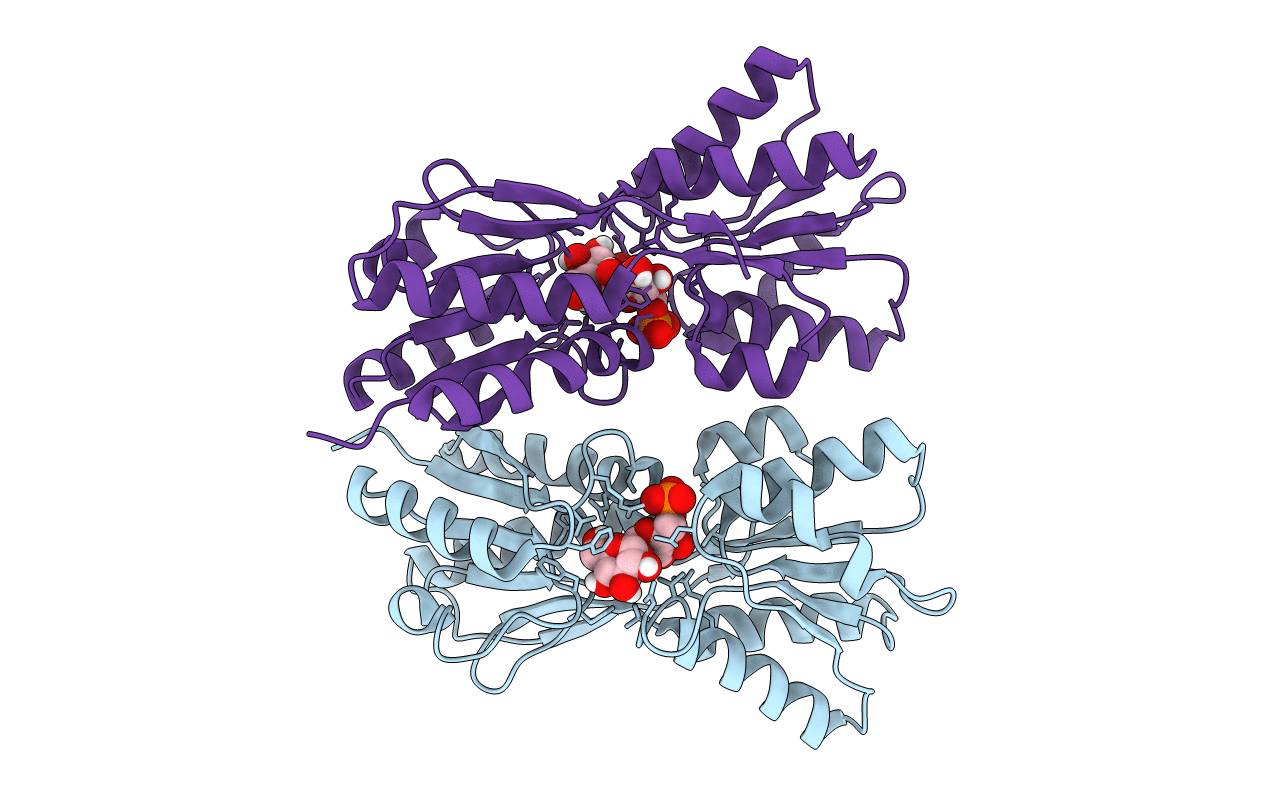
4XXH image
Deposition Date 2015-01-30
Release Date 2015-02-11
Last Version Date 2024-05-08
Entry Detail
PDB ID:
4XXH
Keywords:
Title:
TREHALOSE REPRESSOR FROM ESCHERICHIA COLI
Method Details:
Experimental Method:
Resolution:
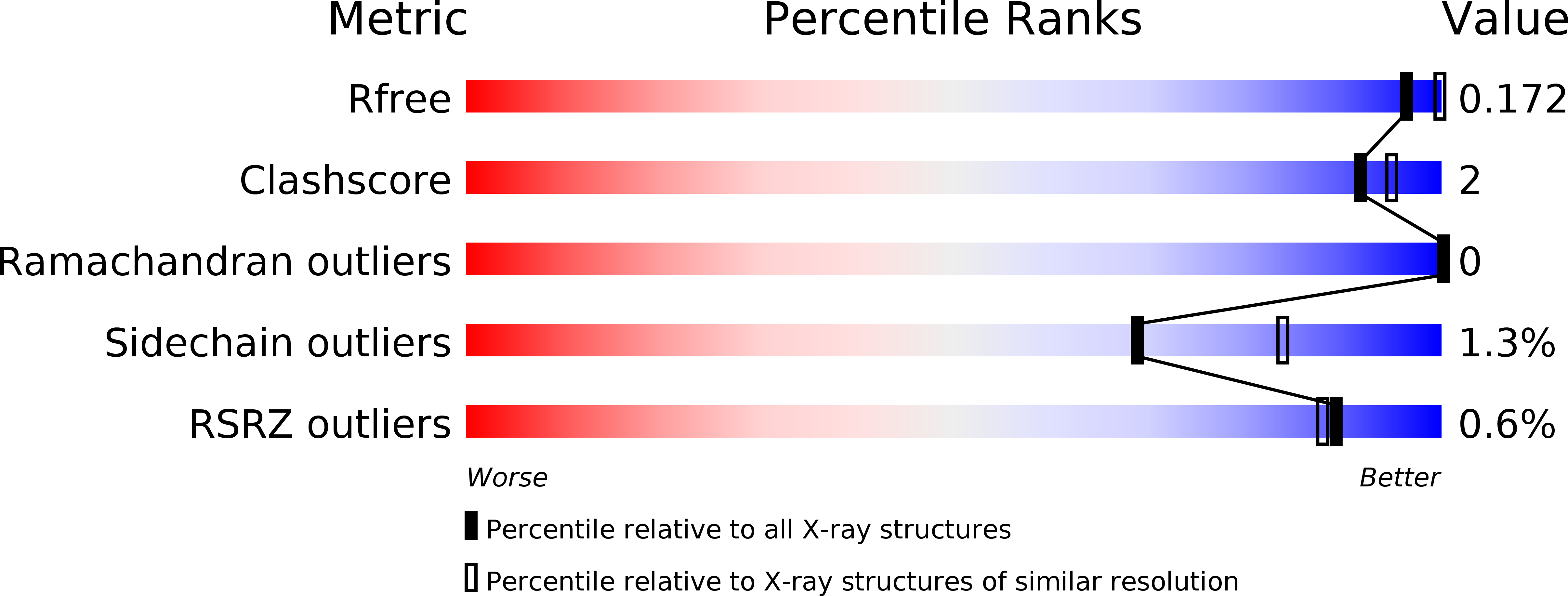
2.40 Å
R-Value Free:
0.17
R-Value Work:
0.15
R-Value Observed:
0.15
Space Group:
P 65
Macromolecular Entities
Structures with similar UniProt ID
Protein Blast
Polymer Type:polypeptide(L)
Molecule:HTH-type transcriptional regulator TreR
Gene (Uniprot):treR
Chain IDs:A, B
Chain Length:255
Number of Molecules:2
Biological Source:Escherichia coli K-12
Peptide-like Molecules
PRD_900039
Primary Citation
CRYSTAL STRUCTURE OF THE EFFECTOR-BINDING DOMAIN OF THE TREHALOSE-REPRESSOR OF ESCHERICHIA COLI, A MEMBER OF THE LACI FAMILY, IN ITS COMPLEXES WITH INDUCER TREHALOSE-6-PHOSPHATE AND NONINDUCER TREHALOSE.
PROTEIN SCI. 7 2511 2521 (1998)
PMID: 9865945 DOI: 10.1002/pro.5560071204

Abstact

The crystal structure of the Escherichia coli trehalose repressor (TreR) in a complex with its inducer trehalose-6-phosphate was determined by the method of multiple isomorphous replacement (MIR) at 2.5 A resolution, followed by the structure determination of TreR in a complex with its noninducer trehalose at 3.1 A resolution. The model consists of residues 61 to 315 comprising the effector binding domain, which forms a dimer as in other members of the LacI family. This domain is composed of two similar subdomains each consisting of a central beta-sheet sandwiched between alpha-helices. The effector binding pocket is at the interface of these subdomains. In spite of different physiological functions, the crystal structures of the two complexes of TreR turned out to be virtually identical to each other with the conformation being similar to those of the effector binding domains of the LacI and PurR in complex with their effector molecules. According to the crystal structure, the noninducer trehalose binds to a similar site as the trehalose portion of trehalose-6-phosphate. The binding affinity for the former is lower than for the latter. The noninducer trehalose thus binds competitively to the repressor. Unlike the phosphorylated inducer molecule, it is incapable of blocking the binding of the repressor headpiece to its operator DNA. The ratio of the concentrations of trehalose-6-phosphate and trehalose thus is used to switch between the two alternative metabolic uses of trehalose as an osmoprotectant and as a carbon source.

Legend

Protein

Chemical

Disease

Primary Citation of related structures
Feedback Form
Name
Email
Institute
Feedback