4XRE image
Deposition Date 2015-01-21
Release Date 2015-02-25
Last Version Date 2024-10-23
Entry Detail
PDB ID:
4XRE
Title:
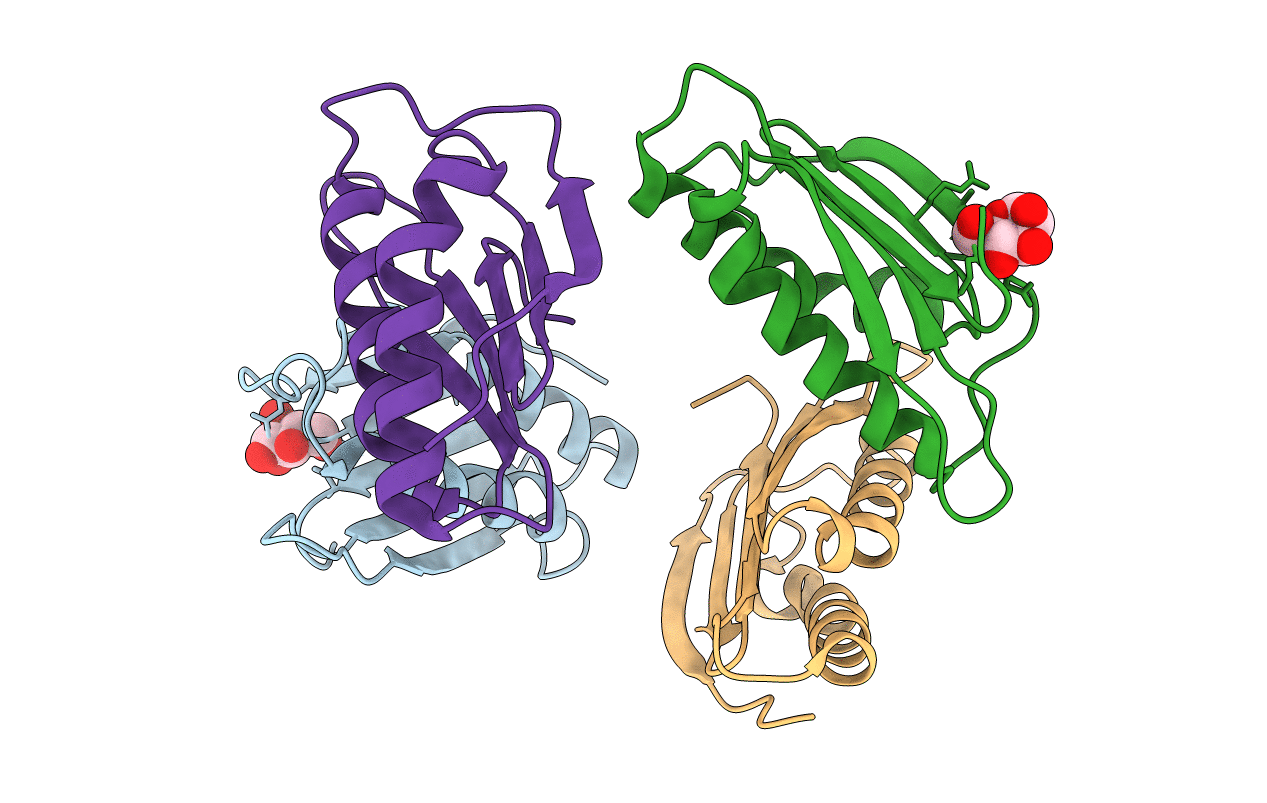
Crystal structure of Gnk2 complexed with mannose
Biological Source:
Source Organism:
Ginkgo biloba (Taxon ID: 3311)
Host Organism:
Method Details:
Experimental Method:
Resolution:
2.60 Å
R-Value Free:
0.28
R-Value Work:
0.24
R-Value Observed:
0.25
Space Group:
P 21 3
Macromolecular Entities
Structures with similar UniProt ID
Protein Blast
Polymer Type:polypeptide(L)
Molecule:Antifungal protein ginkbilobin-2
Gene (Uniprot):GNK2
Chain IDs:A, B, C, D
Chain Length:109
Number of Molecules:4
Biological Source:Ginkgo biloba
Ligand Molecules
Primary Citation
A secreted protein with plant-specific cysteine-rich motif functions as a mannose-binding lectin that exhibits antifungal activity.
Plant Physiol. 166 766 778 (2014)
PMID: 25139159 DOI: 10.1104/pp.114.242636

Abstact

Plants have a variety of mechanisms for defending against plant pathogens and tolerating environmental stresses such as drought and high salinity. Ginkbilobin2 (Gnk2) is a seed storage protein in gymnosperm that possesses antifungal activity and a plant-specific cysteine-rich motif (domain of unknown function26 [DUF26]). The Gnk2-homologous sequence is also observed in an extracellular region of cysteine-rich repeat receptor-like kinases that function in response to biotic and abiotic stresses. Here, we report the lectin-like molecular function of Gnk2 and the structural basis of its monosaccharide recognition. Nuclear magnetic resonance experiments showed that mannan was the only yeast (Saccharomyces cerevisiae) cell wall polysaccharide that interacted with Gnk2. Gnk2 also interacted with mannose, a building block of mannan, with a specificity that was similar to those of mannose-binding legume lectins, by strictly recognizing the configuration of the hydroxy group at the C4 position of the monosaccharide. The crystal structure of Gnk2 in complex with mannose revealed that three residues (asparagine-11, arginine-93, and glutamate-104) recognized mannose by hydrogen bonds, which defined the carbohydrate-binding specificity. These interactions were directly related to the ability of Gnk2 to inhibit the growth of fungi, including the plant pathogenic Fusarium spp., which were disrupted by mutation of arginine-93 or the presence of yeast mannan in the assay system. In addition, Gnk2 did not inhibit the growth of a yeast mutant strain lacking the α1,2-linked mannose moiety. These results provide insights into the molecular basis of the DUF26 protein family.

Legend

Protein

Chemical

Disease

Primary Citation of related structures
Feedback Form
Name
Email
Institute
Feedback