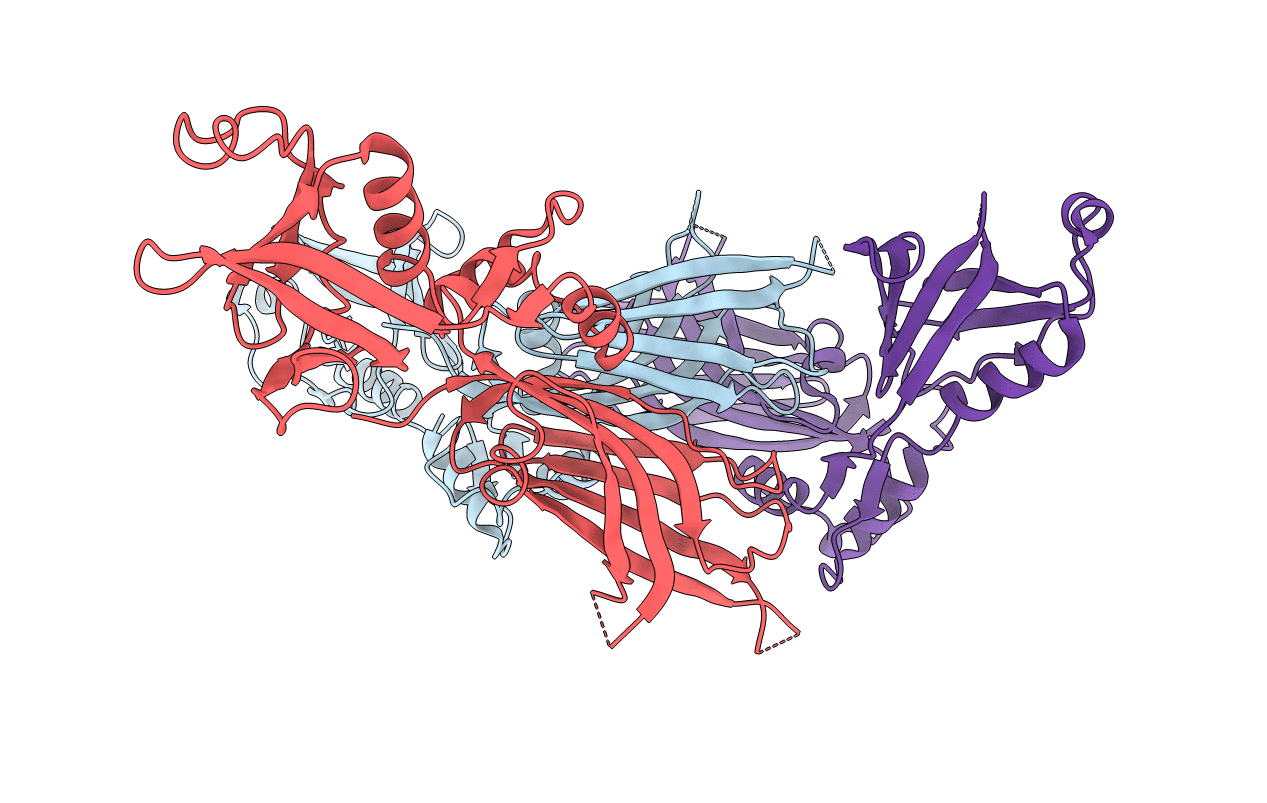
4XOH image
Deposition Date 2015-01-16
Release Date 2015-07-15
Last Version Date 2024-05-29
Entry Detail
PDB ID:
4XOH
Keywords:
Title:
Mechanistic insights into anchorage of the contractile ring from yeast to humans
Biological Source:
Method Details:
Experimental Method:
Resolution:
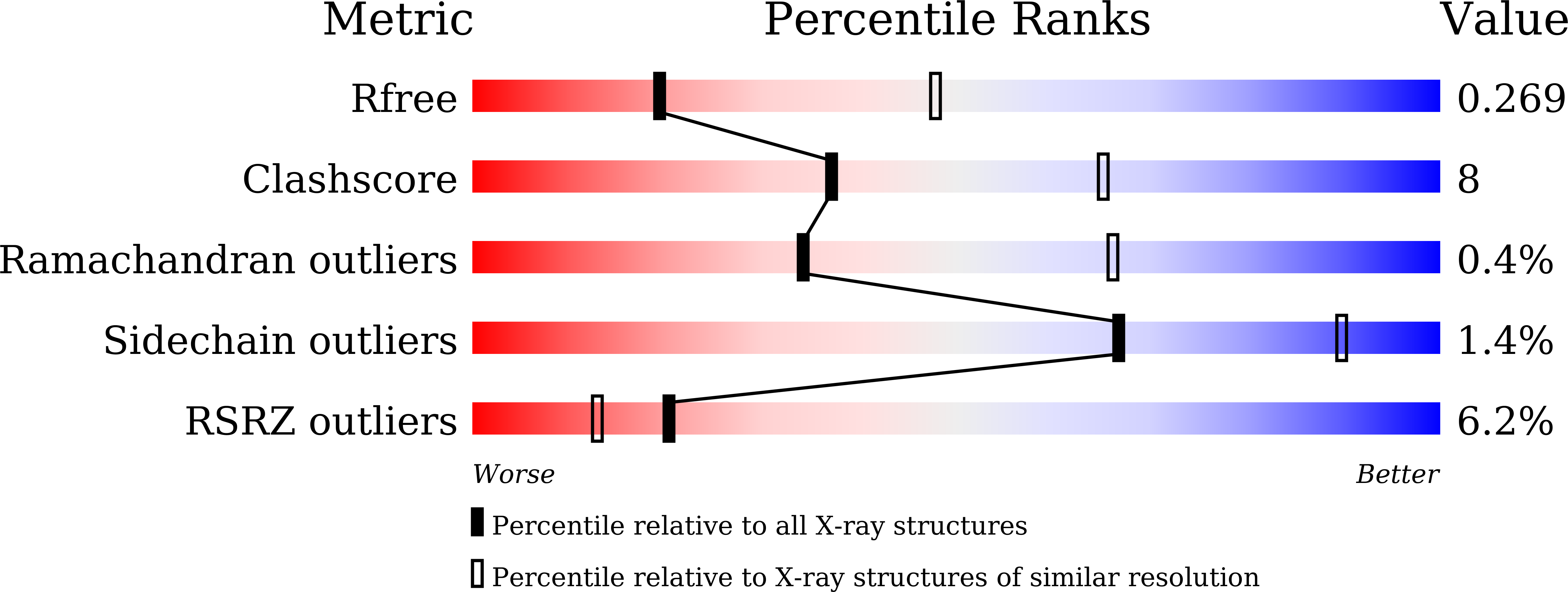
2.80 Å
R-Value Free:
0.26
R-Value Work:
0.23
R-Value Observed:
0.23
Space Group:
P 31 2 1
Macromolecular Entities
Structures with similar UniProt ID
Protein Blast
Polymer Type:polypeptide(L)
Molecule:Division mal foutue 1 protein
Gene (Uniprot):mid1
Chain IDs:A (auth: C), B (auth: A), C (auth: B)
Chain Length:325
Number of Molecules:3
Biological Source:Schizosaccharomyces pombe (strain 972 / ATCC 24843)
Ligand Molecules
Primary Citation
Mechanistic insights into the anchorage of the contractile ring by anillin and mid1
Dev.Cell 33 413 426 (2015)
PMID: 25959226 DOI: 10.1016/j.devcel.2015.03.003

Abstact

Anillins and Mid1 are scaffold proteins that play key roles in anchorage of the contractile ring at the cell equator during cytokinesis in animals and fungi, respectively. Here, we report crystal structures and functional analysis of human anillin and S. pombe Mid1. The combined data show anillin contains a cryptic C2 domain and a Rho-binding domain. Together with the tethering PH domain, three membrane-associating elements synergistically bind to RhoA and phospholipids to anchor anillin at the cleavage furrow. Surprisingly, Mid1 also binds to the membrane through a cryptic C2 domain. Dimerization of Mid1 leads to high affinity and preference for PI(4,5)P2, which stably anchors Mid1 at the division plane, bypassing the requirement for Rho GTPase. These findings uncover the unexpected general machinery and the divergent regulatory logics for the anchorage of the contractile ring through the anillin/Mid1 family proteins from yeast to humans.

Legend

Protein

Chemical

Disease

Primary Citation of related structures
Feedback Form
Name
Email
Institute
Feedback