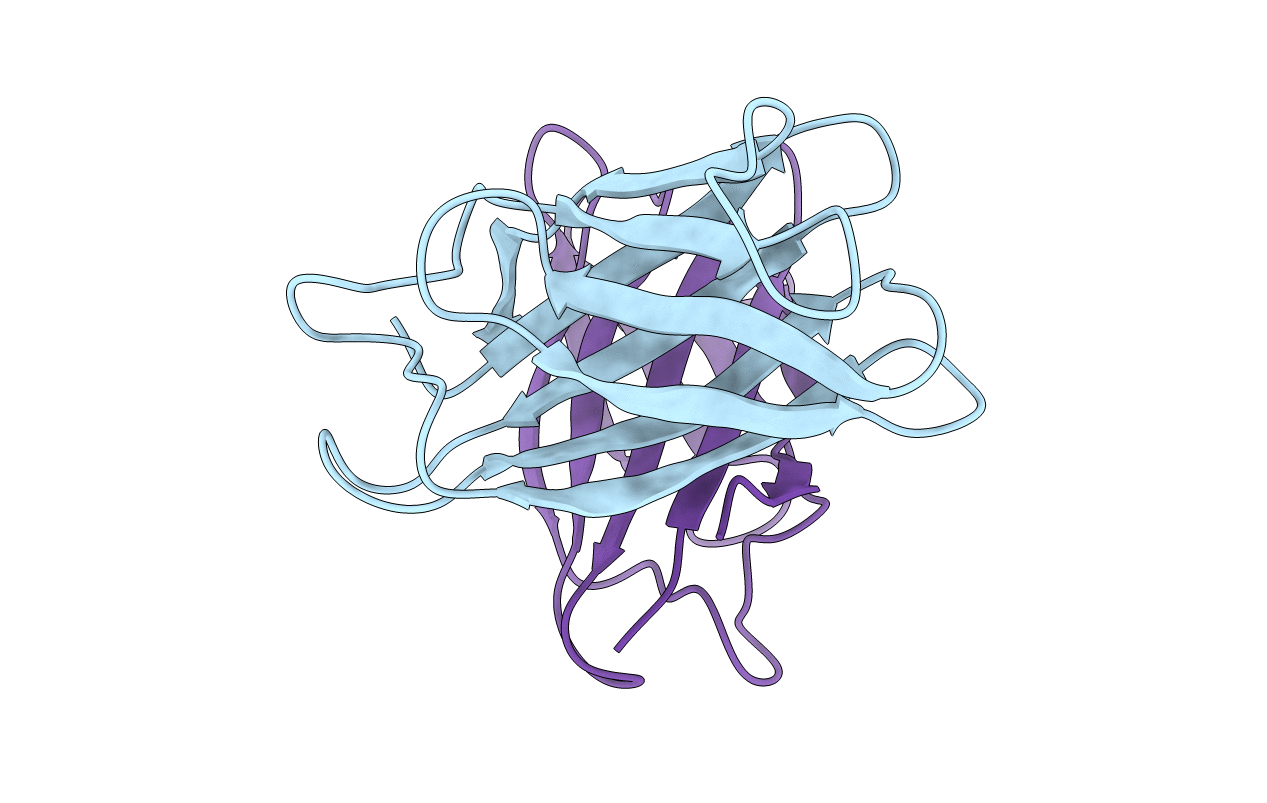
4XCR image
Deposition Date 2014-12-18
Release Date 2016-01-20
Last Version Date 2024-01-10
Entry Detail
PDB ID:
4XCR
Keywords:
Title:
Monomeric Human Cu,Zn Superoxide dismutase, loops IV and VII deleted, apo form, mutant I35A
Biological Source:
Source Organism:
Homo sapiens (Taxon ID: 9606)
Host Organism:
Method Details:
Experimental Method:
Resolution:
3.60 Å
R-Value Free:
0.23
R-Value Work:
0.18
R-Value Observed:
0.19
Space Group:
P 65

Macromolecular Entities
Structures with similar UniProt ID
Protein Blast
Polymer Type:polypeptide(L)
Molecule:Superoxide dismutase [Cu-Zn]
Gene (Uniprot):SOD1
Mutagens:I45A
Chain IDs:A, B
Chain Length:110
Number of Molecules:2
Biological Source:Homo sapiens
Ligand Molecules
Primary Citation
Thermodynamics of protein destabilization in live cells.
Proc. Natl. Acad. Sci. U.S.A. 112 12402 12407 (2015)
PMID: 26392565 DOI: 10.1073/pnas.1511308112

Abstact

Although protein folding and stability have been well explored under simplified conditions in vitro, it is yet unclear how these basic self-organization events are modulated by the crowded interior of live cells. To find out, we use here in-cell NMR to follow at atomic resolution the thermal unfolding of a β-barrel protein inside mammalian and bacterial cells. Challenging the view from in vitro crowding effects, we find that the cells destabilize the protein at 37 °C but with a conspicuous twist: While the melting temperature goes down the cold unfolding moves into the physiological regime, coupled to an augmented heat-capacity change. The effect seems induced by transient, sequence-specific, interactions with the cellular components, acting preferentially on the unfolded ensemble. This points to a model where the in vivo influence on protein behavior is case specific, determined by the individual protein's interplay with the functionally optimized "interaction landscape" of the cellular interior.

Legend

Protein

Chemical

Disease

Primary Citation of related structures
Feedback Form
Name
Email
Institute
Feedback