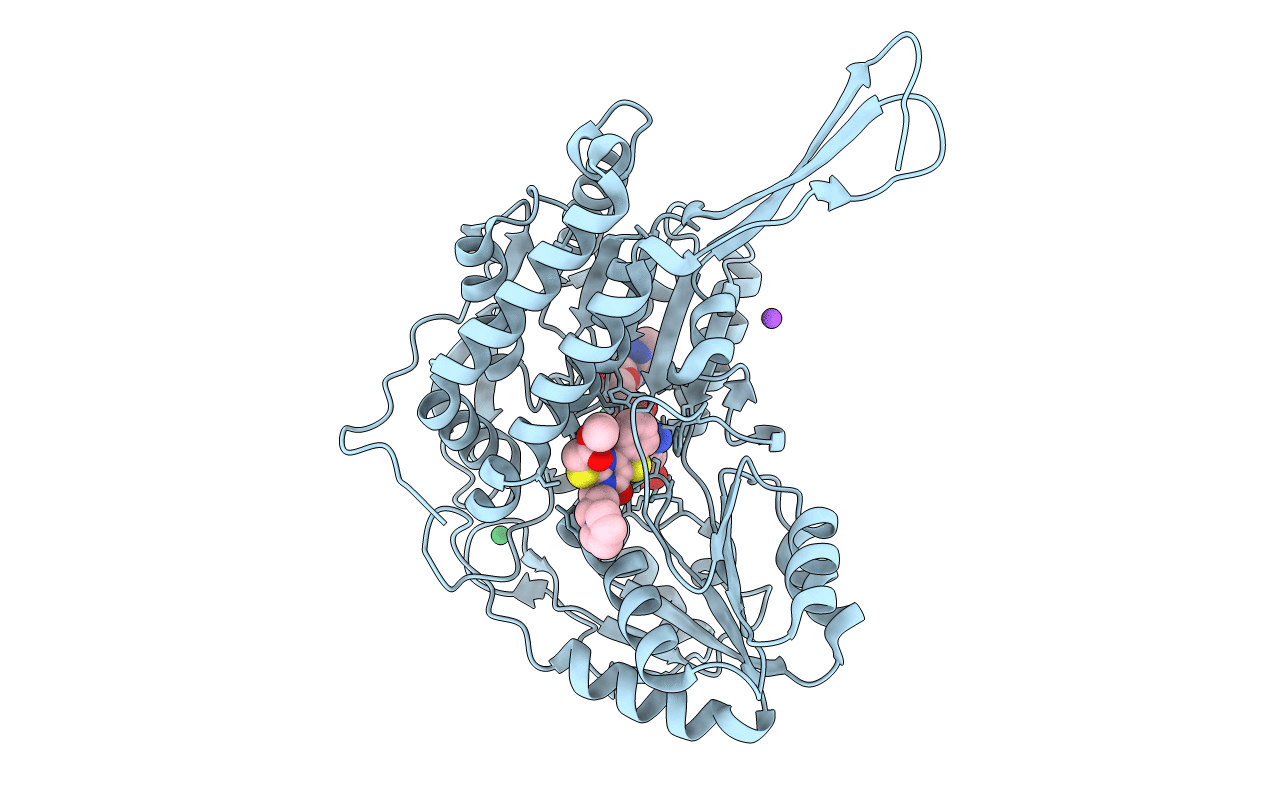
4X4L image
Deposition Date 2014-12-03
Release Date 2015-02-11
Last Version Date 2024-02-28
Entry Detail
PDB ID:
4X4L
Title:
Structure of human ALDH1A1 with inhibitor CM037
Biological Source:
Source Organism:
Homo sapiens (Taxon ID: 9606)
Host Organism:
Method Details:
Experimental Method:
Resolution:
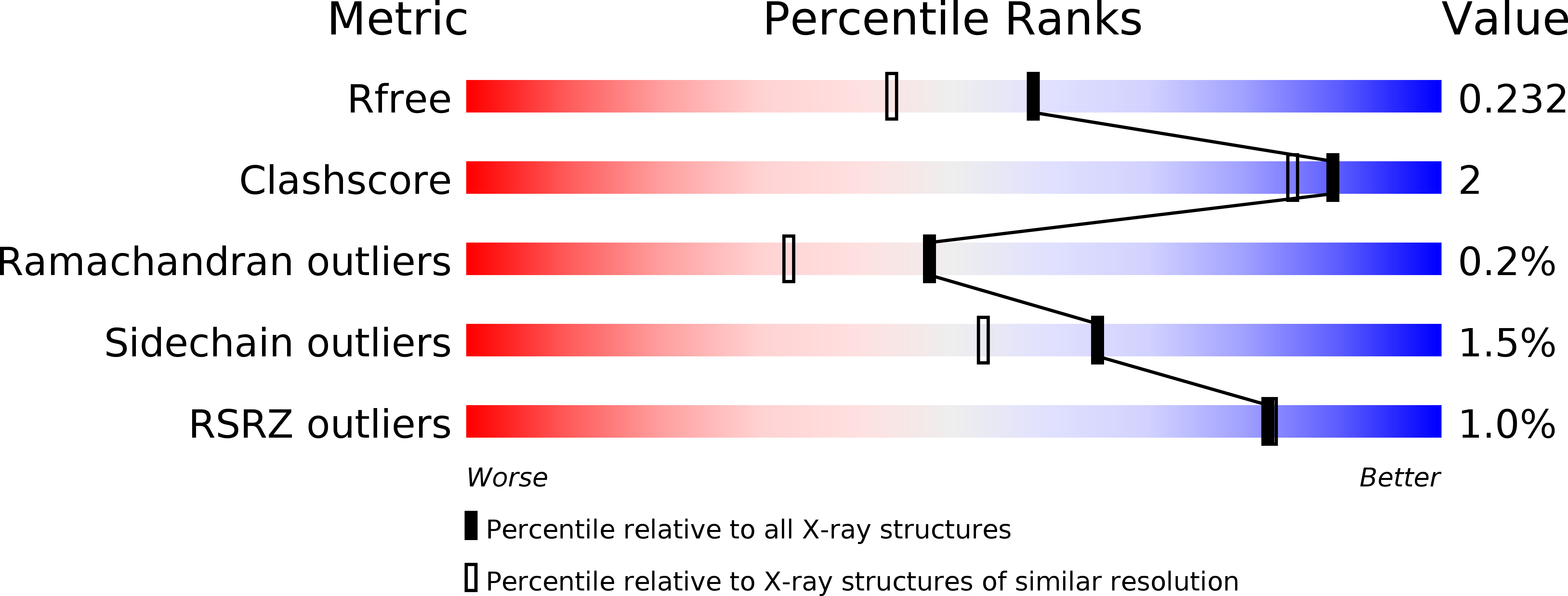
1.85 Å
R-Value Free:
0.23
R-Value Work:
0.20
R-Value Observed:
0.20
Space Group:
P 4 2 2
Macromolecular Entities
Structures with similar UniProt ID
Protein Blast
Polymer Type:polypeptide(L)
Molecule:Retinal dehydrogenase 1
Gene (Uniprot):ALDH1A1
Mutagens:N121S
Chain IDs:A
Chain Length:501
Number of Molecules:1
Biological Source:Homo sapiens
Primary Citation
Characterization of Two Distinct Structural Classes of Selective Aldehyde Dehydrogenase 1A1 Inhibitors.
J.Med.Chem. 58 1964 1975 (2015)
PMID: 25634381 DOI: 10.1021/jm501900s

Abstact

Aldehyde dehydrogenases (ALDH) catalyze the irreversible oxidation of aldehydes to their corresponding carboxylic acid. Alterations in ALDH1A1 activity are associated with such diverse diseases as cancer, Parkinson's disease, obesity, and cataracts. Inhibitors of ALDH1A1 could aid in illuminating the role of this enzyme in disease processes. However, there are no commercially available selective inhibitors for ALDH1A1. Here we characterize two distinct chemical classes of inhibitors that are selective for human ALDH1A1 compared to eight other ALDH isoenzymes. The prototypical members of each structural class, CM026 and CM037, exhibit submicromolar inhibition constants but have different mechanisms of inhibition. The crystal structures of these compounds bound to ALDH1A1 demonstrate that they bind within the aldehyde binding pocket of ALDH1A1 and exploit the presence of a unique glycine residue to achieve their selectivity. These two novel and selective ALDH1A1 inhibitors may serve as chemical tools to better understand the contributions of ALDH1A1 to normal biology and to disease states.

Legend

Protein

Chemical

Disease

Primary Citation of related structures
Feedback Form
Name
Email
Institute
Feedback