4X33 image
Deposition Date 2014-11-27
Release Date 2015-01-21
Last Version Date 2024-10-09
Entry Detail
PDB ID:
4X33
Title:
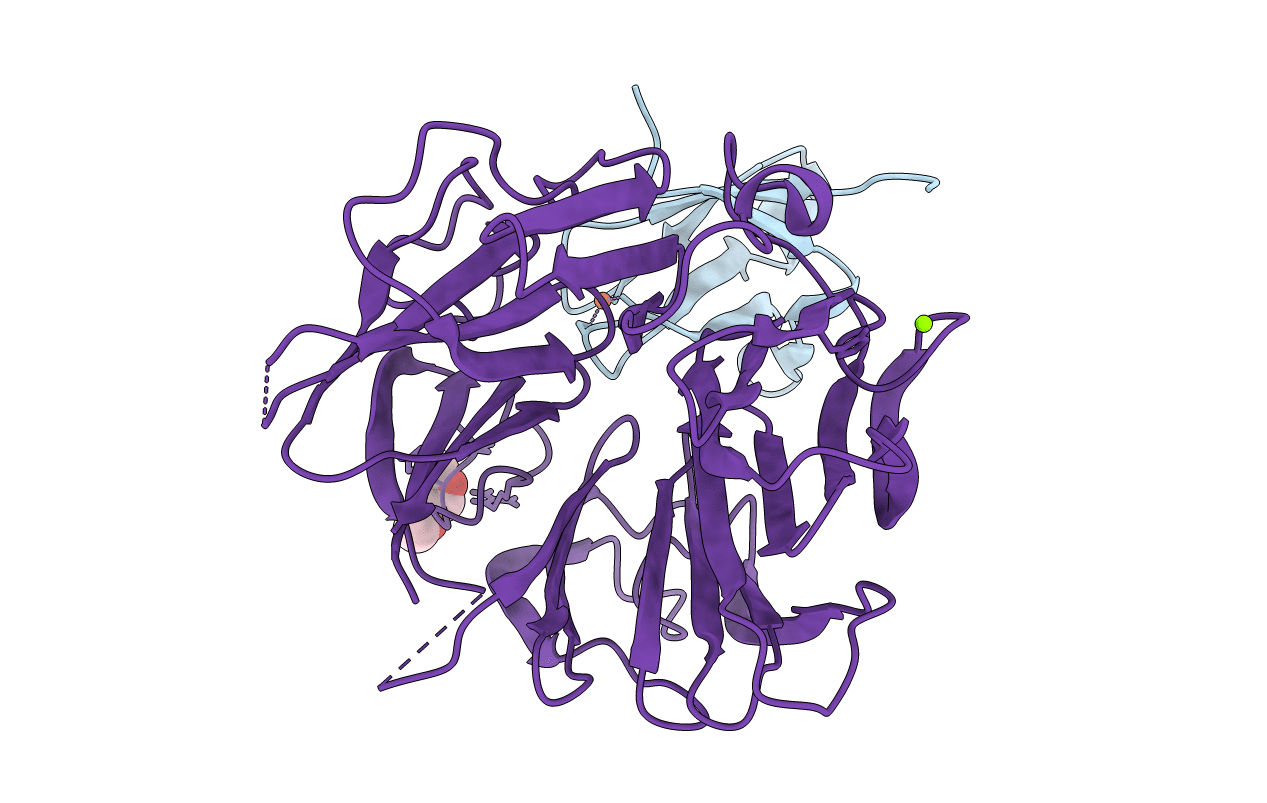
Structure of the Elongator cofactor complex Kti11/Kti13 at 1.45A
Biological Source:
Source Organism(s):
Expression System(s):
Method Details:
Experimental Method:
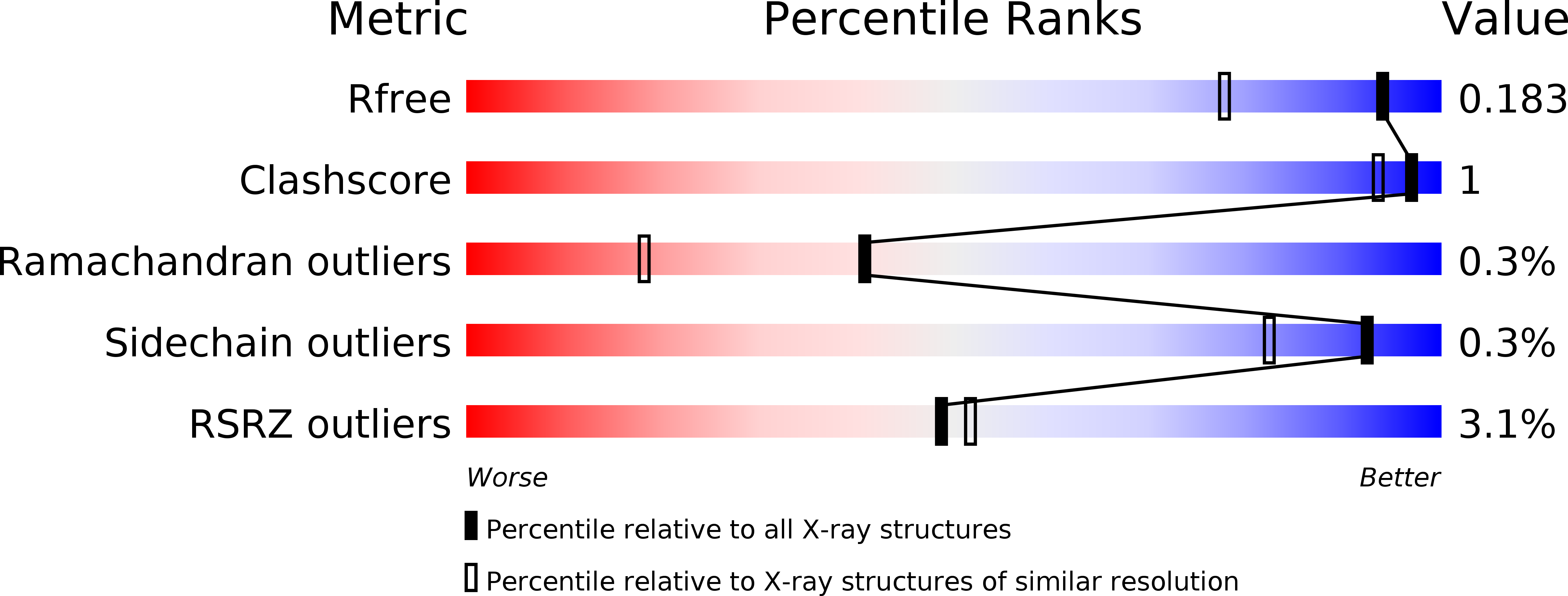
Resolution:
1.45 Å
R-Value Free:
0.17
R-Value Work:
0.14
R-Value Observed:
0.15
Space Group:
C 2 2 21
Macromolecular Entities
Structures with similar UniProt ID
Protein Blast
Polymer Type:polypeptide(L)
Molecule:Diphthamide biosynthesis protein 3
Gene (Uniprot):KTI11
Chain IDs:A
Chain Length:63
Number of Molecules:1
Biological Source:Saccharomyces cerevisiae
Structures with similar UniProt ID
Protein Blast
Polymer Type:polypeptide(L)
Molecule:Protein ATS1
Gene (Uniprot):ATS1
Chain IDs:B
Chain Length:333
Number of Molecules:1
Biological Source:Saccharomyces cerevisiae
Modified Residue
Compound ID Chain ID Parent Comp ID Details 2D Image
CSO B CYS modified residue
Primary Citation
Structure of the Elongator cofactor complex Kti11/Kti13 provides insight into the role of Kti13 in Elongator-dependent tRNA modification.
Febs J. 282 819 833 (2015)
PMID: 25604895 DOI: 10.1111/febs.13199

Abstact

UNLABELLED Modification of wobble uridines of many eukaryotic tRNAs requires the Elongator complex, a highly conserved six-subunit eukaryotic protein assembly, as well as the Killer toxin-insensitive (Kti) proteins 11-14. Kti11 was additionally shown to be implicated in the biosynthesis of diphthamide, a post-translationally modified histidine of translation elongation factor 2. Recent data indicate that iron-bearing Kti11 functions as an electron donor to the [4Fe-4S] cluster of radical S-Adenosylmethionine enzymes, triggering the subsequent radical reaction. We show here that recombinant yeast Kti11 forms a stable 1 : 1 complex with Kti13. To obtain insights into the function of this heterodimer, the Kti11/Kti13 complex was purified to homogeneity, crystallized, and its structure determined at 1.45 Å resolution. The importance of several residues mediating complex formation was confirmed by mutagenesis. Kti13 adopts a fold characteristic of RCC1-like proteins. The seven-bladed β-propeller consists of a unique mixture of four- and three-stranded blades. In the complex, Kti13 orients Kti11 and restricts access to its electron-carrying iron atom, constraining the electron transfer capacity of Kti11. Based on these findings, we propose a role for Kti13, and discuss the possible functional implications of complex formation. DATABASE Structural data have been submitted to the Protein Data Bank under accession number 4X33.

Legend

Protein

Chemical

Disease

Primary Citation of related structures
Feedback Form
Name
Email
Institute
Feedback