4X1P image
Deposition Date 2014-11-25
Release Date 2015-10-21
Last Version Date 2025-09-17
Entry Detail
PDB ID:
4X1P
Title:
The crystal structure of mupain-1-17 in complex with murinised human uPA at pH4.6
Biological Source:
Source Organism:
Host Organism:
Method Details:
Experimental Method:
Resolution:
1.60 Å
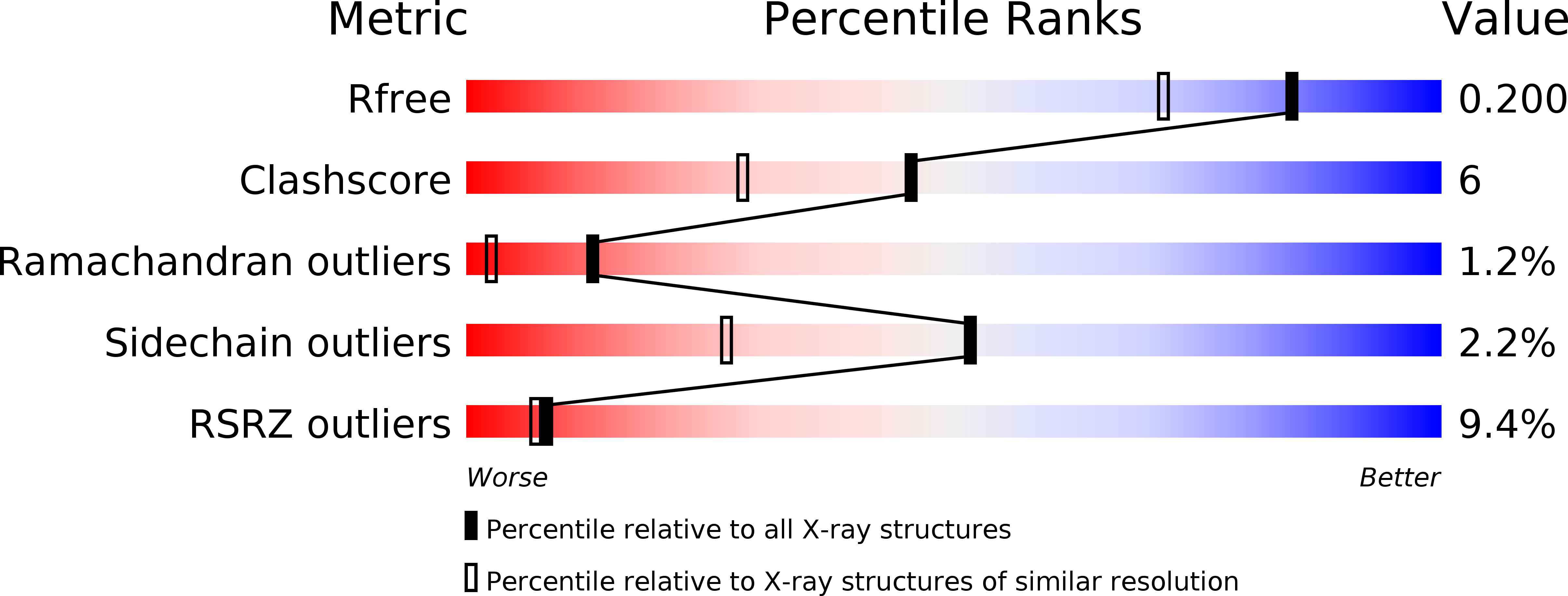
R-Value Free:
0.21
R-Value Work:
0.18
R-Value Observed:
0.18
Space Group:
H 3
Macromolecular Entities
Polymer Type:polypeptide(L)
Molecule:MUPAIN-1-17
Chain IDs:B (auth: P)
Chain Length:10
Number of Molecules:1
Biological Source:synthetic construct
Structures with similar UniProt ID
Protein Blast
Polymer Type:polypeptide(L)
Molecule:Urokinase-type plasminogen activator
Gene (Uniprot):PLAU
Mutagens:H99Y, C122A, N145Q
Chain IDs:A (auth: U)
Chain Length:247
Number of Molecules:1
Biological Source:Homo sapiens
Primary Citation
Distinctive binding modes and inhibitory mechanisms of two peptidic inhibitors of urokinase-type plasminogen activator with isomeric P1 residues.
Int.J.Biochem.Cell Biol. 62 88 92 (2015)
PMID: 25744057 DOI: 10.1016/j.biocel.2015.02.016

Abstact

Two isomeric piperidine derivatives (meta and para isomers) were used as arginine mimics in the P1 position of a cyclic peptidic inhibitor (CPAYSRYLDC) of urokinase-type plasminogen activator. The two resulting cyclic peptides showed vastly different affinities (∼70 fold) to the target enzyme. X-ray crystal structure analysis showed that the two P1 residues were inserted into the S1 specificity pocket in indistinguishable manners. However, the rest of the peptides bound in entirely different ways on the surface of the enzyme, and the two peptides have different conformations, despite the highly similar sequence. These results demonstrate how the subtle difference in P1 residue can dictate the exosite interactions and the potencies of peptidic inhibitors, and highlight the importance of the P1 residue for protease inhibition. This study provides important information for the development of peptidic agents for pharmacological intervention.

Legend

Protein

Chemical

Disease

Primary Citation of related structures
Feedback Form
Name
Email
Institute
Feedback