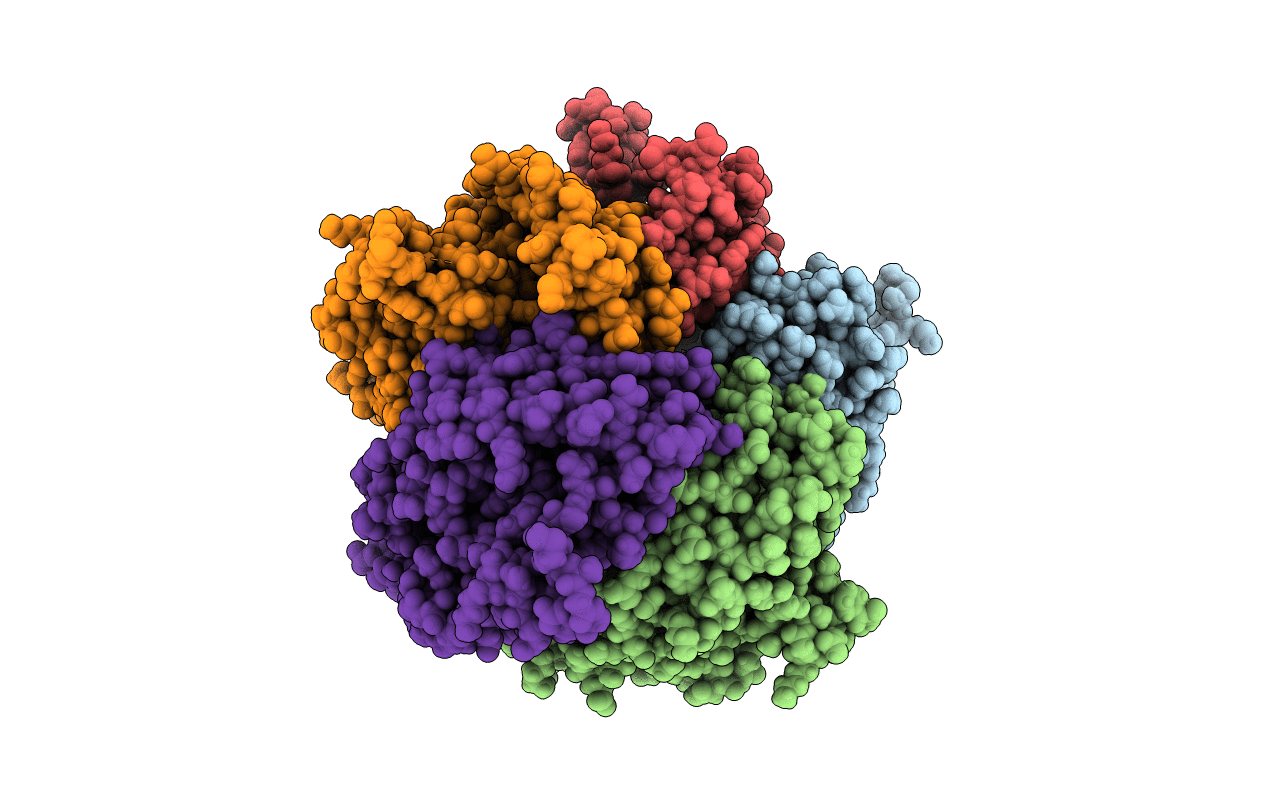
4WWS image
Deposition Date 2014-11-12
Release Date 2015-02-04
Last Version Date 2024-07-10
Entry Detail
PDB ID:
4WWS
Keywords:
Title:
Structure of Chlorite dismutase-like Protein from Listeria monocytogenes
Biological Source:
Source Organism:
Host Organism:
Method Details:
Experimental Method:
Resolution:
2.00 Å
R-Value Free:
0.22
R-Value Work:
0.19
R-Value Observed:
0.20
Space Group:
P 1 21 1

Macromolecular Entities
Structures with similar UniProt ID
Protein Blast
Polymer Type:polypeptide(L)
Molecule:Putative heme-dependent peroxidase lmo2113
Gene (Uniprot):chdC
Chain IDs:A, B, C, D, E
Chain Length:253
Number of Molecules:5
Biological Source:Listeria monocytogenes serovar 1/2a
Ligand Molecules
Primary Citation
Structure and heme-binding properties of HemQ (chlorite dismutase-like protein) from Listeria monocytogenes.
Arch.Biochem.Biophys. 574 36 48 (2015)
PMID: 25602700 DOI: 10.1016/j.abb.2015.01.010

Abstact

Chlorite dismutase-like proteins are structurally closely related to functional chlorite dismutases which are heme b-dependent oxidoreductases capable of reducing chlorite to chloride with simultaneous production of dioxygen. Chlorite dismutase-like proteins are incapable of performing this reaction and their biological role is still under discussion. Recently, members of this large protein family were shown to be involved in heme biosynthesis in Gram-positive bacteria, and thus the protein was renamed HemQ in these organisms. In the present work the structural and heme binding properties of the chlorite dismutase-like protein from the Gram-positive pathogen Listeria monocytogenes (LmCld) were analyzed in order to evaluate its potential role as a regulatory heme sensing protein. The homopentameric crystal structure (2.0Å) shows high similarity to chlorite-degrading chlorite dismutases with an important difference in the structure of the putative substrate and heme entrance channel. In solution LmCld is a stable hexamer able to bind the low-spin ligand cyanide. Heme binding is reversible with KD-values determined to be 7.2μM (circular dichroism spectroscopy) and 16.8μM (isothermal titration calorimetry) at pH 7.0. Both acidic and alkaline conditions promote heme release. Presented biochemical and structural data reveal that the chlorite dismutase-like protein from L. monocytogenes could act as a potential regulatory heme sensing and storage protein within heme biosynthesis.

Legend

Protein

Chemical

Disease

Primary Citation of related structures
Feedback Form
Name
Email
Institute
Feedback