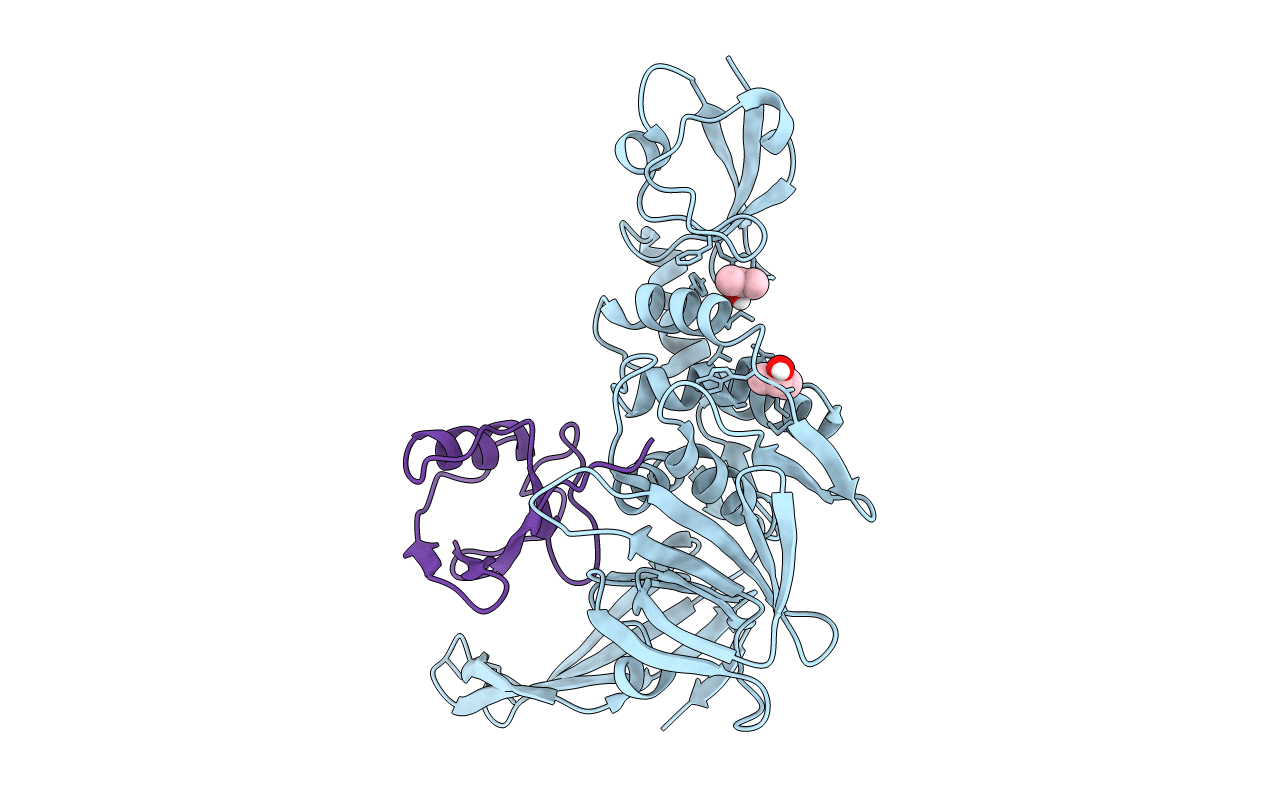
4WUR image
Deposition Date 2014-11-03
Release Date 2014-11-26
Last Version Date 2024-01-10
Entry Detail
PDB ID:
4WUR
Keywords:
Title:
The crystal structure of the MERS-CoV papain-like protease (C111S) with human ubiquitin
Biological Source:
Source Organism:
Method Details:
Experimental Method:
Resolution:
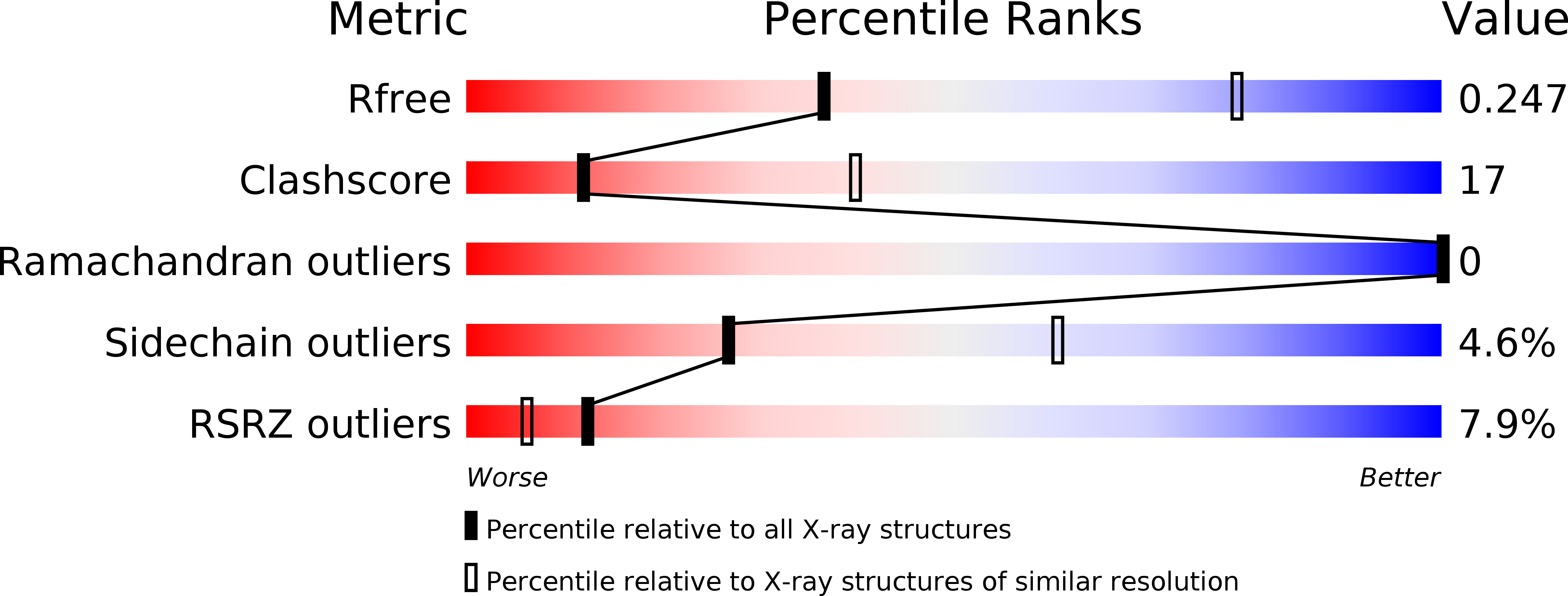
3.16 Å
R-Value Free:
0.25
R-Value Work:
0.20
R-Value Observed:
0.21
Space Group:
P 63
Macromolecular Entities
Structures with similar UniProt ID
Protein Blast
Polymer Type:polypeptide(L)
Molecule:Papain-like protease
Gene (Uniprot):rep
Mutagens:C111S
Chain IDs:A
Chain Length:326
Number of Molecules:1
Biological Source:Human coronavirus EMC
Structures with similar UniProt ID
Protein Blast
Polymer Type:polypeptide(L)
Molecule:Polyubiquitin-B
Gene (Uniprot):UBB
Chain IDs:B
Chain Length:76
Number of Molecules:1
Biological Source:Homo sapiens
Primary Citation
Structural and mutational analysis of the interaction between the Middle-East respiratory syndrome coronavirus (MERS-CoV) papain-like protease and human ubiquitin.
Virol Sin 31 288 299 (2016)
PMID: 27245450 DOI: 10.1007/s12250-016-3742-4

Abstact

The papain-like protease (PL(pro)) of Middle-East respiratory syndrome coronavirus (MERS-CoV) has proteolytic, deubiquitinating, and deISGylating activities. The latter two are involved in the suppression of the antiviral innate immune response of the host cell. To contribute to an understanding of this process, we present here the X-ray crystal structure of a complex between MERS-CoV PL(pro) and human ubiquitin (Ub) that is devoid of any covalent linkage between the two proteins. Five regions of the PL(pro) bind to two areas of the Ub. The C-terminal five residues of Ub, RLRGG, are similar to the P5-P1 residues of the polyprotein substrates of the PL(pro) and are responsible for the major part of the interaction between the two macromolecules. Through sitedirected mutagenesis, we demonstrate that conserved Asp165 and non-conserved Asp164 are important for the catalytic activities of MERS-CoV PL(pro). The enzyme appears not to be optimized for catalytic efficiency; thus, replacement of Phe269 by Tyr leads to increased peptidolytic and deubiquitinating activities. Ubiquitin binding by MERS-CoV PL(pro) involves remarkable differences compared to the corresponding complex with SARS-CoV PL(pro). The structure and the mutational study help understand common and unique features of the deubiquitinating activity of MERS-CoV PL(pro).

Legend

Protein

Chemical

Disease

Primary Citation of related structures
Feedback Form
Name
Email
Institute
Feedback