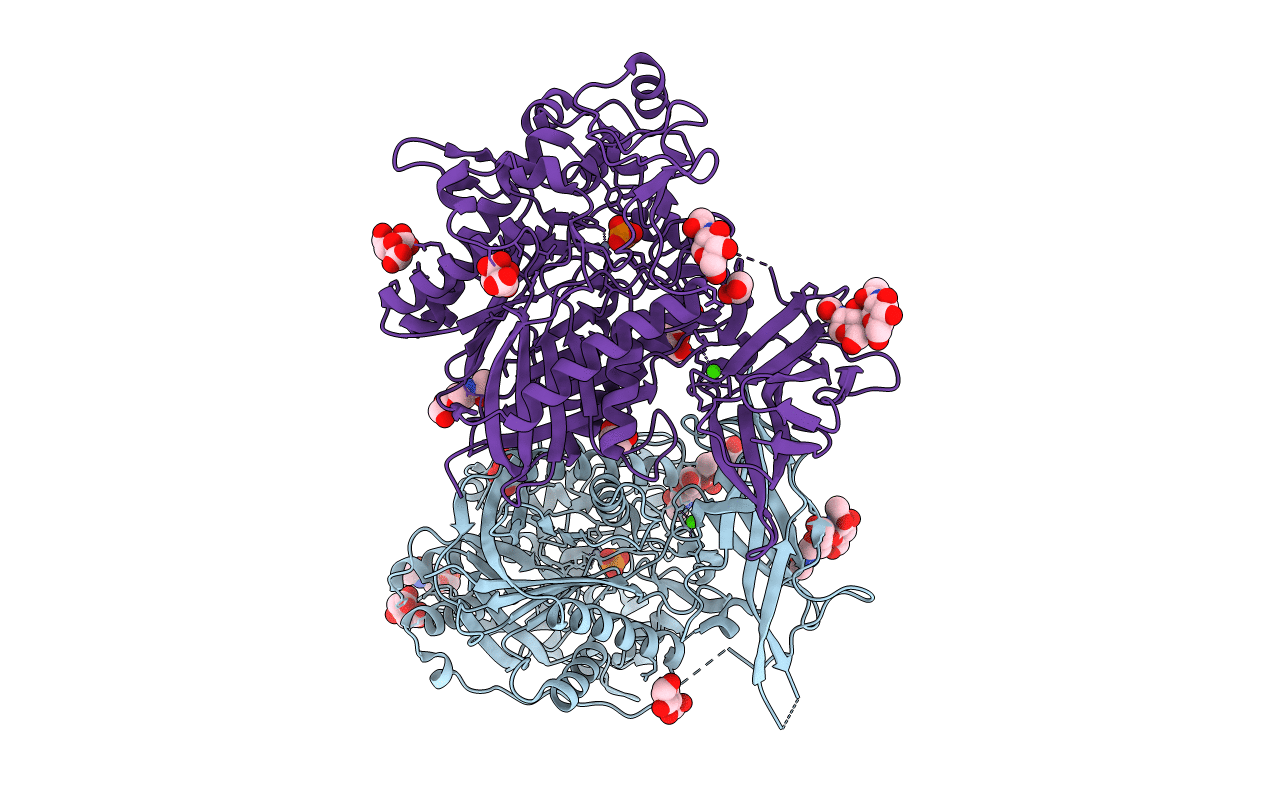
4WGK image
Deposition Date 2014-09-18
Release Date 2015-07-08
Last Version Date 2024-11-06
Entry Detail
PDB ID:
4WGK
Keywords:
Title:
Crystal structure of human neutral ceramidase with Zn-bound phosphate
Biological Source:
Source Organism:
Homo sapiens (Taxon ID: 9606)
Host Organism:
Method Details:
Experimental Method:
Resolution:
2.58 Å
R-Value Free:
0.22
R-Value Work:
0.17
R-Value Observed:
0.18
Space Group:
P 1 21 1
Macromolecular Entities
Structures with similar UniProt ID
Protein Blast
Polymer Type:polypeptide(L)
Molecule:Neutral ceramidase
Gene (Uniprot):ASAH2
Chain IDs:A, B
Chain Length:688
Number of Molecules:2
Biological Source:Homo sapiens
Primary Citation
Structural Basis for Ceramide Recognition and Hydrolysis by Human Neutral Ceramidase.
Structure 23 1482 1491 (2015)
PMID: 26190575 DOI: 10.1016/j.str.2015.06.013

Abstact

Neutral ceramidase (nCDase) catalyzes conversion of the apoptosis-associated lipid ceramide to sphingosine, the precursor for the proliferative factor sphingosine-1-phosphate. As an enzyme regulating the balance of ceramide and sphingosine-1-phosphate, nCDase is emerging as a therapeutic target for cancer. Here, we present the 2.6-Å crystal structure of human nCDase in complex with phosphate that reveals a striking, 20-Å deep, hydrophobic active site pocket stabilized by a eukaryotic-specific subdomain not present in bacterial ceramidases. Utilizing flexible ligand docking, we predict a likely binding mode for ceramide that superimposes closely with the crystallographically observed transition state analog phosphate. Our results suggest that nCDase uses a new catalytic strategy for Zn(2+)-dependent amidases, and generates ceramide specificity by sterically excluding sphingolipids with bulky headgroups and specifically recognizing the small hydroxyl head group of ceramide. Together, these data provide a foundation to aid drug development and establish common themes for how proteins recognize the bioactive lipid ceramide.

Legend

Protein

Chemical

Disease

Primary Citation of related structures
Feedback Form
Name
Email
Institute
Feedback