4WF0 image
Deposition Date 2014-09-11
Release Date 2014-12-24
Last Version Date 2023-09-27
Entry Detail
PDB ID:
4WF0
Keywords:
Title:
Crystal Structure of iLID - an Improved Light-Inducible Dimer
Biological Source:
Source Organism(s):
Avena sativa (Taxon ID: 4498)
Expression System(s):
Method Details:
Experimental Method:
Resolution:
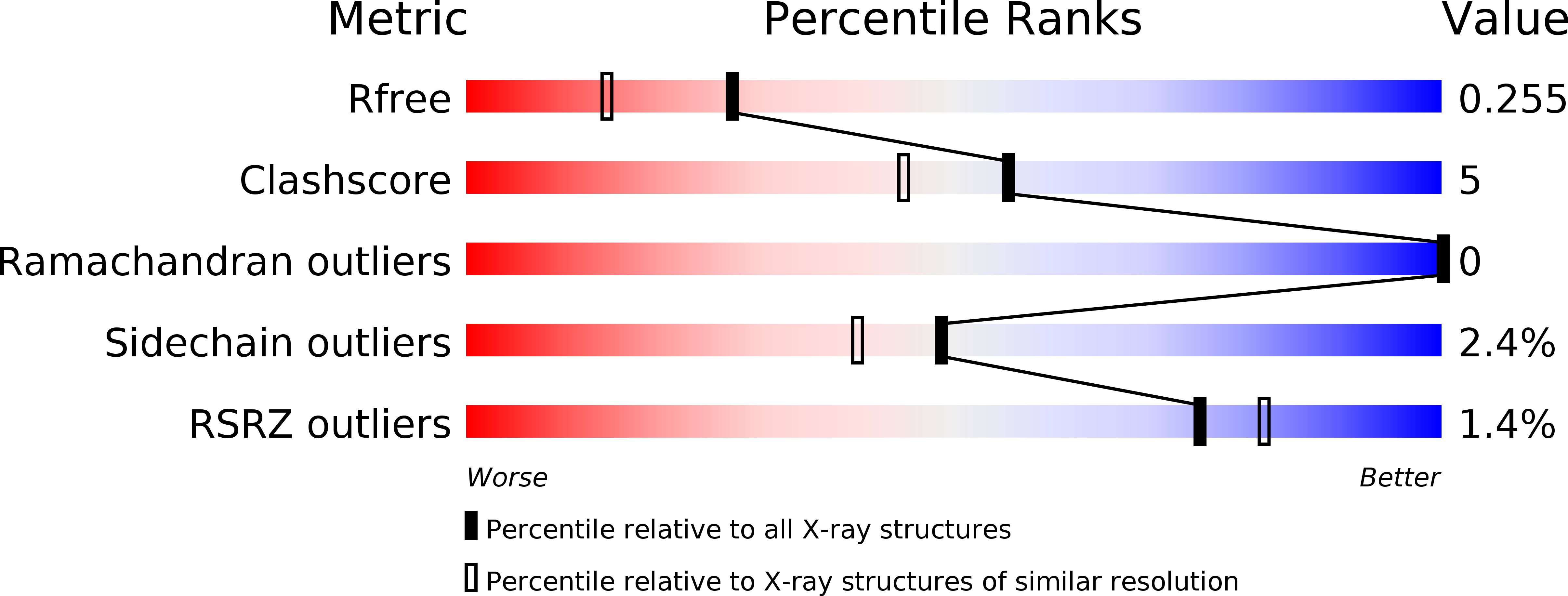
1.95 Å
R-Value Free:
0.24
R-Value Work:
0.23
R-Value Observed:
0.23
Space Group:
P 21 21 21
Macromolecular Entities
Structures with similar UniProt ID
Protein Blast
Polymer Type:polypeptide(L)
Molecule:NPH1-1
Gene (Uniprot):NPH1-1
Chain IDs:A, B
Chain Length:158
Number of Molecules:2
Biological Source:Avena sativa
Primary Citation
Engineering an improved light-induced dimer (iLID) for controlling the localization and activity of signaling proteins.
Proc.Natl.Acad.Sci.USA 112 112 117 (2015)
PMID: 25535392 DOI: 10.1073/pnas.1417910112

Abstact

The discovery of light-inducible protein-protein interactions has allowed for the spatial and temporal control of a variety of biological processes. To be effective, a photodimerizer should have several characteristics: it should show a large change in binding affinity upon light stimulation, it should not cross-react with other molecules in the cell, and it should be easily used in a variety of organisms to recruit proteins of interest to each other. To create a switch that meets these criteria we have embedded the bacterial SsrA peptide in the C-terminal helix of a naturally occurring photoswitch, the light-oxygen-voltage 2 (LOV2) domain from Avena sativa. In the dark the SsrA peptide is sterically blocked from binding its natural binding partner, SspB. When activated with blue light, the C-terminal helix of the LOV2 domain undocks from the protein, allowing the SsrA peptide to bind SspB. Without optimization, the switch exhibited a twofold change in binding affinity for SspB with light stimulation. Here, we describe the use of computational protein design, phage display, and high-throughput binding assays to create an improved light inducible dimer (iLID) that changes its affinity for SspB by over 50-fold with light stimulation. A crystal structure of iLID shows a critical interaction between the surface of the LOV2 domain and a phenylalanine engineered to more tightly pin the SsrA peptide against the LOV2 domain in the dark. We demonstrate the functional utility of the switch through light-mediated subcellular localization in mammalian cell culture and reversible control of small GTPase signaling.

Legend

Protein

Chemical

Disease

Primary Citation of related structures
Feedback Form
Name
Email
Institute
Feedback