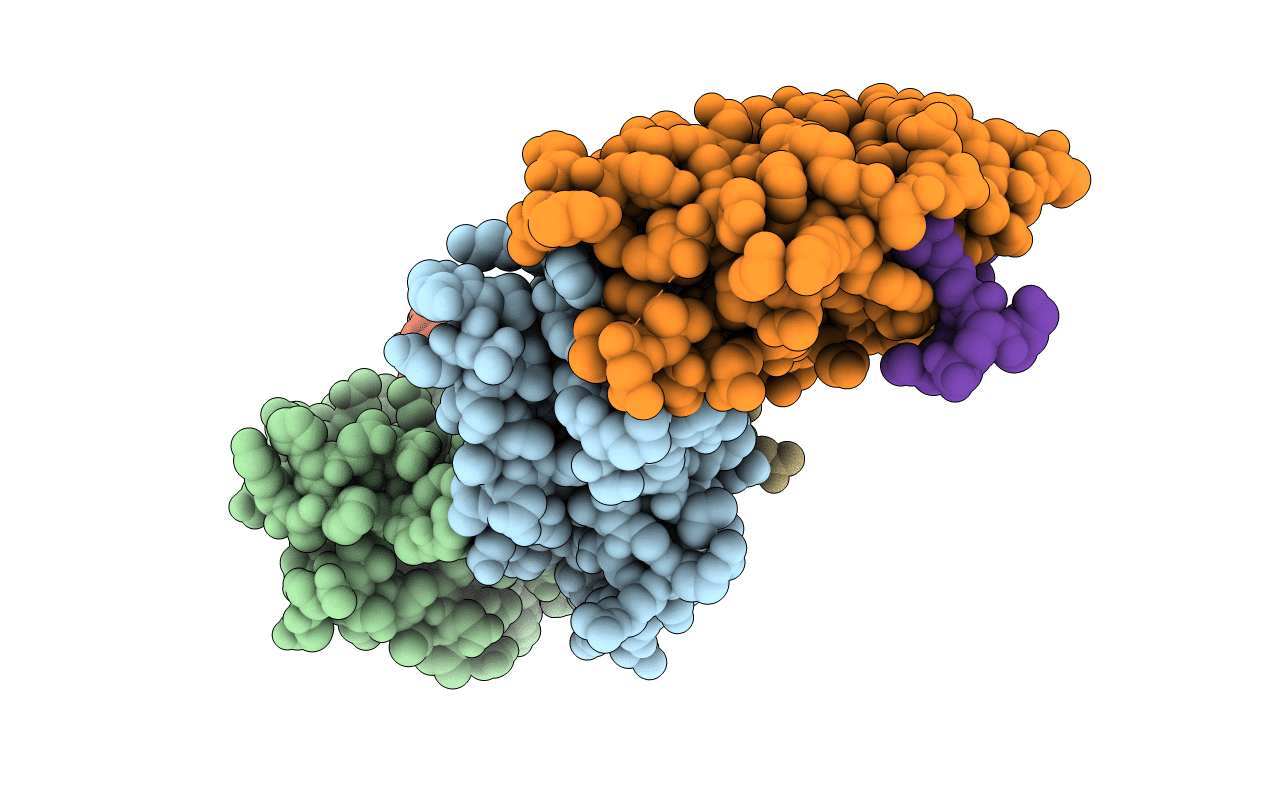
4W5A image
Deposition Date 2014-08-17
Release Date 2015-01-21
Last Version Date 2023-11-08
Entry Detail
PDB ID:
4W5A
Title:
Complex structure of ATRX ADD bound to H3K9me3S10ph peptide
Biological Source:
Source Organism(s):
Homo sapiens (Taxon ID: 9606)
Expression System(s):
Method Details:
Experimental Method:
Resolution:
2.60 Å
R-Value Free:
0.25
R-Value Work:
0.22
R-Value Observed:
0.22
Space Group:
P 32 2 1

Macromolecular Entities
Structures with similar UniProt ID
Protein Blast
Polymer Type:polypeptide(L)
Molecule:Transcriptional regulator ATRX
Gene (Uniprot):ATRX
Mutagens:K251R, F284Y
Chain IDs:A, C (auth: B), E
Chain Length:129
Number of Molecules:3
Biological Source:Homo sapiens
Structures with similar UniProt ID
Protein Blast
Polymer Type:polypeptide(L)
Molecule:Peptide from Histone H3.3
Gene (Uniprot):H3-3A, H3-3B
Chain IDs:B (auth: C), D, F
Chain Length:15
Number of Molecules:3
Biological Source:Homo sapiens
Modified Residue
Compound ID Chain ID Parent Comp ID Details 2D Image
M3L B LYS modified residue
SEP B SER modified residue
Ligand Molecules
Primary Citation
ATRX tolerates activity-dependent histone H3 methyl/phos switching to maintain repetitive element silencing in neurons
Proc.Natl.Acad.Sci.USA 112 6820 6827 (2015)
PMID: 25538301 DOI: 10.1073/pnas.1411258112

Abstact

ATRX (the alpha thalassemia/mental retardation syndrome X-linked protein) is a member of the switch2/sucrose nonfermentable2 (SWI2/SNF2) family of chromatin-remodeling proteins and primarily functions at heterochromatic loci via its recognition of "repressive" histone modifications [e.g., histone H3 lysine 9 tri-methylation (H3K9me3)]. Despite significant roles for ATRX during normal neural development, as well as its relationship to human disease, ATRX function in the central nervous system is not well understood. Here, we describe ATRX's ability to recognize an activity-dependent combinatorial histone modification, histone H3 lysine 9 tri-methylation/serine 10 phosphorylation (H3K9me3S10ph), in postmitotic neurons. In neurons, this "methyl/phos" switch occurs exclusively after periods of stimulation and is highly enriched at heterochromatic repeats associated with centromeres. Using a multifaceted approach, we reveal that H3K9me3S10ph-bound Atrx represses noncoding transcription of centromeric minor satellite sequences during instances of heightened activity. Our results indicate an essential interaction between ATRX and a previously uncharacterized histone modification in the central nervous system and suggest a potential role for abnormal repetitive element transcription in pathological states manifested by ATRX dysfunction.

Legend

Protein

Chemical

Disease

Primary Citation of related structures
Feedback Form
Name
Email
Institute
Feedback