4UZ2 image
Deposition Date 2014-09-04
Release Date 2015-01-14
Last Version Date 2024-05-08
Entry Detail
PDB ID:
4UZ2
Keywords:
Title:
Crystal structure of the N-terminal LysM domains from the putative NlpC/P60 D,L endopeptidase from T. thermophilus
Biological Source:
Source Organism:
Host Organism:
Method Details:
Experimental Method:
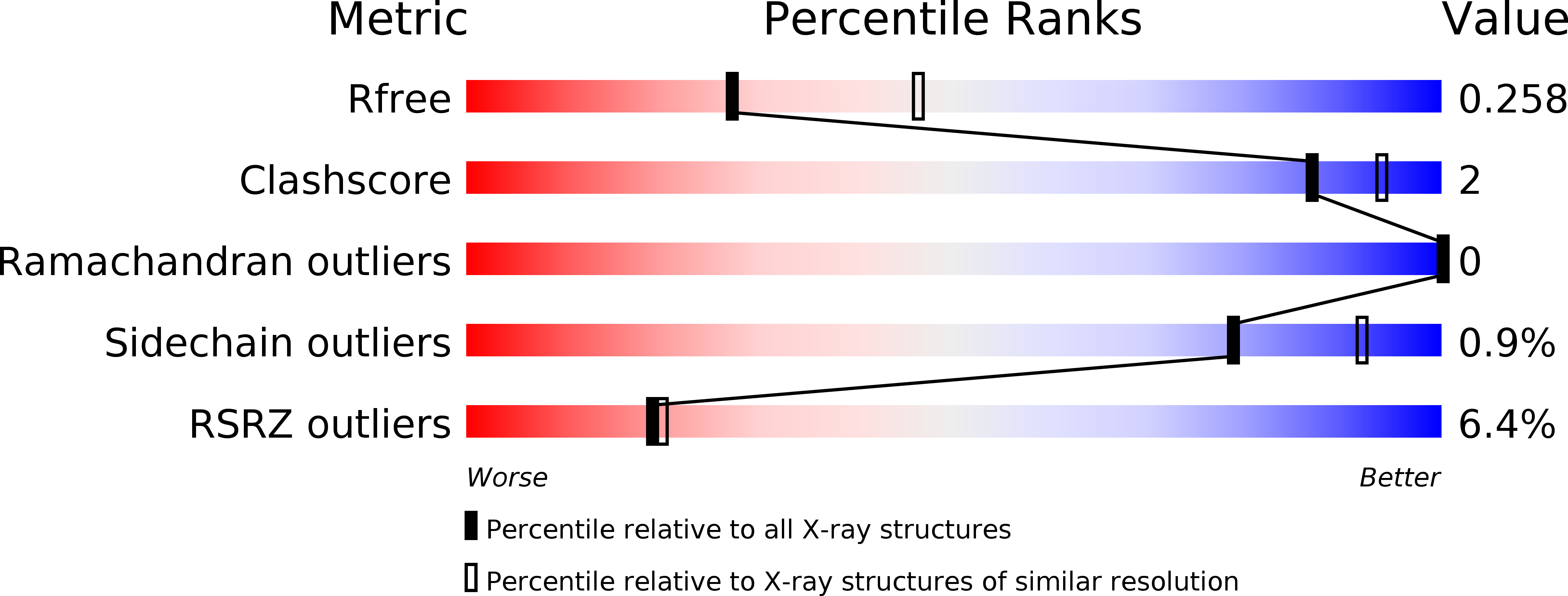
Resolution:
2.50 Å
R-Value Free:
0.25
R-Value Work:
0.21
R-Value Observed:
0.21
Space Group:
P 42 21 2
Macromolecular Entities
Structures with similar UniProt ID
Protein Blast
Polymer Type:polypeptide(L)
Molecule:CELL WALL-BINDING ENDOPEPTIDASE-RELATED PROTEIN
Gene (Uniprot):TTHA0266
Chain IDs:A, B, C, D
Chain Length:100
Number of Molecules:4
Biological Source:THERMUS THERMOPHILUS HB8
Primary Citation
An Intermolecular Binding Mechanism Involving Multiple Lysm Domains Mediates Carbohydrate Recognition by an Endopeptidase.
Acta Crystallogr.,Sect.D 71 592 ? (2015)
PMID: 25760608 DOI: 10.1107/S139900471402793X

Abstact

LysM domains, which are frequently present as repetitive entities in both bacterial and plant proteins, are known to interact with carbohydrates containing N-acetylglucosamine (GlcNAc) moieties, such as chitin and peptidoglycan. In bacteria, the functional significance of the involvement of multiple LysM domains in substrate binding has so far lacked support from high-resolution structures of ligand-bound complexes. Here, a structural study of the Thermus thermophilus NlpC/P60 endopeptidase containing two LysM domains is presented. The crystal structure and small-angle X-ray scattering solution studies of this endopeptidase revealed the presence of a homodimer. The structure of the two LysM domains co-crystallized with N-acetyl-chitohexaose revealed a new intermolecular binding mode that may explain the differential interaction between LysM domains and short or long chitin oligomers. By combining the structural information with the three-dimensional model of peptidoglycan, a model suggesting how protein dimerization enhances the recognition of peptidoglycan is proposed.

Legend

Protein

Chemical

Disease

Primary Citation of related structures
Feedback Form
Name
Email
Institute
Feedback