4UUQ image
Deposition Date 2014-07-30
Release Date 2015-01-21
Last Version Date 2024-10-23
Entry Detail
PDB ID:
4UUQ
Keywords:
Title:
Crystal structure of human mono-glyceride lipase in complex with SAR127303
Biological Source:
Source Organism:
HOMO SAPIENS (Taxon ID: 9606)
Host Organism:
Method Details:
Experimental Method:
Resolution:
2.36 Å
R-Value Free:
0.25
R-Value Work:
0.20
R-Value Observed:
0.21
Space Group:
I 2 2 2
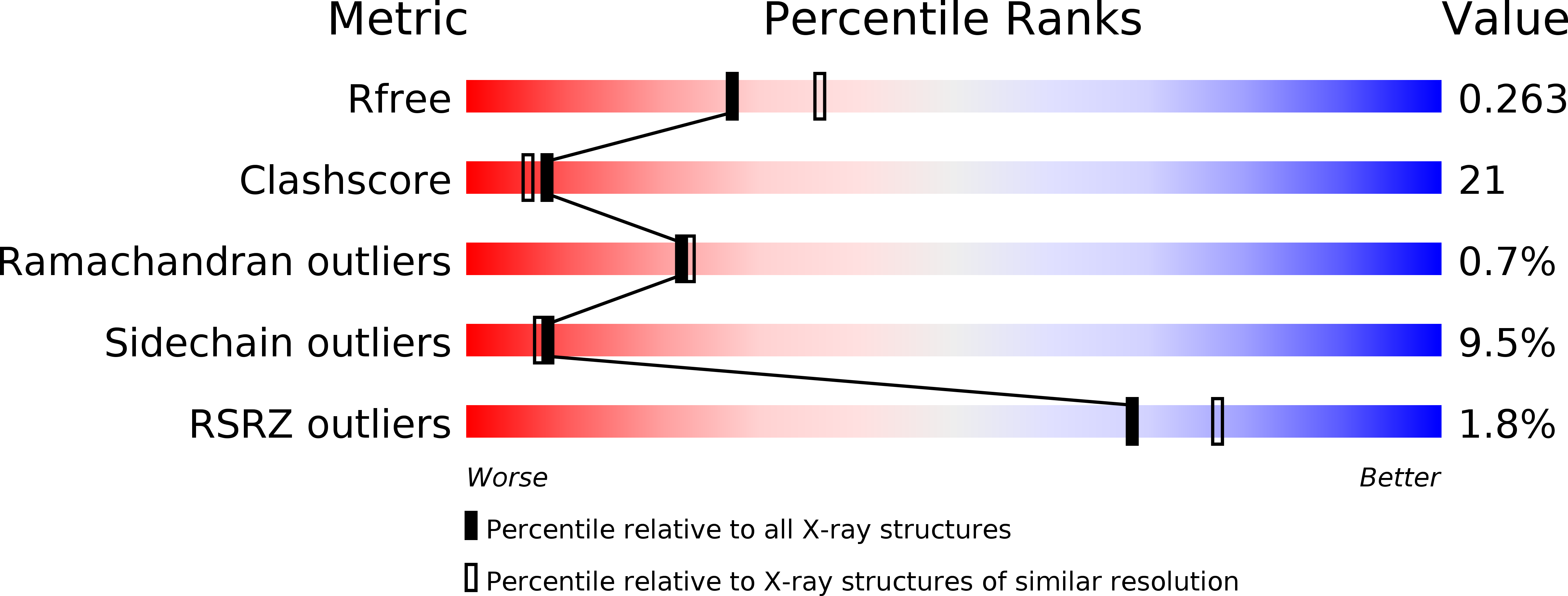
Macromolecular Entities
Structures with similar UniProt ID
Protein Blast
Polymer Type:polypeptide(L)
Molecule:MONOGLYCERIDE LIPASE
Gene (Uniprot):MGLL
Chain IDs:A, B
Chain Length:320
Number of Molecules:2
Biological Source:HOMO SAPIENS
Ligand Molecules
Primary Citation
Selective Blockade of the Hydrolysis of the Endocannabinoid 2-Arachidonoylglycerol Impairs Learning and Memory Performance While Producing Antinociceptive Activity in Rodents.
Sci.Rep. 5 7642 ? (2015)
PMID: 25560837 DOI: 10.1038/SREP07642

Abstact

Monoacylglycerol lipase (MAGL) represents a primary degradation enzyme of the endogenous cannabinoid (eCB), 2-arachidonoyglycerol (2-AG). This study reports a potent covalent MAGL inhibitor, SAR127303. The compound behaves as a selective and competitive inhibitor of mouse and human MAGL, which potently elevates hippocampal levels of 2-AG in mice. In vivo, SAR127303 produces antinociceptive effects in assays of inflammatory and visceral pain. In addition, the drug alters learning performance in several assays related to episodic, working and spatial memory. Moreover, long term potentiation (LTP) of CA1 synaptic transmission and acetylcholine release in the hippocampus, two hallmarks of memory function, are both decreased by SAR127303. Although inactive in acute seizure tests, repeated administration of SAR127303 delays the acquisition and decreases kindled seizures in mice, indicating that the drug slows down epileptogenesis, a finding deserving further investigation to evaluate the potential of MAGL inhibitors as antiepileptics. However, the observation that 2-AG hydrolysis blockade alters learning and memory performance, suggests that such drugs may have limited value as therapeutic agents.

Legend

Protein

Chemical

Disease

Primary Citation of related structures
Feedback Form
Name
Email
Institute
Feedback