4U5Y image
Deposition Date 2014-07-25
Release Date 2014-11-19
Last Version Date 2023-09-27
Entry Detail
PDB ID:
4U5Y
Keywords:
Title:
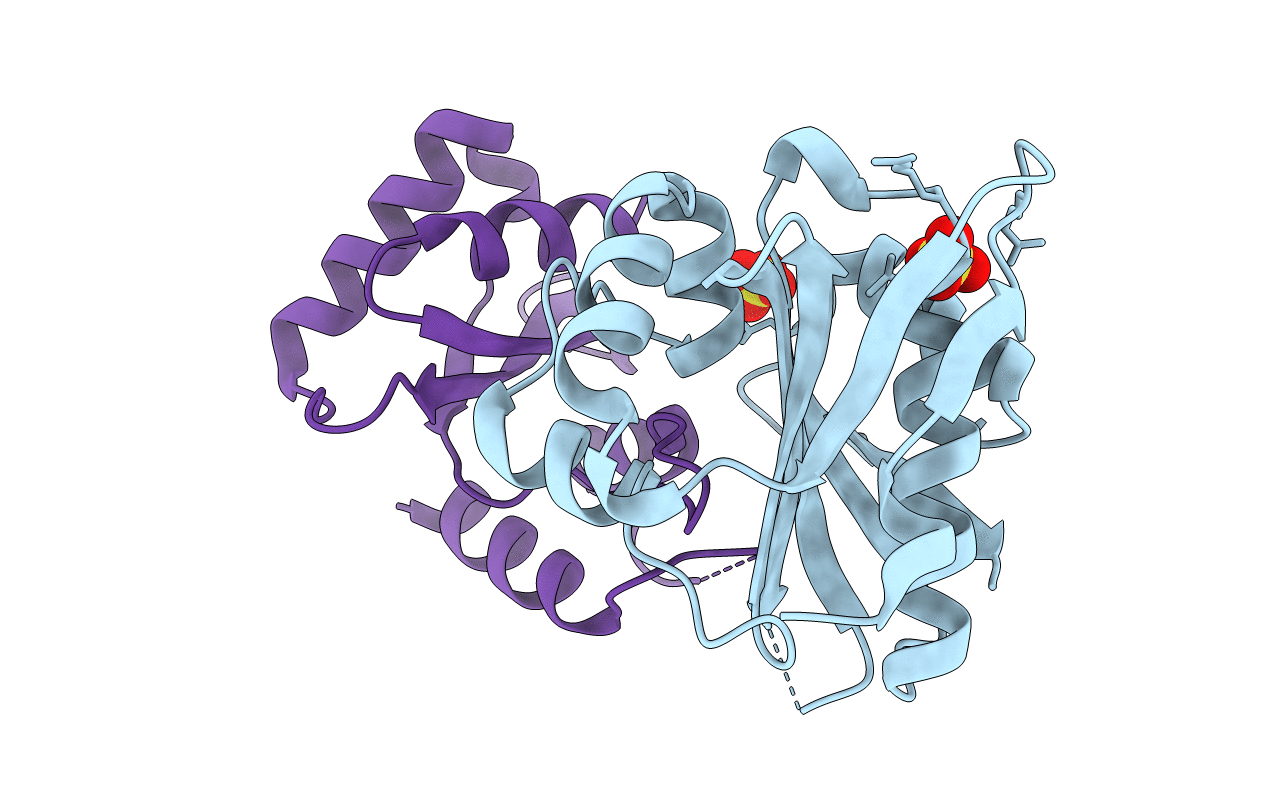
Crystal Structure of the complex between the GNAT domain of S. lividans PAT and the acetyl-CoA synthetase C-terminal domain of S. enterica
Biological Source:
Method Details:
Experimental Method:
Resolution:
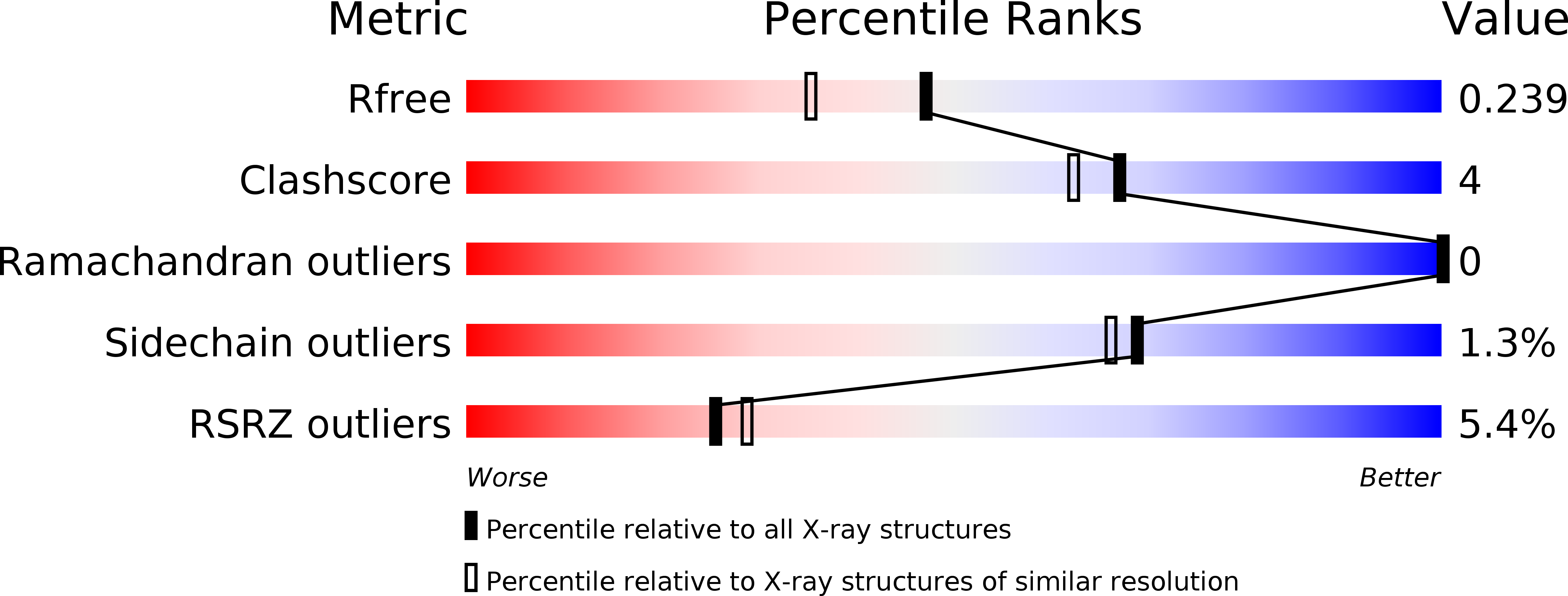
1.93 Å
R-Value Free:
0.23
R-Value Work:
0.18
R-Value Observed:
0.18
Space Group:
C 2 2 21
Macromolecular Entities
Polymer Type:polypeptide(L)
Molecule:Acyl-CoA synthetase
Mutagens:S73C
Chain IDs:A
Chain Length:194
Number of Molecules:1
Biological Source:Streptomyces lividans TK24
Polymer Type:polypeptide(L)
Molecule:Acetyl-coenzyme A synthetase
Mutagens:H567C
Chain IDs:B (auth: D)
Chain Length:135
Number of Molecules:1
Biological Source:Salmonella enterica subsp. enterica serovar Paratyphi B str. ATCC 10719
Ligand Molecules
Primary Citation
Insights into the specificity of lysine acetyltransferases.
J.Biol.Chem. 289 36249 36262 (2014)
PMID: 25381442 DOI: 10.1074/jbc.M114.613901

Abstact

Reversible lysine acetylation by protein acetyltransferases is a conserved regulatory mechanism that controls diverse cellular pathways. Gcn5-related N-acetyltransferases (GNATs), named after their founding member, are found in all domains of life. GNATs are known for their role as histone acetyltransferases, but non-histone bacterial protein acetytransferases have been identified. Only structures of GNAT complexes with short histone peptide substrates are available in databases. Given the biological importance of this modification and the abundance of lysine in polypeptides, how specificity is attained for larger protein substrates is central to understanding acetyl-lysine-regulated networks. Here we report the structure of a GNAT in complex with a globular protein substrate solved to 1.9 Å. GNAT binds the protein substrate with extensive surface interactions distinct from those reported for GNAT-peptide complexes. Our data reveal determinants needed for the recognition of a protein substrate and provide insight into the specificity of GNATs.

Legend

Protein

Chemical

Disease

Primary Citation of related structures
Feedback Form
Name
Email
Institute
Feedback