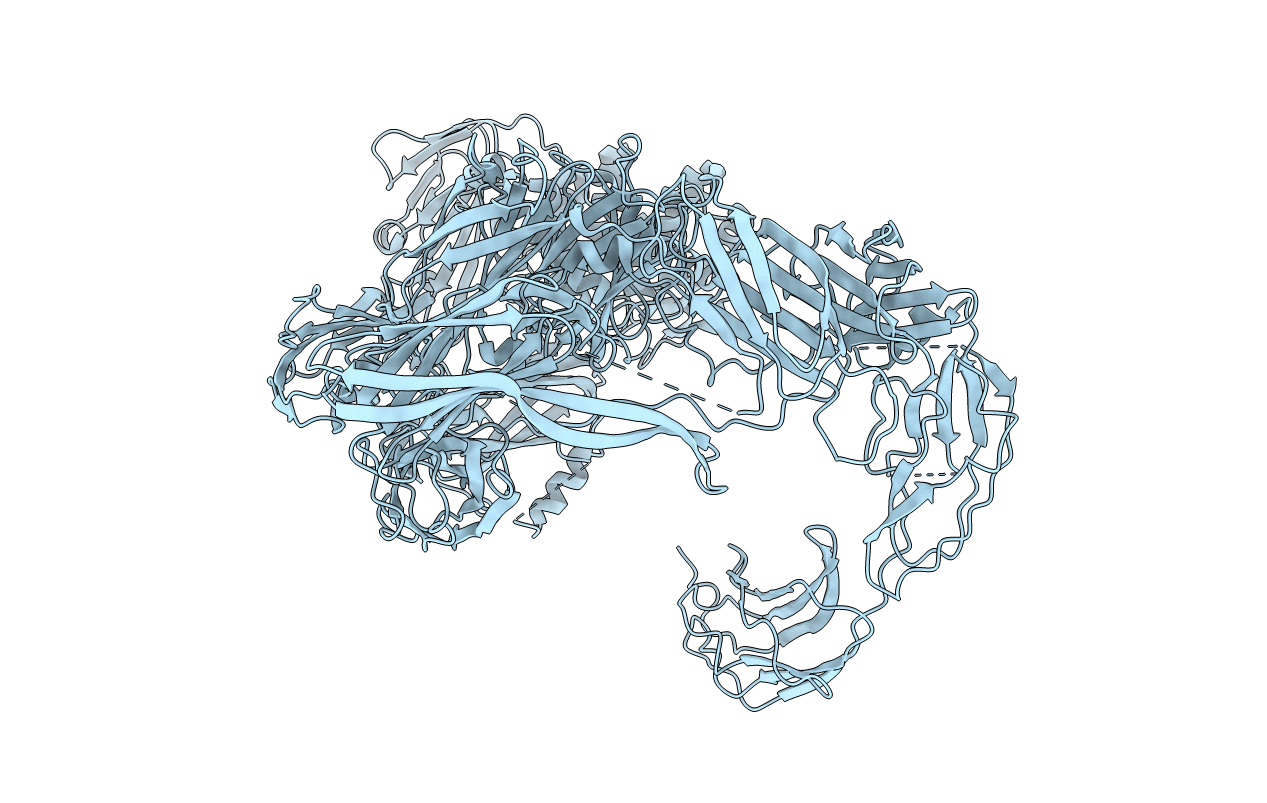
4U4J image
Deposition Date 2014-07-23
Release Date 2014-09-17
Last Version Date 2023-12-20
Entry Detail
PDB ID:
4U4J
Title:
Crystal structure of Salmonella alpha-2-macroglobulin mutant Y1175G
Biological Source:
Method Details:
Experimental Method:
Resolution:
2.90 Å
R-Value Free:
0.28
R-Value Work:
0.24
R-Value Observed:
0.24
Space Group:
P 21 21 2

Macromolecular Entities
Structures with similar UniProt ID
Protein Blast
Polymer Type:polypeptide(L)
Molecule:Putative inner membrane lipoprotein
Gene (Uniprot):STM2532
Mutagens:K98A, K99A, Y1175G
Chain IDs:A
Chain Length:1647
Number of Molecules:1
Biological Source:Salmonella enterica subsp. enterica serovar Typhimurium str. LT2
Ligand Molecules
Primary Citation
Structure of a bacterial alpha 2-macroglobulin reveals mimicry of eukaryotic innate immunity.
Nat Commun 5 4917 4917 (2014)
PMID: 25221932 DOI: 10.1038/ncomms5917

Abstact

Alpha-2-macroglobulins (A2Ms) are plasma proteins that trap and inhibit a broad range of proteases and are major components of the eukaryotic innate immune system. Surprisingly, A2M-like proteins were identified in pathogenically invasive bacteria and species that colonize higher eukaryotes. Bacterial A2Ms are located in the periplasm where they are believed to provide protection to the cell by trapping external proteases through a covalent interaction with an activated thioester. Here we report the crystal structures and characterization of Salmonella enterica ser. Typhimurium A2M in different states of thioester activation. The structures reveal thirteen domains whose arrangement displays high similarity to proteins involved in eukaryotic immune defence. A structural lock mechanism maintains the stability of the buried thioester, a requirement for its protease-trapping activity. These findings indicate that bacteria have developed a rudimentary innate immune system whose mechanism mimics that of eukaryotes.

Legend

Protein

Chemical

Disease

Primary Citation of related structures
Feedback Form
Name
Email
Institute
Feedback