4TM6 image
Deposition Date 2014-05-31
Release Date 2015-03-25
Last Version Date 2023-12-27
Entry Detail
PDB ID:
4TM6
Title:
Crystal Structure of EutL from Clostridium Perfringens at 298K
Biological Source:
Source Organism:
Host Organism:
Method Details:
Experimental Method:
Resolution:
1.90 Å
R-Value Free:
0.15
R-Value Work:
0.13
R-Value Observed:
0.13
Space Group:
P 43 21 2
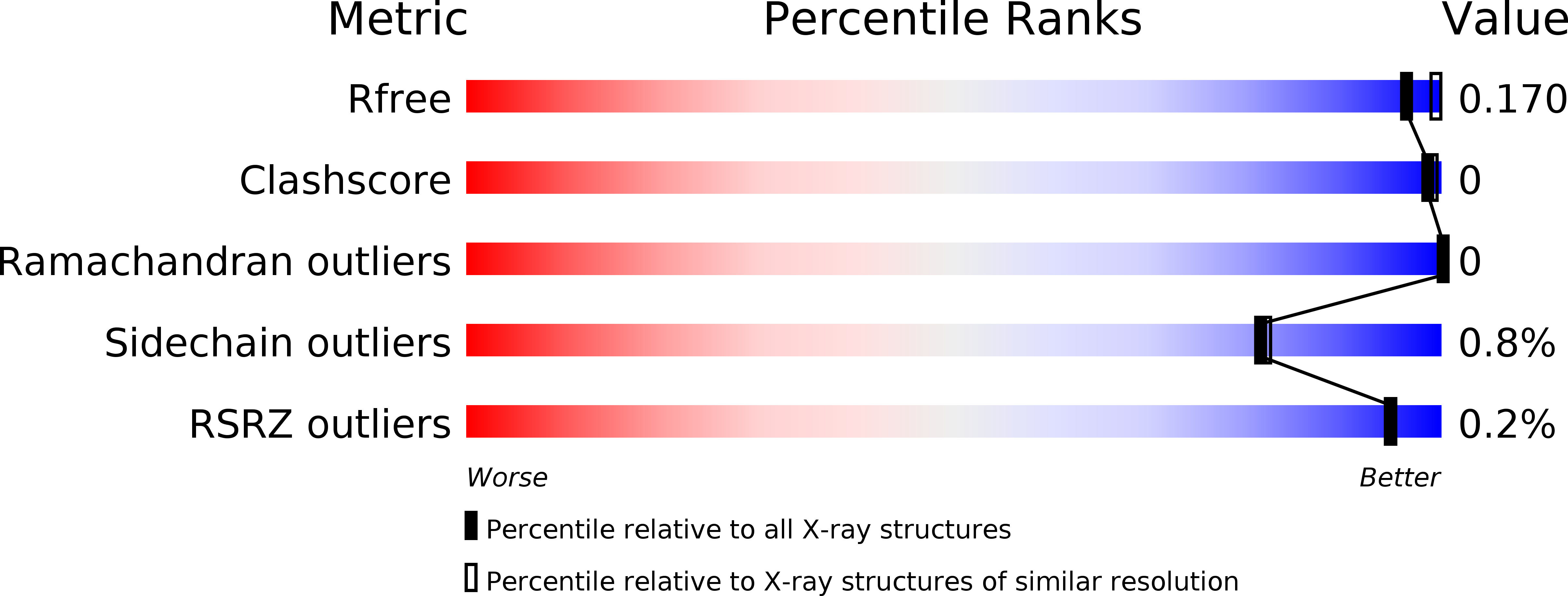
Macromolecular Entities
Structures with similar UniProt ID
Protein Blast
Polymer Type:polypeptide(L)
Molecule:Ethanolamine utilization protein EutL
Chain IDs:A, B, C
Chain Length:225
Number of Molecules:3
Biological Source:Clostridium perfringens E str. JGS1987
Ligand Molecules
Primary Citation
An allosteric model for control of pore opening by substrate binding in the EutL microcompartment shell protein.
Protein Sci. 24 956 975 (2015)
PMID: 25752492 DOI: 10.1002/pro.2672

Abstact

The ethanolamine utilization (Eut) microcompartment is a protein-based metabolic organelle that is strongly associated with pathogenesis in bacteria that inhabit the human gut. The exterior shell of this elaborate protein complex is composed from a few thousand copies of BMC-domain shell proteins, which form a semi-permeable diffusion barrier that provides the interior enzymes with substrates and cofactors while simultaneously retaining metabolic intermediates. The ability of this protein shell to regulate passage of substrate and cofactor molecules is critical for microcompartment function, but the details of how this diffusion barrier can allow the passage of large cofactors while still retaining small intermediates remain unclear. Previous work has revealed two conformations of the EutL shell protein, providing substantial evidence for a gated pore that might allow the passage of large cofactors. Here we report structural and biophysical evidence to show that ethanolamine, the substrate of the Eut microcompartment, acts as a negative allosteric regulator of EutL pore opening. Specifically, a series of X-ray crystal structures of EutL from Clostridium perfringens, along with equilibrium binding studies, reveal that ethanolamine binds to EutL at a site that exists in the closed-pore conformation and which is incompatible with opening of the large pore for cofactor transport. The allosteric mechanism we propose is consistent with the cofactor requirements of the Eut microcompartment, leading to a new model for EutL function. Furthermore, our results suggest the possibility of redox modulation of the allosteric mechanism, opening potentially new lines of investigation.

Legend

Protein

Chemical

Disease

Primary Citation of related structures
Feedback Form
Name
Email
Institute
Feedback