4RUM image
Deposition Date 2014-11-21
Release Date 2015-04-08
Last Version Date 2024-02-28
Entry Detail
PDB ID:
4RUM
Keywords:
Title:
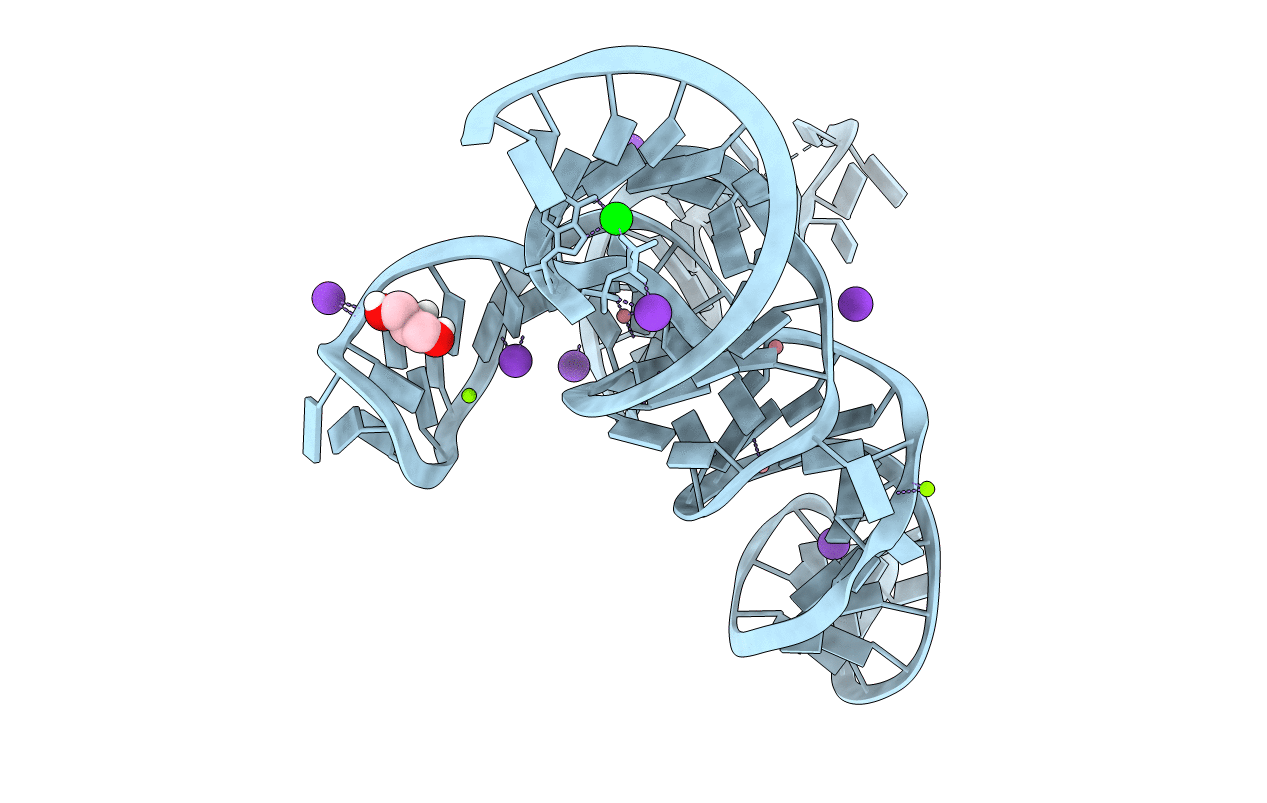
Crystal structure of the NiCo transition-metal riboswitch bound to cobalt
Biological Source:
Source Organism:
Synthetic (Taxon ID: 32630)
Method Details:
Experimental Method:
Resolution:
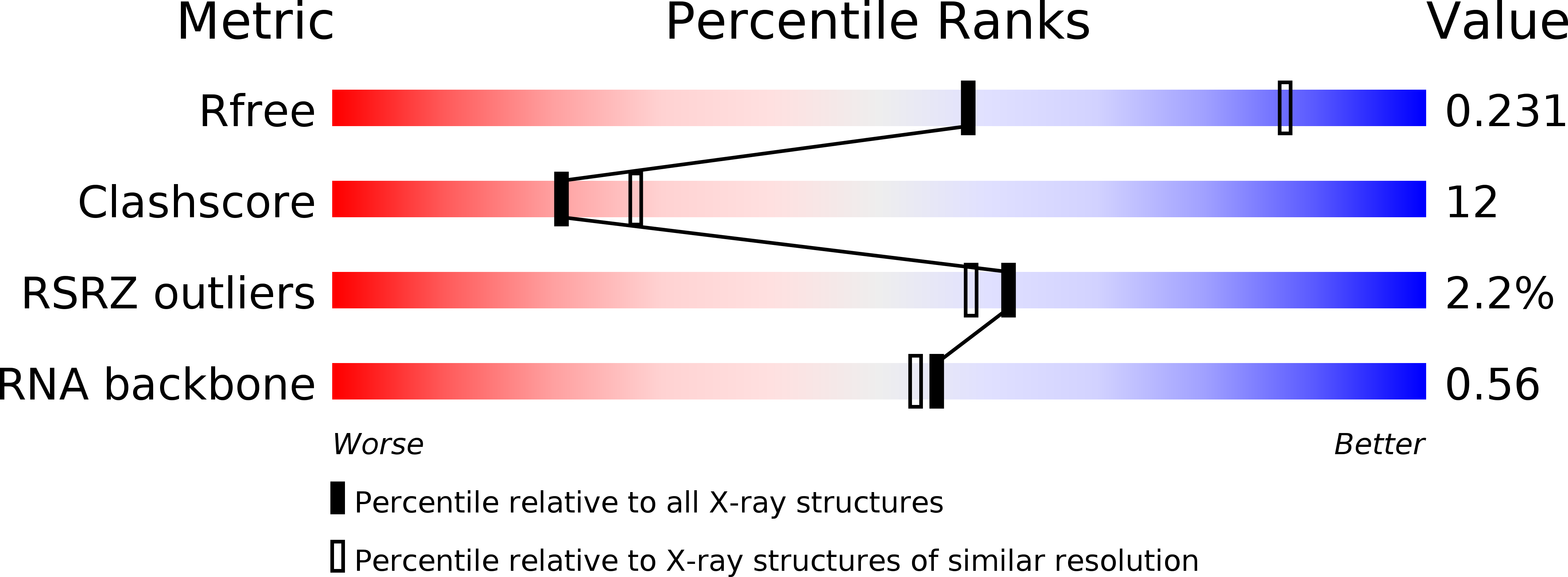
2.64 Å
R-Value Free:
0.23
R-Value Work:
0.19
R-Value Observed:
0.19
Space Group:
I 4 2 2
Macromolecular Entities
Polymer Type:polyribonucleotide
Molecule:NiCo riboswitch RNA
Chain IDs:A
Chain Length:94
Number of Molecules:1
Biological Source:Synthetic
Modified Residue
Compound ID Chain ID Parent Comp ID Details 2D Image
GTP A G GUANOSINE-5'-TRIPHOSPHATE
Primary Citation
Bacterial riboswitches cooperatively bind Ni(2+) or Co(2+) ions and control expression of heavy metal transporters.
Mol.Cell 57 1088 1098 (2015)
PMID: 25794617 DOI: 10.1016/j.molcel.2015.02.009

Abstact

Bacteria regularly encounter widely varying metal concentrations in their surrounding environment. As metals become depleted or, conversely, accrue to toxicity, microbes will activate cellular responses that act to maintain metal homeostasis. A suite of metal-sensing regulatory ("metalloregulatory") proteins orchestrate these responses by allosterically coupling the selective binding of target metals to the activity of DNA-binding domains. However, we report here the discovery, validation, and structural details of a widespread class of riboswitch RNAs, whose members selectively and tightly bind the low-abundance transition metals, Ni(2+) and Co(2+). These riboswitches bind metal cooperatively, and with affinities in the low micromolar range. The structure of a Co(2+)-bound RNA reveals a network of molecular contacts that explains how it achieves cooperative binding between adjacent sites. These findings reveal that bacteria have evolved to utilize highly selective metalloregulatory riboswitches, in addition to metalloregulatory proteins, for detecting and responding to toxic levels of heavy metals.

Legend

Protein

Chemical

Disease

Primary Citation of related structures
Feedback Form
Name
Email
Institute
Feedback