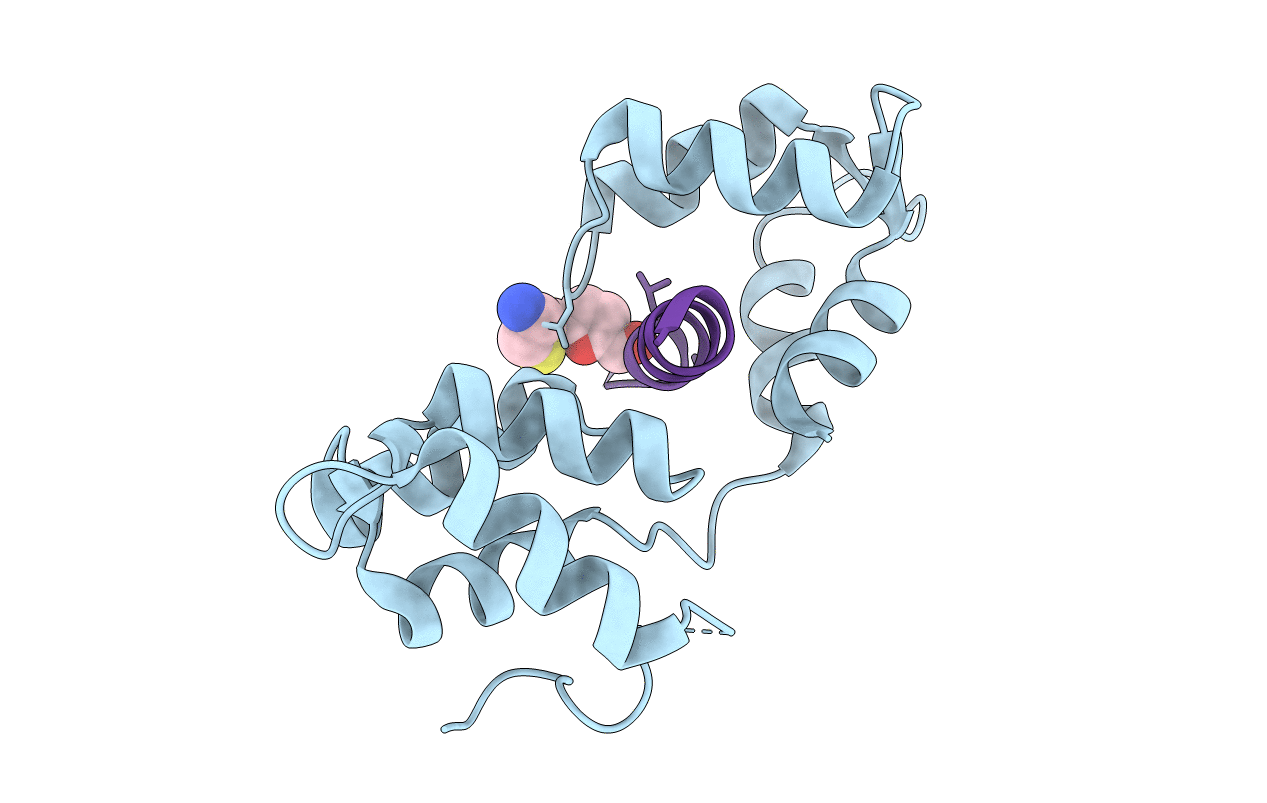
4R1E image
Deposition Date 2014-08-05
Release Date 2014-11-12
Last Version Date 2024-12-25
Entry Detail
PDB ID:
4R1E
Title:
Crystal Structure of MTIP from Plasmodium falciparum in complex with a peptide-fragment chimera
Biological Source:
Source Organism:
Host Organism:
Method Details:
Experimental Method:
Resolution:
1.98 Å
R-Value Free:
0.22
R-Value Work:
0.19
R-Value Observed:
0.19
Space Group:
P 21 21 21

Macromolecular Entities
Structures with similar UniProt ID
Protein Blast
Polymer Type:polypeptide(L)
Molecule:Myosin A tail domain interacting protein
Gene (Uniprot):PF3D7_1246400
Chain IDs:A
Chain Length:145
Number of Molecules:1
Biological Source:Plasmodium falciparum
Structures with similar UniProt ID
Protein Blast
Polymer Type:polypeptide(L)
Molecule:Myosin-A
Gene (Uniprot):MyoA
Chain IDs:B
Chain Length:15
Number of Molecules:1
Biological Source:Plasmodium falciparum Isolate 3D7
Ligand Molecules
Primary Citation
Targeting a Dynamic Protein-Protein Interaction: Fragment Screening against the Malaria Myosin A Motor Complex.
Chemmedchem 10 134 143 (2015)
PMID: 25367834 DOI: 10.1002/cmdc.201402357

Abstact

Motility is a vital feature of the complex life cycle of Plasmodium falciparum, the apicomplexan parasite that causes human malaria. Processes such as host cell invasion are thought to be powered by a conserved actomyosin motor (containing myosin A or myoA), correct localization of which is dependent on a tight interaction with myosin A tail domain interacting protein (MTIP) at the inner membrane of the parasite. Although disruption of this protein-protein interaction represents an attractive means to investigate the putative roles of myoA-based motility and to inhibit the parasitic life cycle, no small molecules have been identified that bind to MTIP. Furthermore, it has not been possible to obtain a crystal structure of the free protein, which is highly dynamic and unstable in the absence of its natural myoA tail partner. Herein we report the de novo identification of the first molecules that bind to and stabilize MTIP via a fragment-based, integrated biophysical approach and structural investigations to examine the binding modes of hit compounds. The challenges of targeting such a dynamic system with traditional fragment screening workflows are addressed throughout.

Legend

Protein

Chemical

Disease

Primary Citation of related structures
Feedback Form
Name
Email
Institute
Feedback