4QVC image
Deposition Date 2014-07-14
Release Date 2015-05-27
Last Version Date 2023-11-08
Entry Detail
PDB ID:
4QVC
Title:
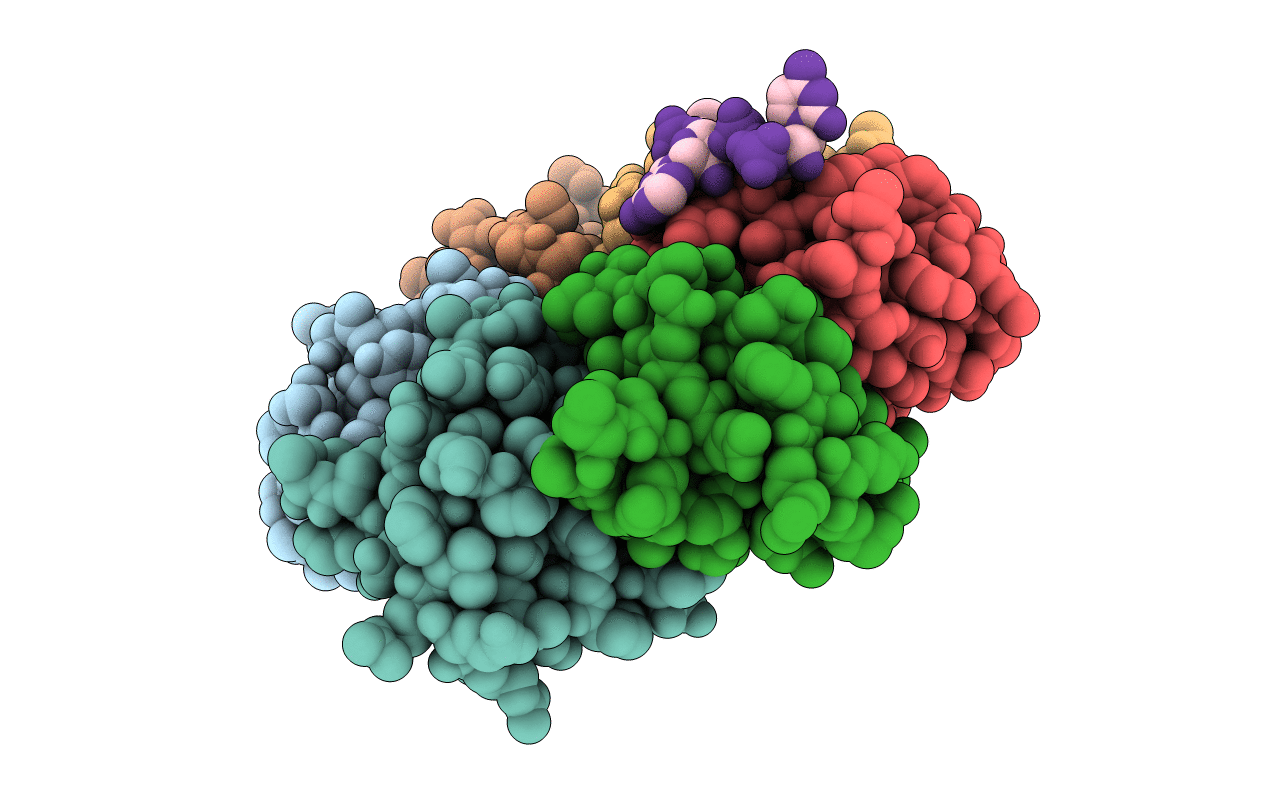
E.coli Hfq in complex with RNA Aus
Biological Source:
Source Organism:
Escherichia coli (Taxon ID: 562)
Host Organism:
Method Details:
Experimental Method:
Resolution:
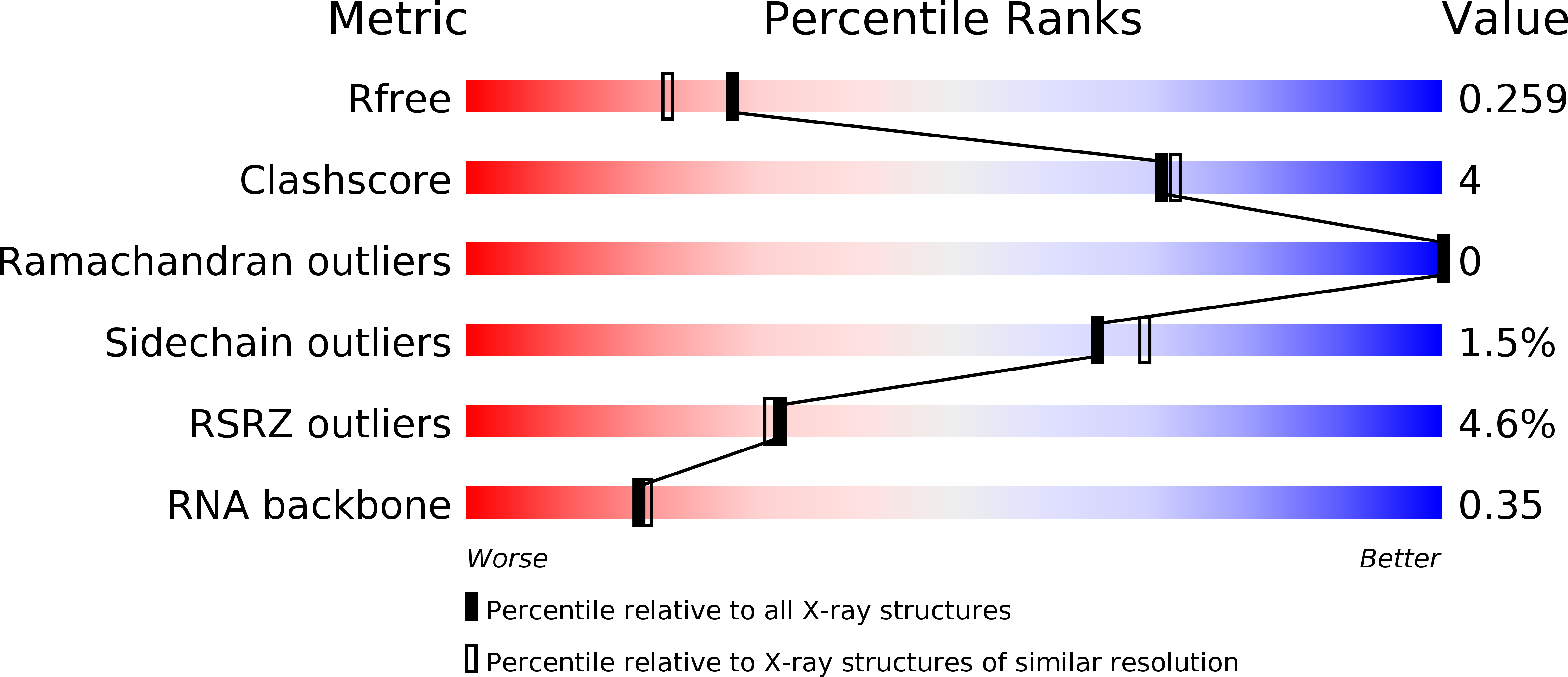
1.99 Å
R-Value Free:
0.25
R-Value Work:
0.21
R-Value Observed:
0.21
Space Group:
P 21 21 21
Macromolecular Entities
Structures with similar UniProt ID
Protein Blast
Polymer Type:polypeptide(L)
Molecule:RNA-binding protein Hfq
Gene (Uniprot):hfq
Chain IDs:A, B, C, D, E, F
Chain Length:65
Number of Molecules:6
Biological Source:Escherichia coli
Polymer Type:polyribonucleotide
Molecule:RNA (5'-R(*AP*U*AP*AP*CP*UP*A)-3')
Chain IDs:G
Chain Length:7
Number of Molecules:1
Biological Source:Escherichia coli
Primary Citation
Structural insights into the recognition of the internal A-rich linker from OxyS sRNA by Escherichia coli Hfq
Nucleic Acids Res. 43 2400 2411 (2015)
PMID: 25670676 DOI: 10.1093/nar/gkv072

Abstact

Small RNA OxyS is induced during oxidative stress in Escherichia coli and it is an Hfq-dependent negative regulator of mRNA translation. OxyS represses the translation of fhlA and rpoS mRNA, which encode the transcriptional activator and σ(s) subunit of RNA polymerase, respectively. However, little is known regarding how Hfq, an RNA chaperone, interacts with OxyS at the atomic level. Here, using fluorescence polarization and tryptophan fluorescence quenching assays, we verified that the A-rich linker region of OxyS sRNA binds Hfq at its distal side. We also report two crystal structures of Hfq in complex with A-rich RNA fragments from this linker region. Both of these RNA fragments bind to the distal side of Hfq and adopt a different conformation compared with those previously reported for the (A-R-N)n tripartite recognition motif. Furthermore, using fluorescence polarization, electrophoresis mobility shift assays and in vivo translation assays, we found that an Hfq mutant, N48A, increases the binding affinity of OxyS for Hfq in vitro but is defective in the negative regulation of fhlA translation in vivo, suggesting that the normal function of OxyS depends on the details of the interaction with Hfq that may be related to the rapid recycling of Hfq in the cell.

Legend

Protein

Chemical

Disease

Primary Citation of related structures
Feedback Form
Name
Email
Institute
Feedback