Planned Maintenance: Some services may turn out to be unavailable from 15th January, 2026 to 16th January, 2026. We apologize for the inconvenience!

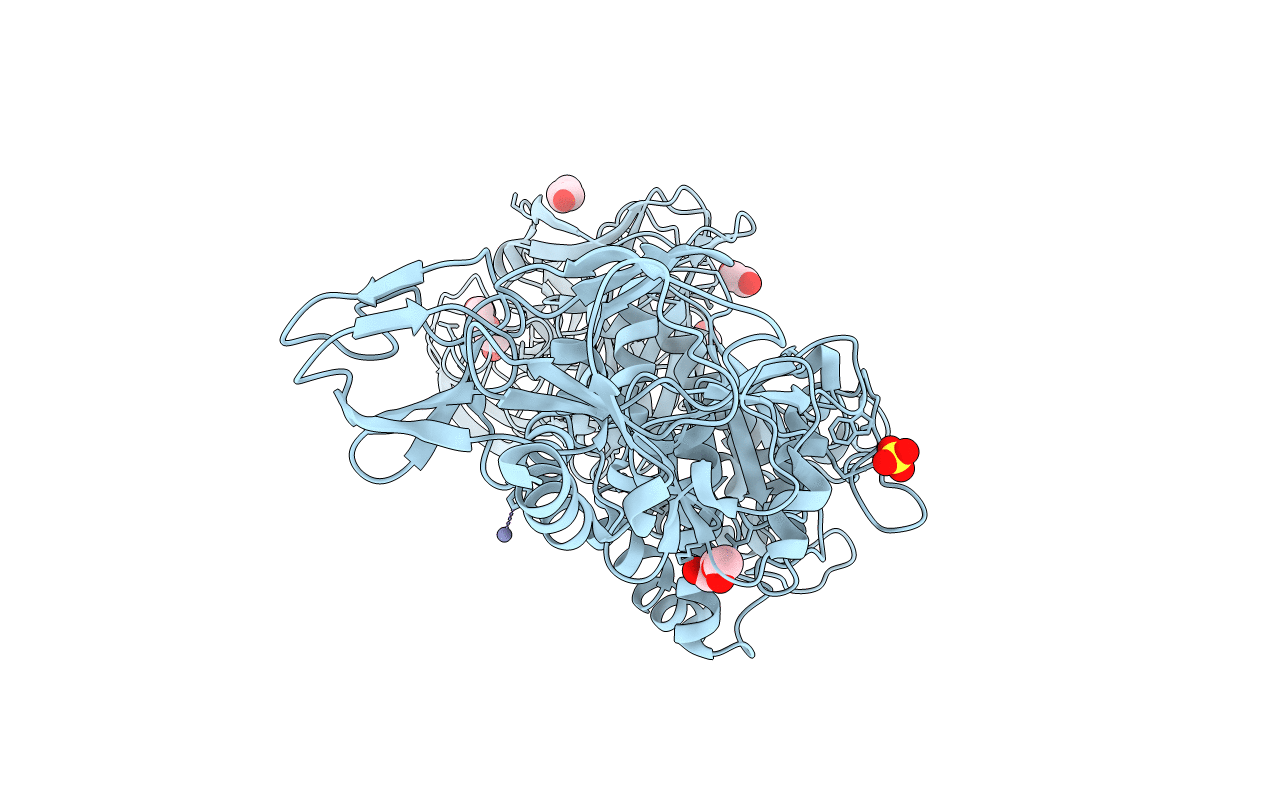
4QNL image
Deposition Date 2014-06-18
Release Date 2015-06-24
Last Version Date 2024-10-09
Entry Detail
PDB ID:
4QNL
Keywords:
Title:
Crystal structure of tail fiber protein gp63.1 from E. coli phage G7C
Biological Source:
Source Organism(s):
Expression System(s):
Method Details:
Experimental Method:
Resolution:
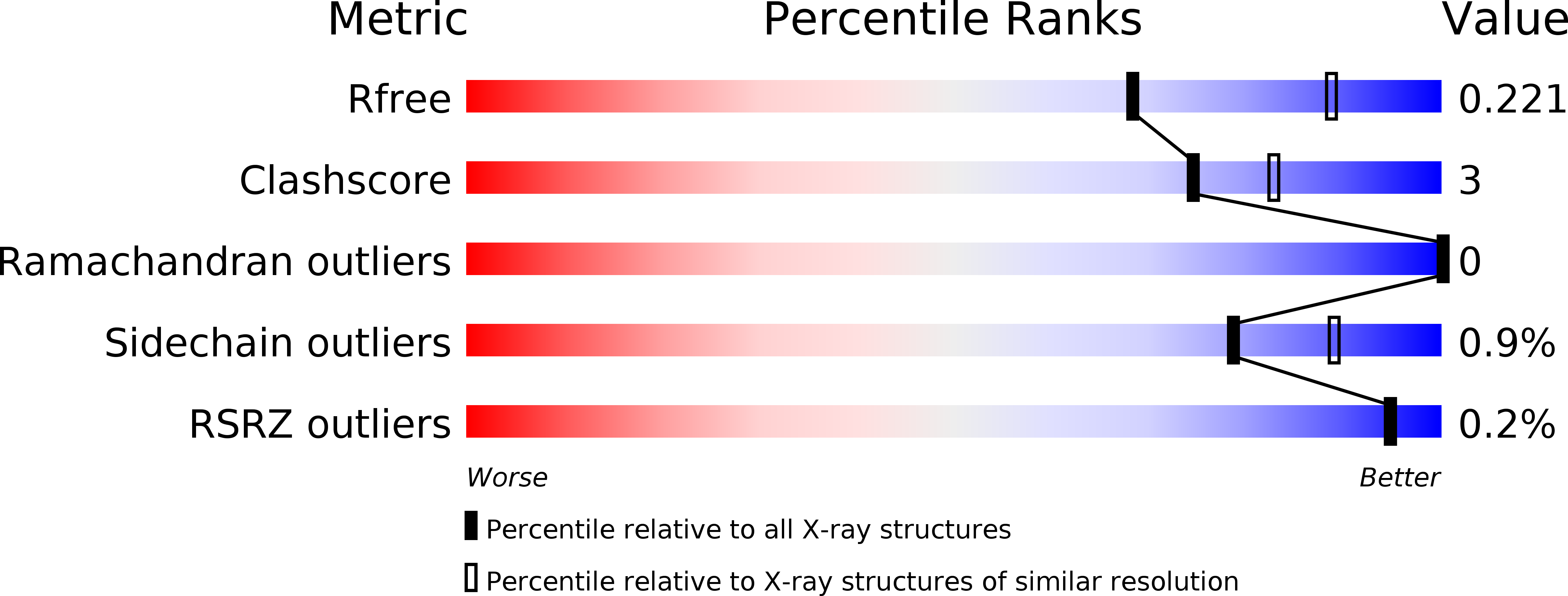
2.41 Å
R-Value Free:
0.22
R-Value Work:
0.15
R-Value Observed:
0.16
Space Group:
H 3 2
Macromolecular Entities
Structures with similar UniProt ID
Protein Blast
Polymer Type:polypeptide(L)
Molecule:Tail fiber protein
Gene (Uniprot):gp63.1
Chain IDs:A
Chain Length:859
Number of Molecules:1
Biological Source:Escherichia phage vB_EcoP_G7C
Modified Residue
Compound ID Chain ID Parent Comp ID Details 2D Image
MSE A MET SELENOMETHIONINE
Primary Citation
Function of bacteriophage G7C esterase tailspike in host cell adsorption.
Mol. Microbiol. 105 385 398 (2017)
PMID: 28513100 DOI: 10.1111/mmi.13710

Abstact

Bacteriophages recognize and bind to their hosts with the help of receptor-binding proteins (RBPs) that emanate from the phage particle in the form of fibers or tailspikes. RBPs show a great variability in their shapes, sizes, and location on the particle. Some RBPs are known to depolymerize surface polysaccharides of the host while others show no enzymatic activity. Here we report that both RBPs of podovirus G7C - tailspikes gp63.1 and gp66 - are essential for infection of its natural host bacterium E. coli 4s that populates the equine intestinal tract. We characterize the structure and function of gp63.1 and show that unlike any previously described RPB, gp63.1 deacetylates surface polysaccharides of E. coli 4s leaving the backbone of the polysaccharide intact. We demonstrate that gp63.1 and gp66 form a stable complex, in which the N-terminal part of gp66 serves as an attachment site for gp63.1 and anchors the gp63.1-gp66 complex to the G7C tail. The esterase domain of gp63.1 as well as domains mediating the gp63.1-gp66 interaction is widespread among all three families of tailed bacteriophages.

Legend

Protein

Chemical

Disease

Primary Citation of related structures
Feedback Form
Name
Email
Institute
Feedback