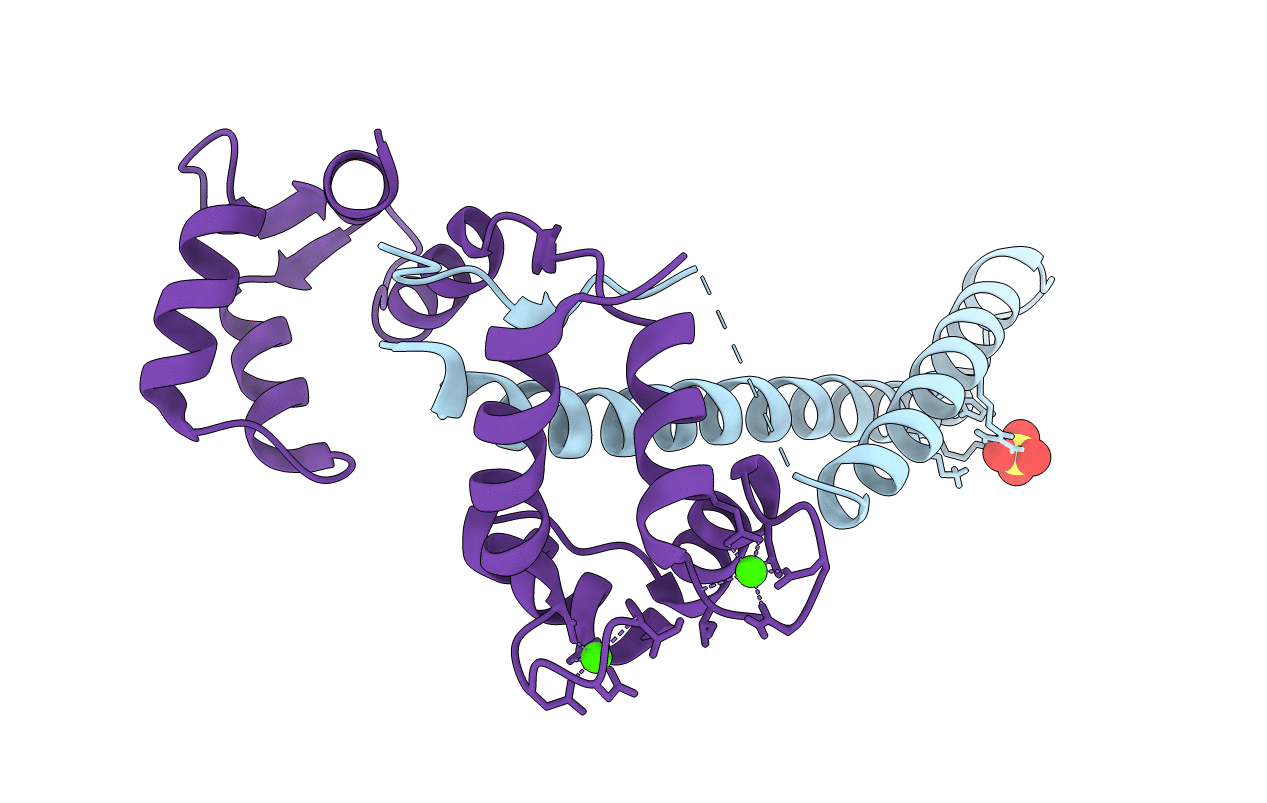
4QNH image
Deposition Date 2014-06-17
Release Date 2014-08-06
Last Version Date 2024-02-28
Entry Detail
PDB ID:
4QNH
Title:
Calcium-calmodulin (T79D) complexed with the calmodulin binding domain from a small conductance potassium channel SK2-a
Biological Source:
Source Organism:
Host Organism:
Method Details:
Experimental Method:
Resolution:
2.02 Å
R-Value Free:
0.23
R-Value Work:
0.18
R-Value Observed:
0.18
Space Group:
C 1 2 1

Macromolecular Entities
Structures with similar UniProt ID
Protein Blast
Polymer Type:polypeptide(L)
Molecule:Small conductance calcium-activated potassium channel protein 2
Gene (Uniprot):Kcnn2
Chain IDs:A (auth: B)
Chain Length:102
Number of Molecules:1
Biological Source:Rattus norvegicus
Polymer Type:polypeptide(L)
Molecule:Calmodulin
Mutagens:T79D
Chain IDs:B (auth: R)
Chain Length:149
Number of Molecules:1
Biological Source:Rattus norvegicus
Primary Citation
Selective phosphorylation modulates the PIP2 sensitivity of the CaM-SK channel complex.
Nat.Chem.Biol. 10 753 759 (2014)
PMID: 25108821 DOI: 10.1038/nchembio.1592

Abstact

Phosphatidylinositol bisphosphate (PIP2) regulates the activities of many membrane proteins, including ion channels, through direct interactions. However, the affinity of PIP2 is so high for some channel proteins that its physiological role as a modulator has been questioned. Here we show that PIP2 is a key cofactor for activation of small conductance Ca2+-activated potassium channels (SKs) by Ca(2+)-bound calmodulin (CaM). Removal of the endogenous PIP2 inhibits SKs. The PIP2-binding site resides at the interface of CaM and the SK C terminus. We further demonstrate that the affinity of PIP2 for its target proteins can be regulated by cellular signaling. Phosphorylation of CaM T79, located adjacent to the PIP2-binding site, by casein kinase 2 reduces the affinity of PIP2 for the CaM-SK channel complex by altering the dynamic interactions among amino acid residues surrounding the PIP2-binding site. This effect of CaM phosphorylation promotes greater channel inhibition by G protein-mediated hydrolysis of PIP2.

Legend

Protein

Chemical

Disease

Primary Citation of related structures
Feedback Form
Name
Email
Institute
Feedback