4QJV image
Deposition Date 2014-06-05
Release Date 2014-10-08
Last Version Date 2024-03-20
Entry Detail
PDB ID:
4QJV
Keywords:
Title:
The X-ray crystal structure of Rpo3/Rpo11 heterodimer of euryarchaeal RNA polymerase from Thermococcus kodakarensis
Biological Source:
Source Organism:
Host Organism:
Method Details:
Experimental Method:
Resolution:
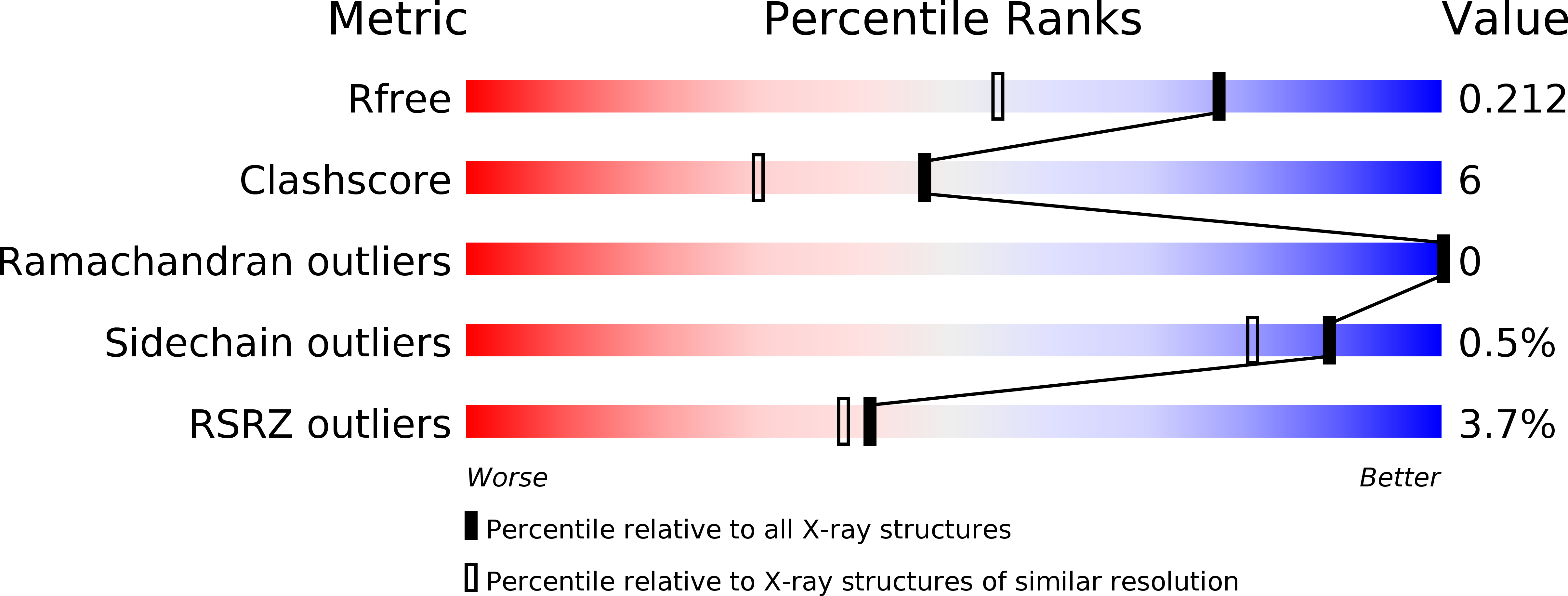
1.60 Å
R-Value Free:
0.21
R-Value Work:
0.17
R-Value Observed:
0.17
Space Group:
P 21 21 21
Macromolecular Entities
Structures with similar UniProt ID
Protein Blast
Polymer Type:polypeptide(L)
Molecule:DNA-directed RNA polymerase subunit D
Gene (Uniprot):rpo3
Chain IDs:A, C
Chain Length:259
Number of Molecules:2
Biological Source:Thermococcus kodakarensis
Structures with similar UniProt ID
Protein Blast
Polymer Type:polypeptide(L)
Molecule:DNA-directed RNA polymerase subunit L
Gene (Uniprot):rpo11
Chain IDs:B, D
Chain Length:94
Number of Molecules:2
Biological Source:Thermococcus kodakarensis
Ligand Molecules
Primary Citation
The X-ray crystal structure of the euryarchaeal RNA polymerase in an open-clamp configuration
Nat Commun 5 5132 5132 (2014)
PMID: 25311937 DOI: 10.1038/ncomms6132

Abstact

The archaeal transcription apparatus is closely related to the eukaryotic RNA polymerase II (Pol II) system. Archaeal RNA polymerase (RNAP) and Pol II evolved from a common ancestral structure and the euryarchaeal RNAP is the simplest member of the extant archaeal-eukaryotic RNAP family. Here we report the first crystal structure of euryarchaeal RNAP from Thermococcus kodakarensis (Tko). This structure reveals that the clamp domain is able to swing away from the main body of RNAP in the presence of the Rpo4/Rpo7 stalk by coordinated movements of these domains. More detailed structure-function analysis of yeast Pol II and Tko RNAP identifies structural additions to Pol II that correspond to the binding sites of Pol II-specific general transcription factors including TFIIF, TFIIH and Mediator. Such comparisons provide a framework for dissecting interactions between RNAP and these factors during formation of the pre-initiation complex.

Legend

Protein

Chemical

Disease

Primary Citation of related structures
Feedback Form
Name
Email
Institute
Feedback