4QBT image
Deposition Date 2014-05-08
Release Date 2014-12-17
Last Version Date 2023-09-20
Entry Detail
PDB ID:
4QBT
Keywords:
Title:
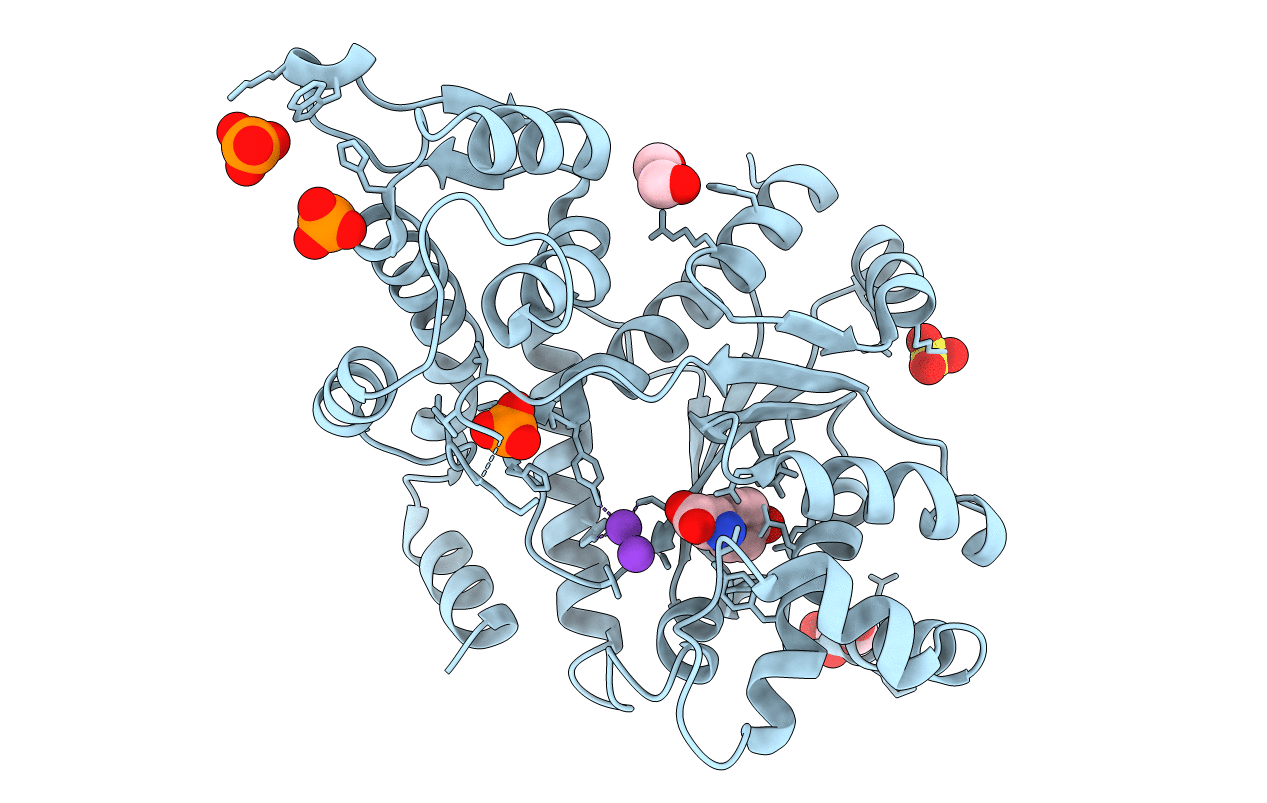
Crystal structure of tyrosine bound human tyrosyl tRNA synthetase
Biological Source:
Source Organism:
Homo sapiens (Taxon ID: 9606)
Host Organism:
Method Details:
Experimental Method:
Resolution:
2.10 Å
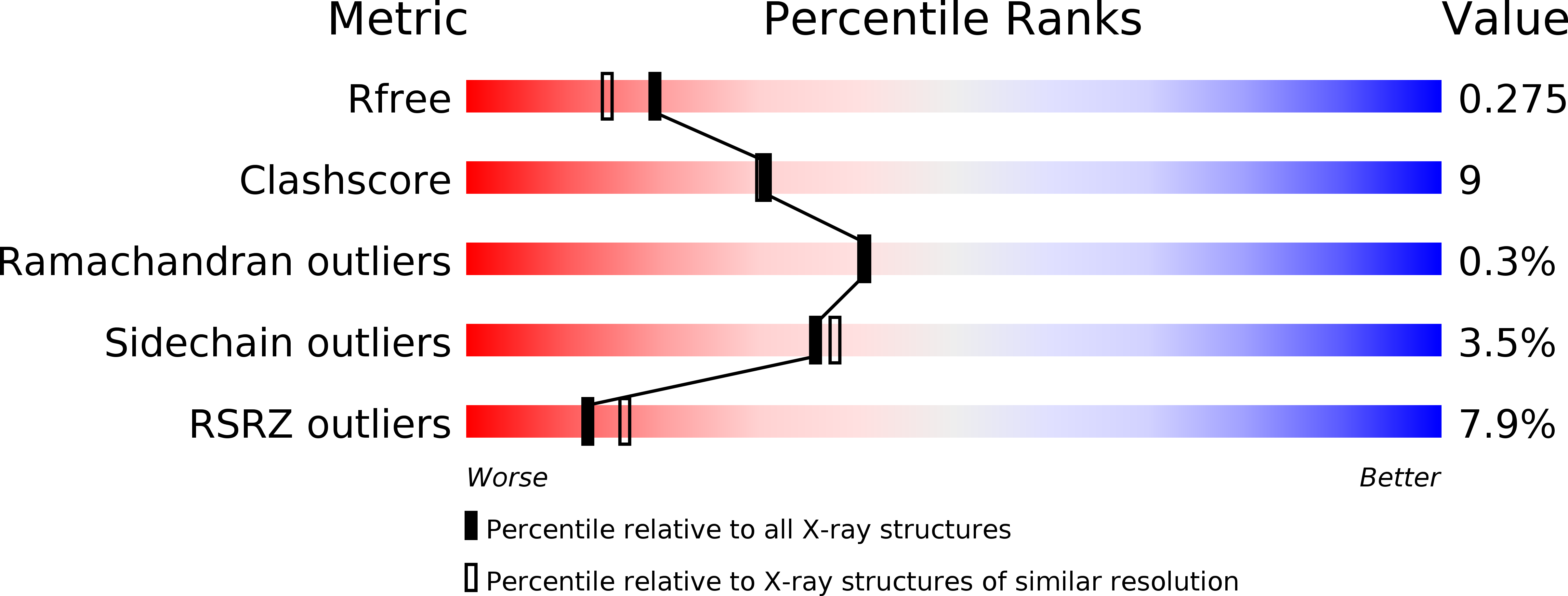
R-Value Free:
0.26
R-Value Work:
0.21
R-Value Observed:
0.21
Space Group:
P 21 21 2
Macromolecular Entities
Structures with similar UniProt ID
Protein Blast
Polymer Type:polypeptide(L)
Molecule:Tyrosine--tRNA ligase, cytoplasmic
Gene (Uniprot):YARS1
Chain IDs:A
Chain Length:372
Number of Molecules:1
Biological Source:Homo sapiens
Primary Citation
A human tRNA synthetase is a potent PARP1-activating effector target for resveratrol.
Nature 519 370 373 (2014)
PMID: 25533949 DOI: 10.1038/nature14028

Abstact

Resveratrol is reported to extend lifespan and provide cardio-neuro-protective, anti-diabetic, and anti-cancer effects by initiating a stress response that induces survival genes. Because human tyrosyl transfer-RNA (tRNA) synthetase (TyrRS) translocates to the nucleus under stress conditions, we considered the possibility that the tyrosine-like phenolic ring of resveratrol might fit into the active site pocket to effect a nuclear role. Here we present a 2.1 Å co-crystal structure of resveratrol bound to the active site of TyrRS. Resveratrol nullifies the catalytic activity and redirects TyrRS to a nuclear function, stimulating NAD(+)-dependent auto-poly-ADP-ribosylation of poly(ADP-ribose) polymerase 1 (PARP1). Downstream activation of key stress signalling pathways are causally connected to TyrRS-PARP1-NAD(+) collaboration. This collaboration is also demonstrated in the mouse, and is specifically blocked in vivo by a resveratrol-displacing tyrosyl adenylate analogue. In contrast to functionally diverse tRNA synthetase catalytic nulls created by alternative splicing events that ablate active sites, here a non-spliced TyrRS catalytic null reveals a new PARP1- and NAD(+)-dependent dimension to the physiological mechanism of resveratrol.

Legend

Protein

Chemical

Disease

Primary Citation of related structures
Feedback Form
Name
Email
Institute
Feedback