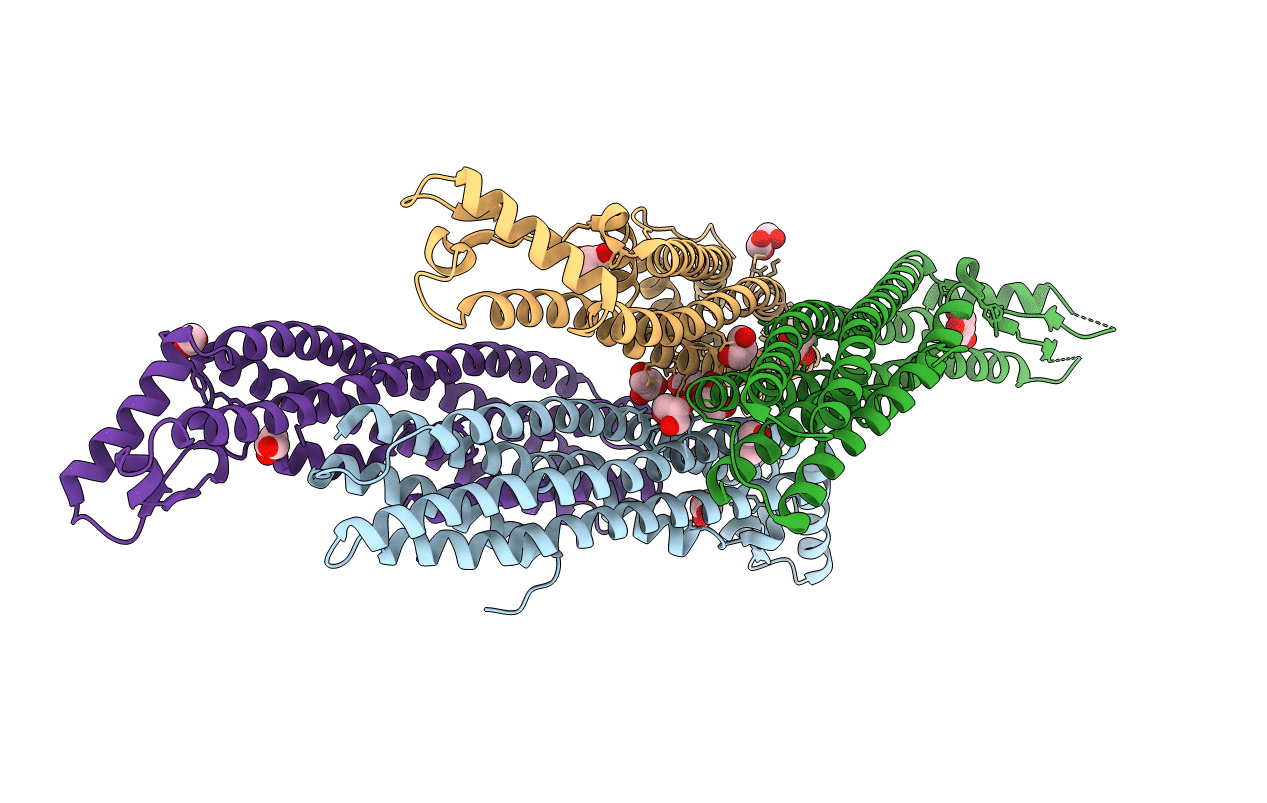
4PHQ image
Deposition Date 2014-05-06
Release Date 2014-09-24
Last Version Date 2024-11-20
Entry Detail
PDB ID:
4PHQ
Keywords:
Title:
ClyA CC6/264 ox (6-303)
Biological Source:
Source Organism:
Method Details:
Experimental Method:
Resolution:
1.94 Å
R-Value Free:
0.21
R-Value Work:
0.17
R-Value Observed:
0.17
Space Group:
C 1 2 1
Macromolecular Entities
Structures with similar UniProt ID
Protein Blast
Polymer Type:polypeptide(L)
Molecule:Hemolysin E, chromosomal
Gene (Uniprot):hlyE
Mutagens:delta 1-5, A6C, V264C, C87A, C285A
Chain IDs:A, B, C, D
Chain Length:298
Number of Molecules:4
Biological Source:Escherichia coli
Primary Citation
Characterization of Variants of the Pore-Forming Toxin ClyA from Escherichia coli Controlled by a Redox Switch.
Biochemistry 53 6357 6369 (2014)
PMID: 25222267 DOI: 10.1021/bi5007578

Abstact

The α-pore-forming toxin Cytolysin A (ClyA) is responsible for the hemolytic phenotype of several Escherichia coli and Salmonella enterica strains. ClyA is a soluble, 34 kDa monomer that assembles into a dodecameric pore complex in the presence of membranes or detergent. The comparison of the X-ray structures of monomeric ClyA and the ClyA protomer in the pore complex revealed one of the largest conformational transitions observed so far in proteins, involving the structural rearrangement of more than half of all residues, which is consistent with the finding that conversion from the monomer to the assembly competent protomer is rate-limiting for pore assembly. Here, we introduced artificial disulfide bonds at two distinct sites into the ClyA monomer that both prevent a specific structural rearrangement required for protomer formation. Using electron microscopy and hemolytic activity assays, we show that the engineered disulfides indeed trap these ClyA variants in an assembly incompetent state. Assembly of the variants into functional pore complexes can be completely recovered by disulfide reduction. The assembly kinetics of the ClyA variants recorded with circular dichroism and fluorescence spectroscopy revealed the same mechanism of protomer formation that was observed for wild-type ClyA, proceeding via an intermediate with decreased secondary structure content.

Legend

Protein

Chemical

Disease

Primary Citation of related structures
Feedback Form
Name
Email
Institute
Feedback