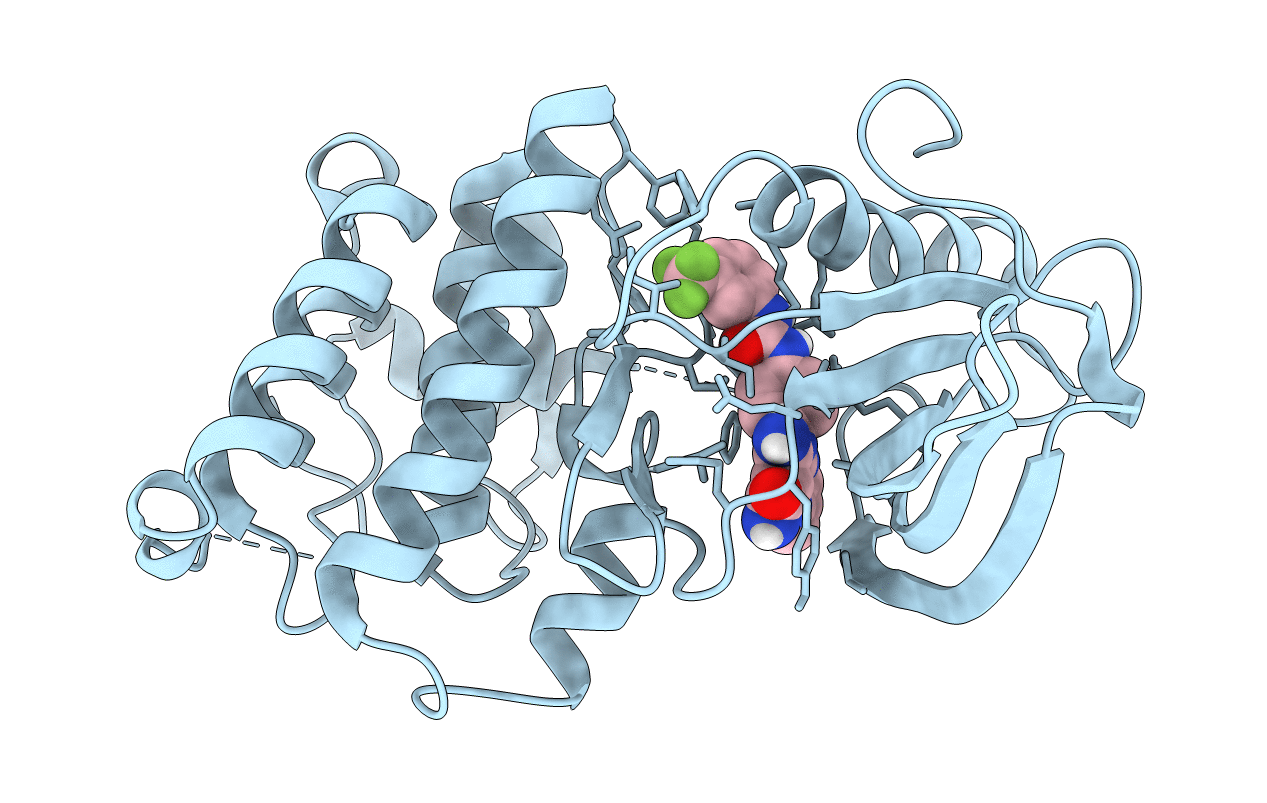
4P5Z image
Deposition Date 2014-03-20
Release Date 2014-08-13
Last Version Date 2023-12-20
Entry Detail
PDB ID:
4P5Z
Keywords:
Title:
Human EphA3 Kinase domain in complex with quinoxaline derivatives
Biological Source:
Source Organism:
Homo sapiens (Taxon ID: 9606)
Method Details:
Experimental Method:
Resolution:
2.00 Å
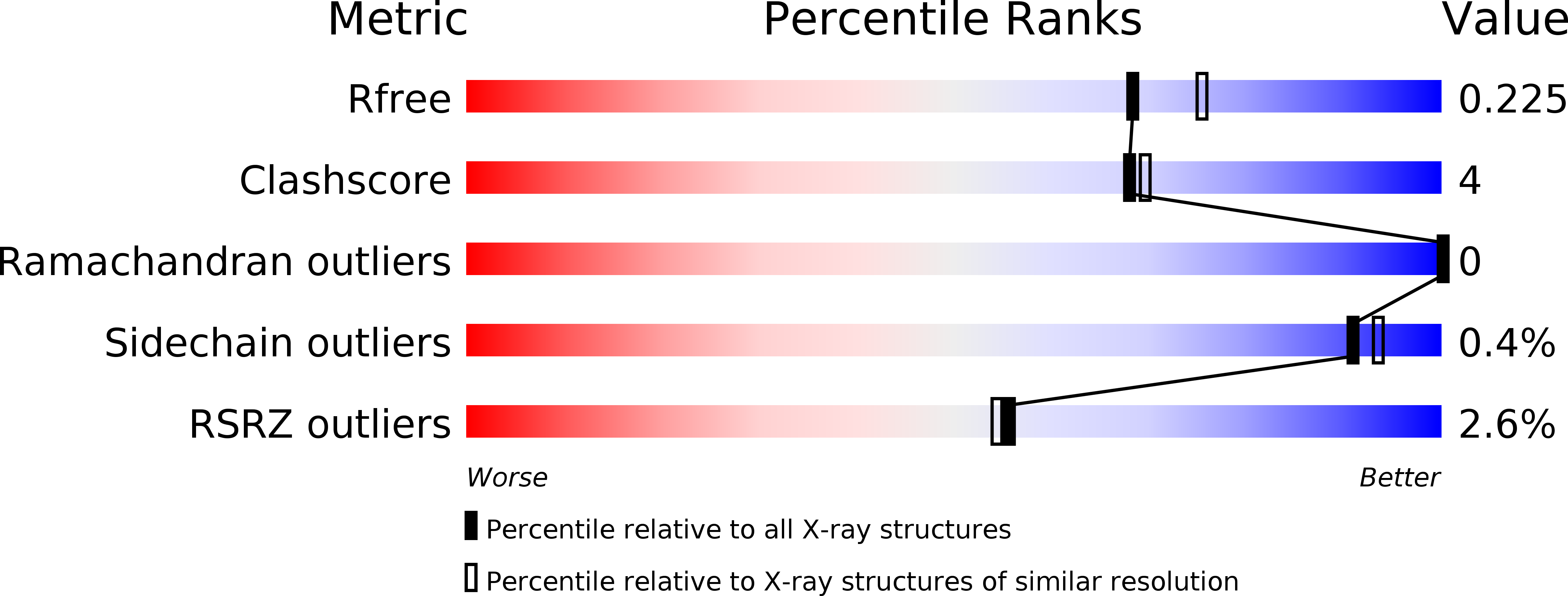
R-Value Free:
0.21
R-Value Work:
0.17
R-Value Observed:
0.18
Space Group:
P 1 21 1
Macromolecular Entities
Structures with similar UniProt ID
Protein Blast
Polymer Type:polypeptide(L)
Molecule:Ephrin type-A receptor 3
Gene (Uniprot):EPHA3
Chain IDs:A
Chain Length:361
Number of Molecules:1
Biological Source:Homo sapiens
Ligand Molecules
Primary Citation
Pyrrolo[3,2-b]quinoxaline Derivatives as Types I1/2 and II Eph Tyrosine Kinase Inhibitors: Structure-Based Design, Synthesis, and in Vivo Validation.
J.Med.Chem. 57 6834 ? (2014)
PMID: 25076195 DOI: 10.1021/jm5009242

Abstact

The X-ray crystal structures of the catalytic domain of the EphA3 tyrosine kinase in complex with two type I inhibitors previously discovered in silico (compounds A and B) were used to design type I1/2 and II inhibitors. Chemical synthesis of about 25 derivatives culminated in the discovery of compounds 11d (type I1/2), 7b, and 7g (both of type II), which have low-nanomolar affinity for Eph kinases in vitro and a good selectivity profile on a panel of 453 human kinases (395 nonmutant). Surface plasmon resonance measurements show a very slow unbinding rate (1/115 min) for inhibitor 7m. Slow dissociation is consistent with a type II binding mode in which the hydrophobic moiety (trifluoromethyl-benzene) of the inhibitor is deeply buried in a cavity originating from the displacement of the Phe side chain of the so-called DFG motif as observed in the crystal structure of compound 7m. The inhibitor 11d displayed good in vivo efficacy in a human breast cancer xenograft.

Legend

Protein

Chemical

Disease

Primary Citation of related structures
Feedback Form
Name
Email
Institute
Feedback