4P5X image
Deposition Date 2014-03-20
Release Date 2014-11-26
Last Version Date 2023-12-20
Entry Detail
PDB ID:
4P5X
Title:
Structure of the N-terminal domain of the human mitochondrial aspartate/glutamate carrier Aralar in the calcium-bound state
Biological Source:
Source Organism:
Homo sapiens (Taxon ID: 9606)
Method Details:
Experimental Method:
Resolution:
2.26 Å
R-Value Free:
0.27
R-Value Work:
0.23
R-Value Observed:
0.23
Space Group:
P 31 2 1
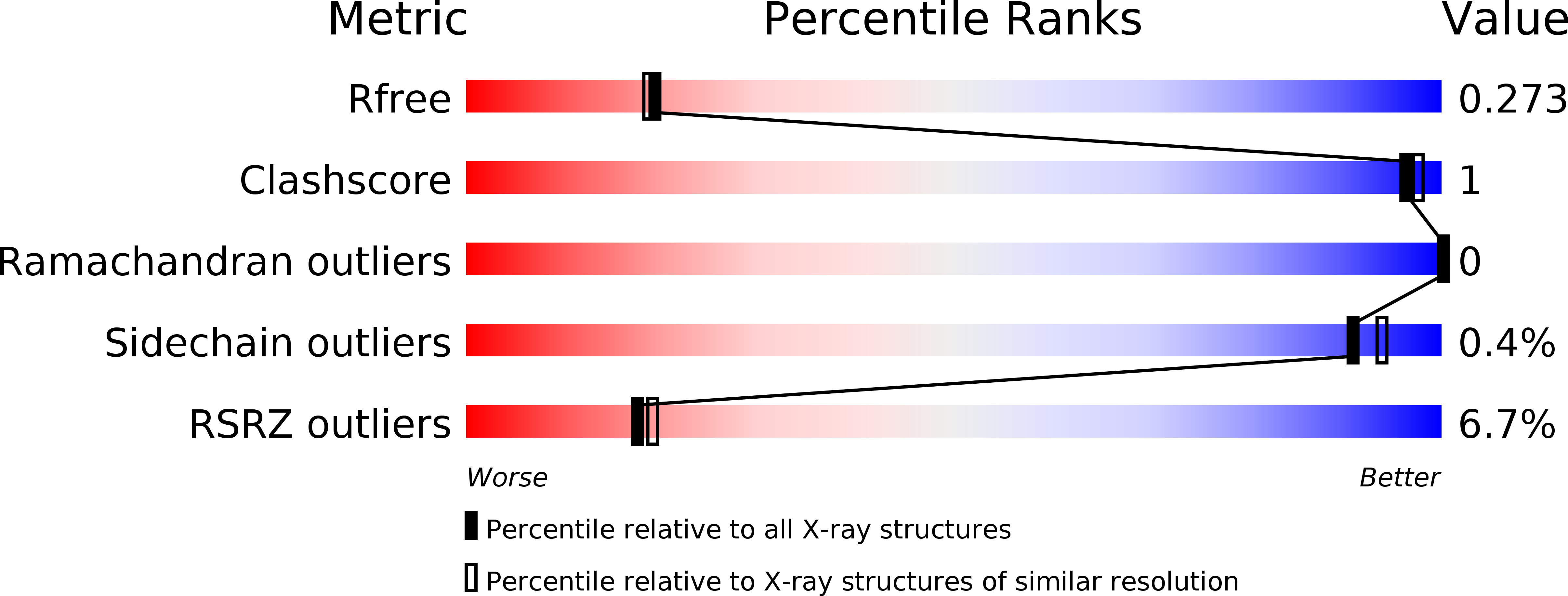
Macromolecular Entities
Structures with similar UniProt ID
Protein Blast
Polymer Type:polypeptide(L)
Molecule:Calcium-binding mitochondrial carrier protein Aralar1
Gene (Uniprot):SLC25A12
Chain IDs:A
Chain Length:315
Number of Molecules:1
Biological Source:Homo sapiens
Ligand Molecules
Primary Citation
Calcium-induced conformational changes of the regulatory domain of human mitochondrial aspartate/glutamate carriers.
Nat Commun 5 5491 5491 (2014)
PMID: 25410934 DOI: 10.1038/ncomms6491

Abstact

The transport activity of human mitochondrial aspartate/glutamate carriers is central to the malate-aspartate shuttle, urea cycle, gluconeogenesis and myelin synthesis. They have a unique three-domain structure, comprising a calcium-regulated N-terminal domain with eight EF-hands, a mitochondrial carrier domain, and a C-terminal domain. Here we present the calcium-bound and calcium-free structures of the N- and C-terminal domains, elucidating the mechanism of calcium regulation. Unexpectedly, EF-hands 4-8 are involved in dimerization of the carrier and form a static unit, whereas EF-hands 1-3 form a calcium-responsive mobile unit. On calcium binding, an amphipathic helix of the C-terminal domain binds to the N-terminal domain, opening a vestibule. In the absence of calcium, the mobile unit closes the vestibule. Opening and closing of the vestibule might regulate access of substrates to the carrier domain, which is involved in their transport. These structures provide a framework for understanding cases of the mitochondrial disease citrin deficiency.

Legend

Protein

Chemical

Disease

Primary Citation of related structures
Feedback Form
Name
Email
Institute
Feedback