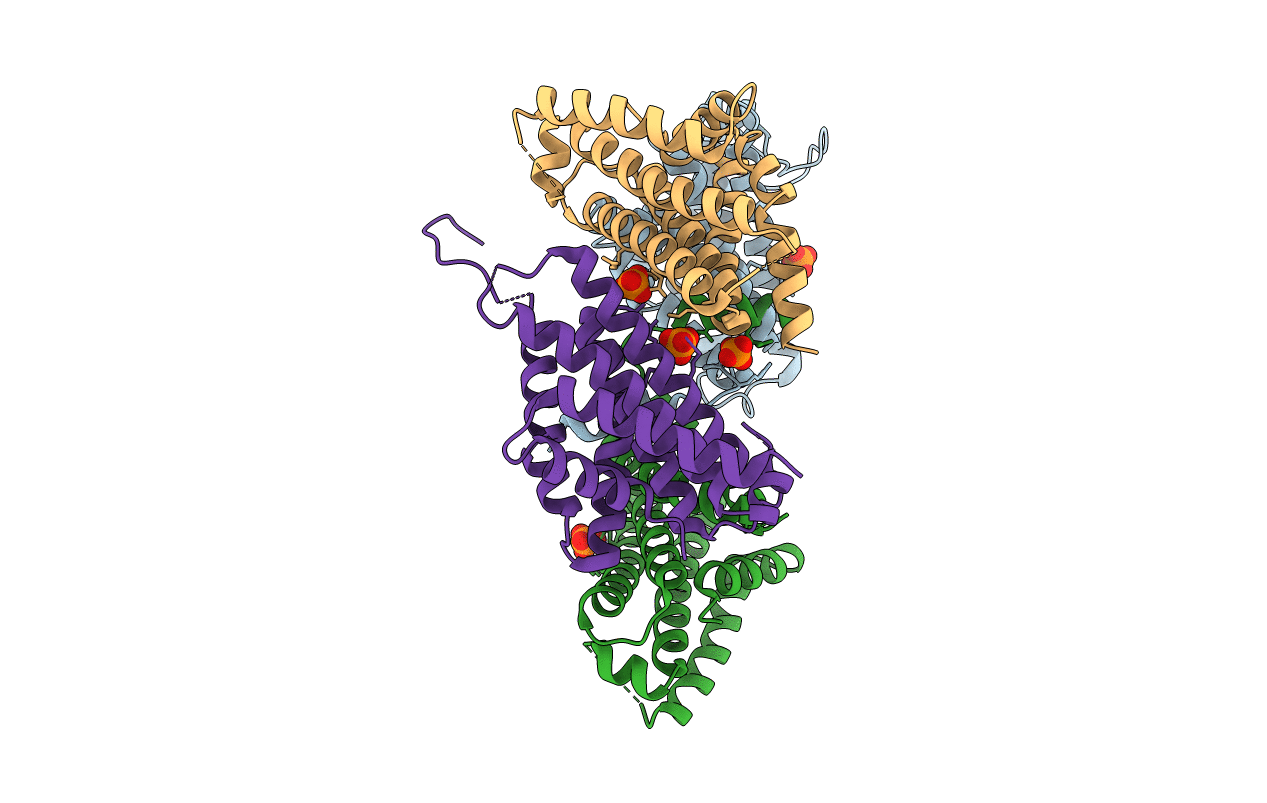
4P3G image
Deposition Date 2014-03-07
Release Date 2014-04-16
Last Version Date 2024-11-13
Entry Detail
PDB ID:
4P3G
Title:
Structure of the SRP68-RBD from Chaetomium thermophilum
Biological Source:
Source Organism:
Host Organism:
Method Details:
Experimental Method:
Resolution:
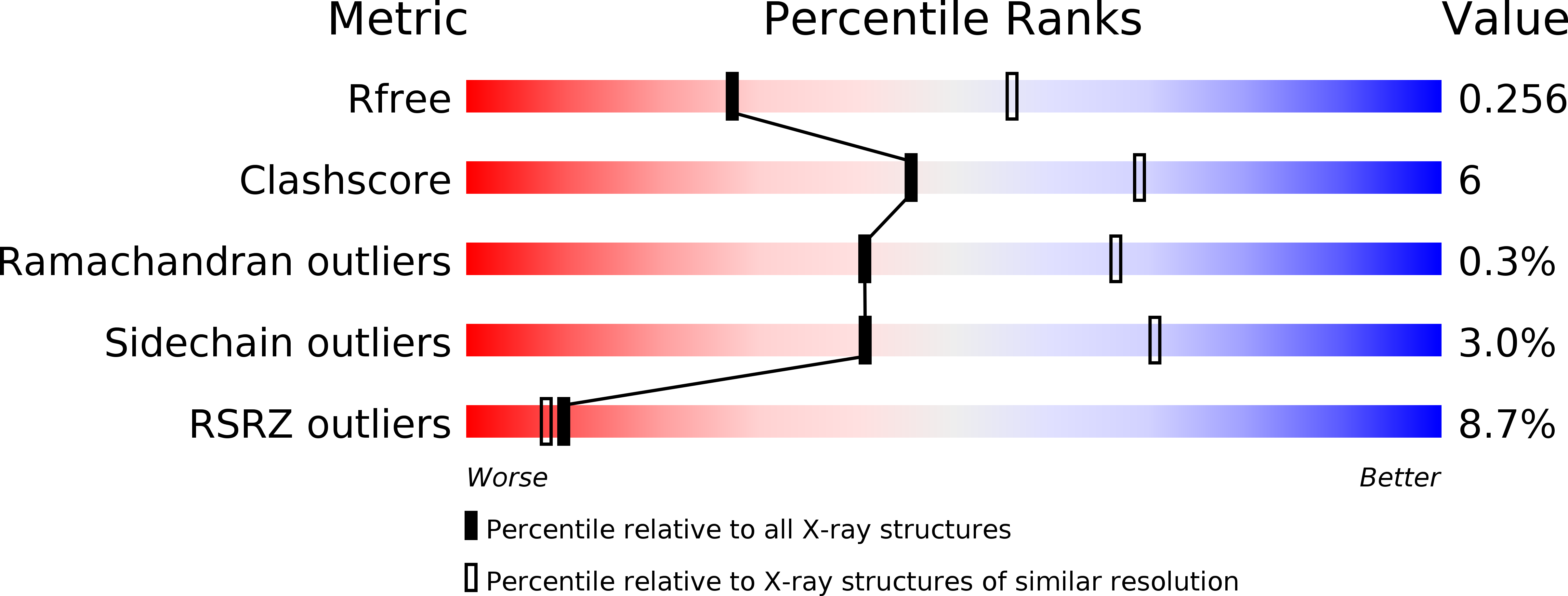
2.70 Å
R-Value Free:
0.25
R-Value Work:
0.19
R-Value Observed:
0.20
Space Group:
P 21 21 21
Macromolecular Entities
Structures with similar UniProt ID
Protein Blast
Polymer Type:polypeptide(L)
Molecule:Signal recognition particle subunit SRP68
Gene (Uniprot):CTHT_0033730
Chain IDs:A, B, C, D
Chain Length:224
Number of Molecules:4
Biological Source:Chaetomium thermophilum
Modified Residue
Compound ID Chain ID Parent Comp ID Details 2D Image
MSE A MET modified residue
Ligand Molecules
Primary Citation
SRP RNA remodeling by SRP68 explains its role in protein translocation.
Science 344 101 104 (2014)
PMID: 24700861 DOI: 10.1126/science.1249094

Abstact

The signal recognition particle (SRP) is central to membrane protein targeting; SRP RNA is essential for SRP assembly, elongation arrest, and activation of SRP guanosine triphosphatases. In eukaryotes, SRP function relies on the SRP68-SRP72 heterodimer. We present the crystal structures of the RNA-binding domain of SRP68 (SRP68-RBD) alone and in complex with SRP RNA and SRP19. SRP68-RBD is a tetratricopeptide-like module that binds to a RNA three-way junction, bends the RNA, and inserts an α-helical arginine-rich motif (ARM) into the major groove. The ARM opens the conserved 5f RNA loop, which in ribosome-bound SRP establishes a contact to ribosomal RNA. Our data provide the structural basis for eukaryote-specific, SRP68-driven RNA remodeling required for protein translocation.

Legend

Protein

Chemical

Disease

Primary Citation of related structures
Feedback Form
Name
Email
Institute
Feedback