4OUN image
Deposition Date 2014-02-18
Release Date 2015-02-04
Last Version Date 2023-11-08
Entry Detail
PDB ID:
4OUN
Keywords:
Title:
Crystal Structure of Mini-ribonuclease 3 from Bacillus subtilis
Biological Source:
Source Organism:
Host Organism:
Method Details:
Experimental Method:
Resolution:
1.80 Å
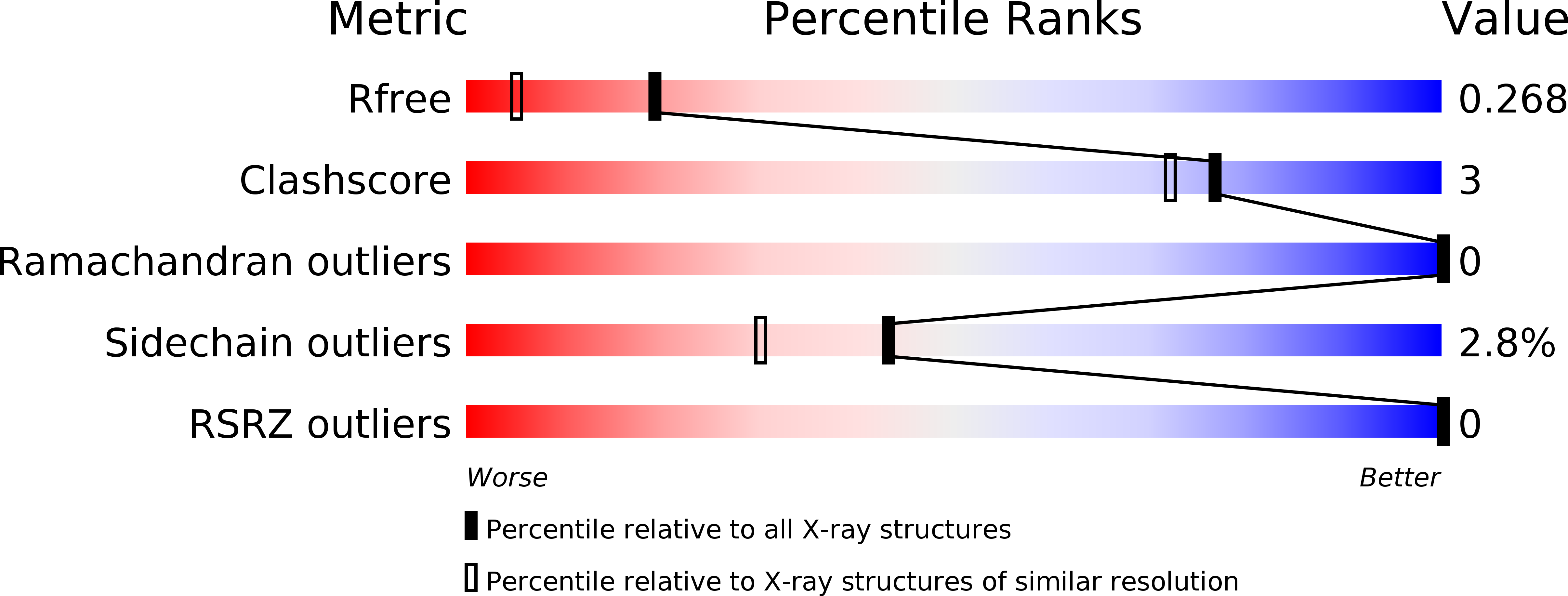
R-Value Free:
0.26
R-Value Work:
0.20
R-Value Observed:
0.20
Space Group:
C 2 2 21
Macromolecular Entities
Structures with similar UniProt ID
Protein Blast
Polymer Type:polypeptide(L)
Molecule:Mini-ribonuclease 3
Gene (Uniprot):mrnC
Mutagens:E126Q
Chain IDs:A
Chain Length:163
Number of Molecules:1
Biological Source:Bacillus subtilis subsp. subtilis
Primary Citation
Sequence-specific cleavage of dsRNA by Mini-III RNase
Nucleic Acids Res. 43 2864 2873 (2015)
PMID: 25634891 DOI: 10.1093/nar/gkv009

Abstact

Ribonucleases (RNases) play a critical role in RNA processing and degradation by hydrolyzing phosphodiester bonds (exo- or endonucleolytically). Many RNases that cut RNA internally exhibit substrate specificity, but their target sites are usually limited to one or a few specific nucleotides in single-stranded RNA and often in a context of a particular three-dimensional structure of the substrate. Thus far, no RNase counterparts of restriction enzymes have been identified which could cleave double-stranded RNA (dsRNA) in a sequence-specific manner. Here, we present evidence for a sequence-dependent cleavage of long dsRNA by RNase Mini-III from Bacillus subtilis (BsMiniIII). Analysis of the sites cleaved by this enzyme in limited digest of bacteriophage Φ6 dsRNA led to the identification of a consensus target sequence. We defined nucleotide residues within the preferred cleavage site that affected the efficiency of the cleavage and were essential for the discrimination of cleavable versus non-cleavable dsRNA sequences. We have also determined that the loop α5b-α6, a distinctive structural element in Mini-III RNases, is crucial for the specific cleavage, but not for dsRNA binding. Our results suggest that BsMiniIII may serve as a prototype of a sequence-specific dsRNase that could possibly be used for targeted cleavage of dsRNA.

Legend

Protein

Chemical

Disease

Primary Citation of related structures
Feedback Form
Name
Email
Institute
Feedback