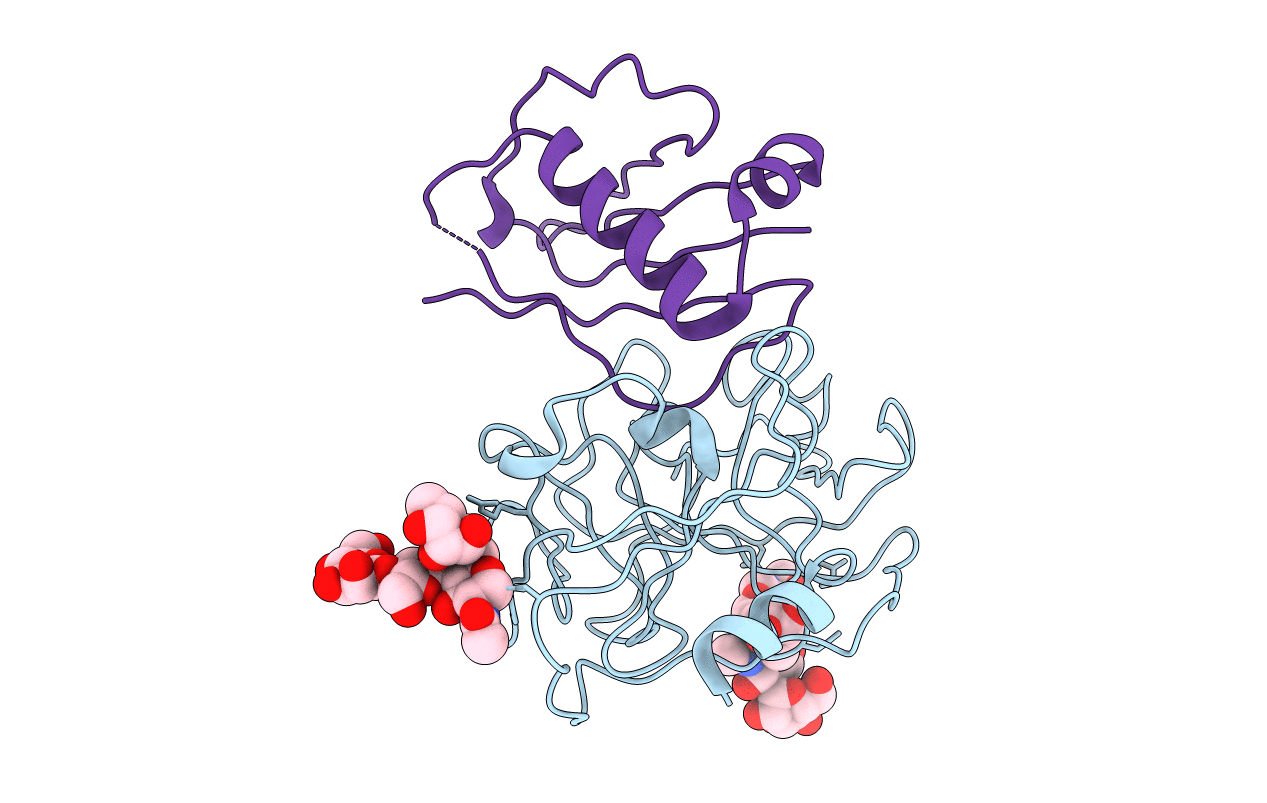
4NZL image
Deposition Date 2013-12-12
Release Date 2014-08-20
Last Version Date 2024-10-09
Entry Detail
PDB ID:
4NZL
Title:
Extracellular proteins of Staphylococcus aureus inhibit the neutrophil serine proteases
Biological Source:
Source Organism:
Host Organism:
Method Details:
Experimental Method:
Resolution:
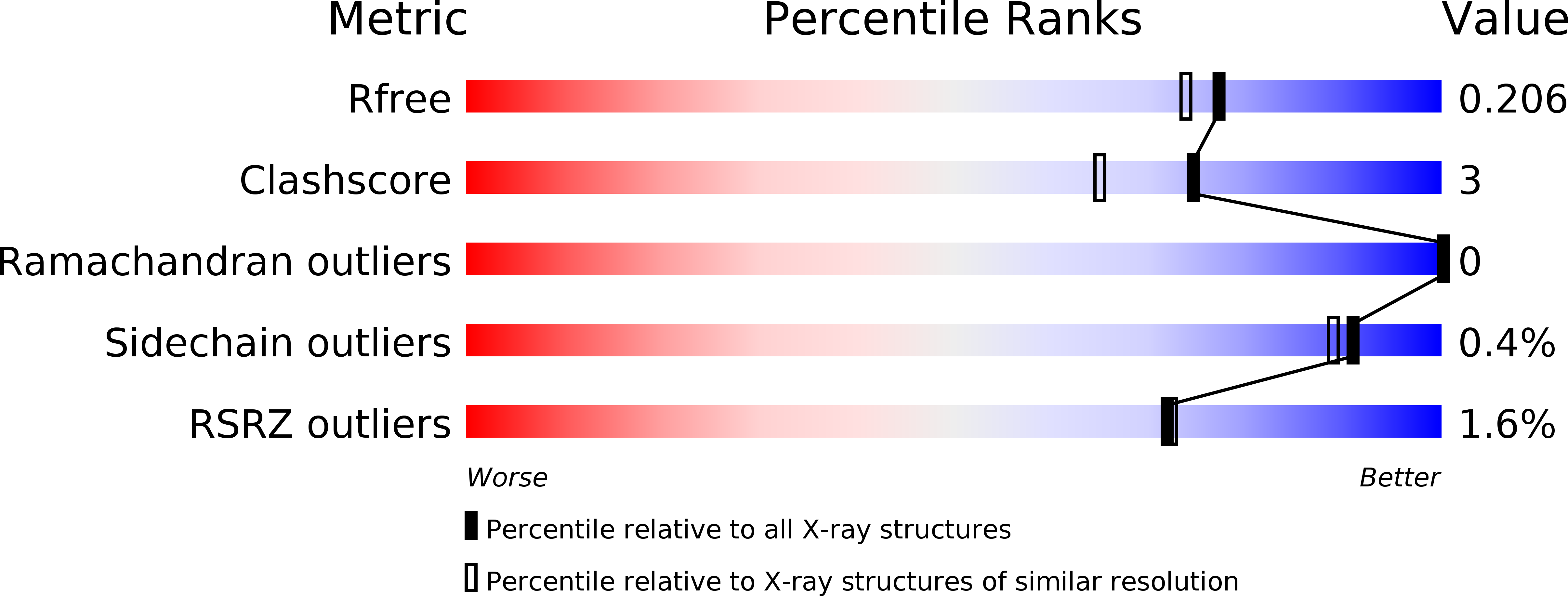
1.85 Å
R-Value Free:
0.20
R-Value Work:
0.16
R-Value Observed:
0.16
Space Group:
P 61
Macromolecular Entities
Structures with similar UniProt ID
Protein Blast
Polymer Type:polypeptide(L)
Molecule:Neutrophil elastase
Gene (Uniprot):ELANE
Chain IDs:A
Chain Length:218
Number of Molecules:1
Biological Source:Homo sapiens
Structures with similar UniProt ID
Protein Blast
Polymer Type:polypeptide(L)
Molecule:Uncharacterized protein
Chain IDs:B
Chain Length:114
Number of Molecules:1
Biological Source:Staphylococcus aureus subsp. aureus
Modified Residue
Compound ID Chain ID Parent Comp ID Details 2D Image
ASN A ASN GLYCOSYLATION SITE
Primary Citation
Staphylococcus aureus secretes a unique class of neutrophil serine protease inhibitors.
Proc.Natl.Acad.Sci.USA 111 13187 13192 (2014)
PMID: 25161283 DOI: 10.1073/pnas.1407616111

Abstact

Neutrophils are indispensable for clearing infections with the prominent human pathogen Staphylococcus aureus. Here, we report that S. aureus secretes a family of proteins that potently inhibits the activity of neutrophil serine proteases (NSPs): neutrophil elastase (NE), proteinase 3, and cathepsin G. The NSPs, but not related serine proteases, are specifically blocked by the extracellular adherence protein (Eap) and the functionally orphan Eap homologs EapH1 and EapH2, with inhibitory-constant values in the low-nanomolar range. Eap proteins are together essential for NSP inhibition by S. aureus in vitro and promote staphylococcal infection in vivo. The crystal structure of the EapH1/NE complex showed that Eap molecules constitute a unique class of noncovalent protease inhibitors that occlude the catalytic cleft of NSPs. These findings increase our insights into the complex pathogenesis of S. aureus infections and create opportunities to design novel treatment strategies for inflammatory conditions related to excessive NSP activity.

Legend

Protein

Chemical

Disease

Primary Citation of related structures
Feedback Form
Name
Email
Institute
Feedback