4NUF image
Deposition Date 2013-12-03
Release Date 2014-01-29
Last Version Date 2024-02-28
Entry Detail
PDB ID:
4NUF
Keywords:
Title:
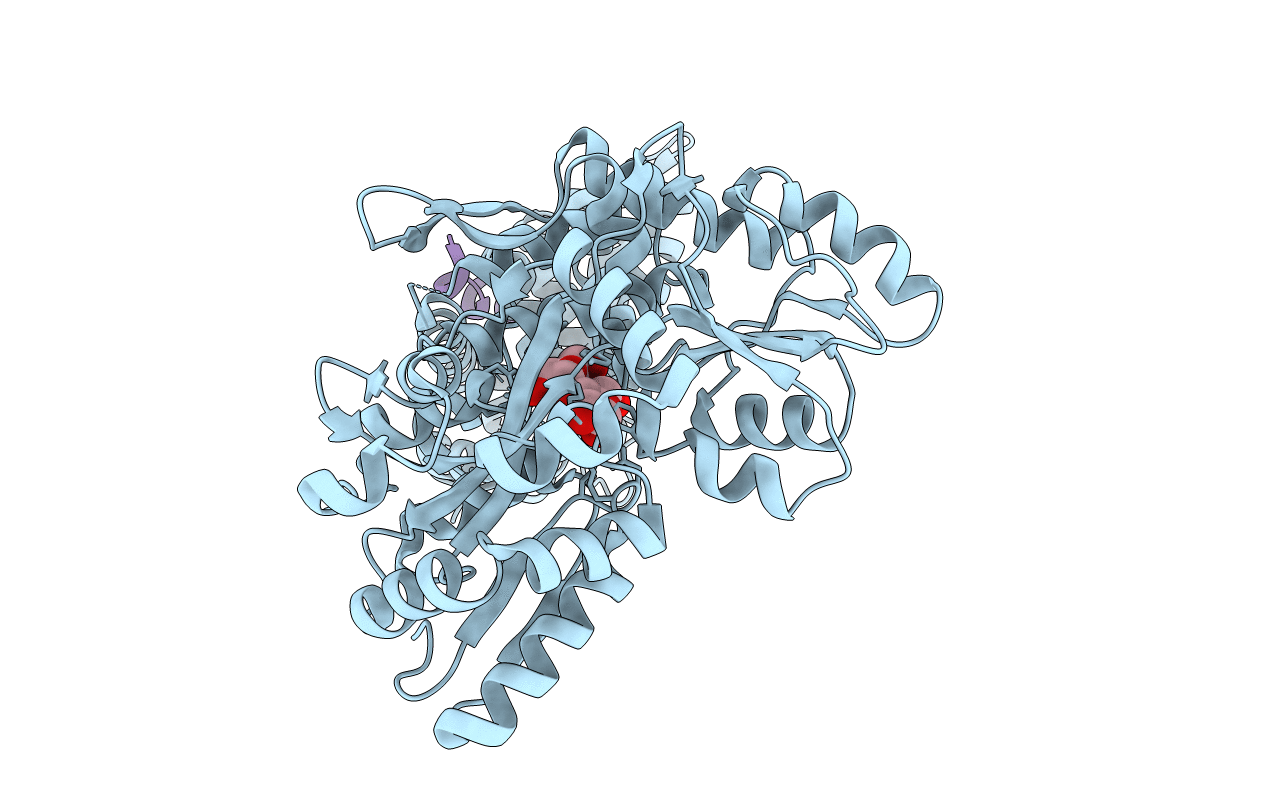
Crystal Structure of SHP/EID1
Biological Source:
Source Organism:
Host Organism:
Method Details:
Experimental Method:
Resolution:
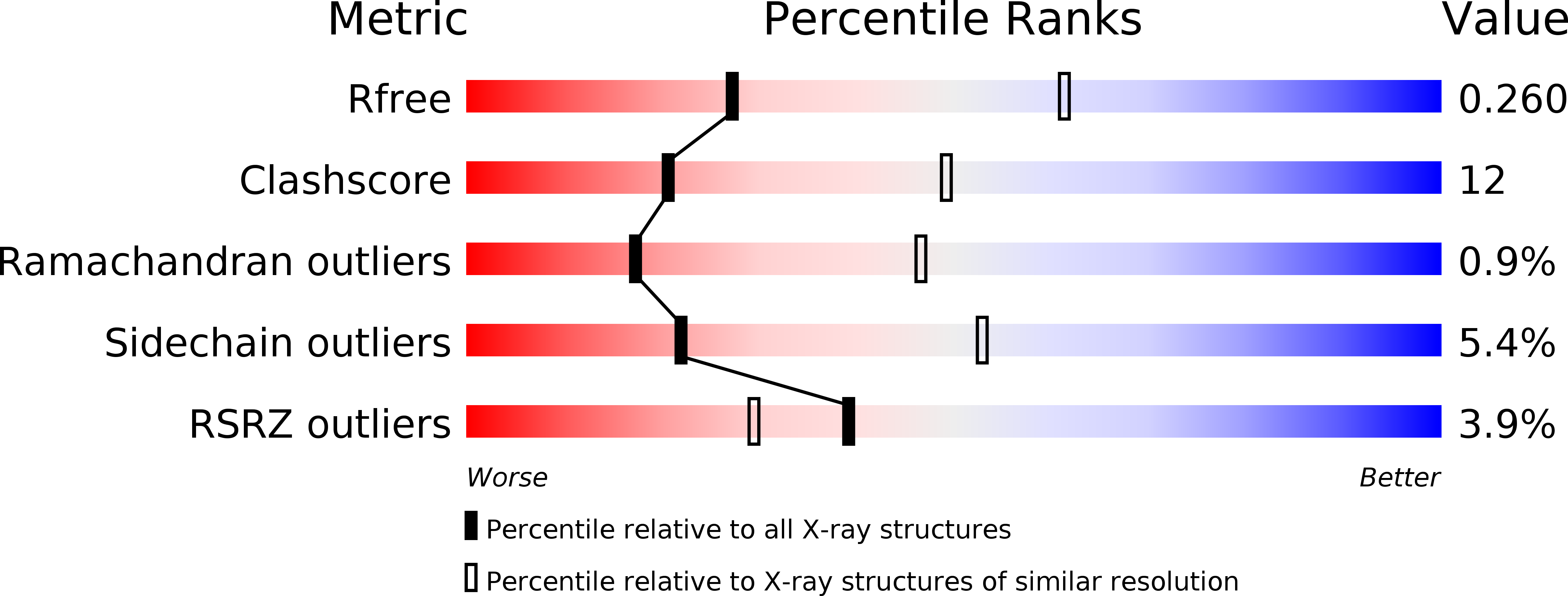
2.80 Å
R-Value Free:
0.24
R-Value Work:
0.19
R-Value Observed:
0.19
Space Group:
P 21 21 21
Macromolecular Entities
Protein Blast
Polymer Type:polypeptide(L)
Molecule:Maltose ABC transporter periplasmic protein, Nuclear receptor subfamily 0 group B member 2 chimeric construct
Gene (Uniprot):Nr0b2
Mutagens:E85D, L126T, E127T, E128R, K228R
Chain IDs:A
Chain Length:580
Number of Molecules:1
Biological Source:Escherichia coli O104:H4, mus musculus
Peptide-like Molecules
PRD_900001
Primary Citation
Structural insights into gene repression by the orphan nuclear receptor SHP.
Proc.Natl.Acad.Sci.USA 111 839 844 (2014)
PMID: 24379397 DOI: 10.1073/pnas.1322827111

Abstact

Small heterodimer partner (SHP) is an orphan nuclear receptor that functions as a transcriptional repressor to regulate bile acid and cholesterol homeostasis. Although the precise mechanism whereby SHP represses transcription is not known, E1A-like inhibitor of differentiation (EID1) was isolated as a SHP-interacting protein and implicated in SHP repression. Here we present the crystal structure of SHP in complex with EID1, which reveals an unexpected EID1-binding site on SHP. Unlike the classical cofactor-binding site near the C-terminal helix H12, the EID1-binding site is located at the N terminus of the receptor, where EID1 mimics helix H1 of the nuclear receptor ligand-binding domain. The residues composing the SHP-EID1 interface are highly conserved. Their mutation diminishes SHP-EID1 interactions and affects SHP repressor activity. Together, these results provide important structural insights into SHP cofactor recruitment and repressor function and reveal a conserved protein interface that is likely to have broad implications for transcriptional repression by orphan nuclear receptors.

Legend

Protein

Chemical

Disease

Primary Citation of related structures
Feedback Form
Name
Email
Institute
Feedback