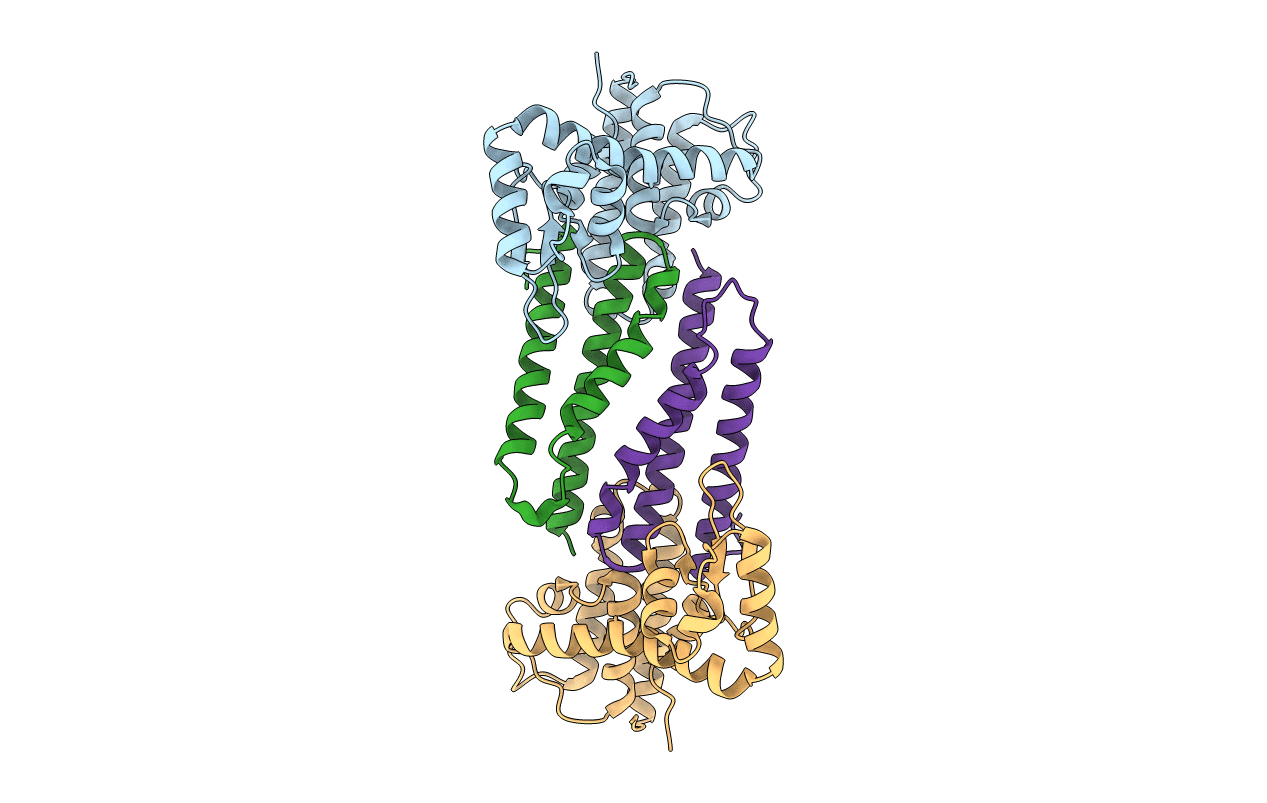
4NOO image
Deposition Date 2013-11-20
Release Date 2014-04-09
Last Version Date 2024-11-20
Entry Detail
PDB ID:
4NOO
Keywords:
Title:
Molecular mechanism for self-protection against type VI secretion system in Vibrio cholerae
Biological Source:
Source Organism:
Host Organism:
Method Details:
Experimental Method:
Resolution:
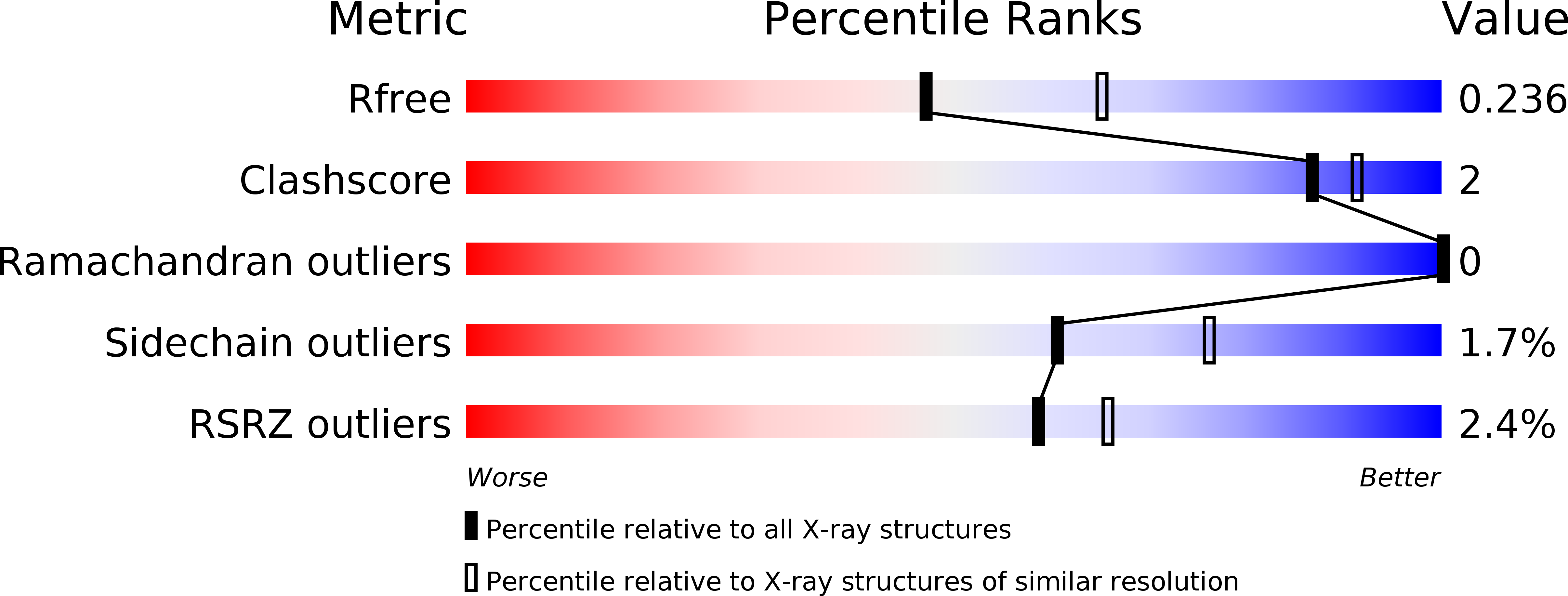
2.30 Å
R-Value Free:
0.23
R-Value Work:
0.18
R-Value Observed:
0.18
Space Group:
P 1 21 1
Macromolecular Entities
Structures with similar UniProt ID
Protein Blast
Polymer Type:polypeptide(L)
Molecule:VgrG protein
Gene (Uniprot):vgrG3
Chain IDs:A, C
Chain Length:205
Number of Molecules:2
Biological Source:Vibrio cholerae O1 biovar El Tor
Structures with similar UniProt ID
Protein Blast
Polymer Type:polypeptide(L)
Molecule:Putative uncharacterized protein
Gene (Uniprot):tsiV3
Chain IDs:B, D
Chain Length:98
Number of Molecules:2
Biological Source:Vibrio cholerae O1 biovar El Tor
Modified Residue
Compound ID Chain ID Parent Comp ID Details 2D Image
MSE A MET SELENOMETHIONINE
Primary Citation
Molecular mechanism for self-protection against the type VI secretion system in Vibrio cholerae.
Acta Crystallogr.,Sect.D 70 1094 1103 (2014)
PMID: 24699653 DOI: 10.1107/S1399004714001242

Abstact

VgrG proteins form the spike of the type VI secretion system (T6SS) syringe-like complex. VgrG3 of Vibrio cholerae degrades the peptidoglycan cell wall of rival bacteria via its C-terminal region (VgrG3C) through its muramidase activity. VgrG3C consists of a peptidoglycan-binding domain (VgrG3C(PGB)) and a putative catalytic domain (VgrG3C(CD)), and its activity can be inhibited by its immunity protein partner TsiV3. Here, the crystal structure of V. cholerae VgrG3C(CD) in complex with TsiV3 is presented at 2.3 Å resolution. VgrG3C(CD) adopts a chitosanase fold. A dimer of TsiV3 is bound in the deep active-site groove of VgrG3C(CD), occluding substrate binding and distorting the conformation of the catalytic dyad. Gln91 and Arg92 of TsiV3 are located in the centre of the interface and are important for recognition of VgrG3C. Mutation of these residues destabilized the complex and abolished the inhibitory activity of TsiV3 against VgrG3C toxicity in cells. Disruption of TsiV3 dimerization also weakened the complex and impaired the inhibitory activity. These structural, biochemical and functional data define the molecular mechanism underlying the self-protection of V. cholerae and expand the understanding of the role of T6SS in bacterial competition.

Legend

Protein

Chemical

Disease

Primary Citation of related structures
Feedback Form
Name
Email
Institute
Feedback