4NNM image
Deposition Date 2013-11-18
Release Date 2015-01-21
Last Version Date 2026-01-21
Entry Detail
PDB ID:
4NNM
Keywords:
Title:
Tax-Interacting Protein-1 (TIP-1) PDZ domain bound to Y-iCAL36 (YPTSII) peptide
Biological Source:
Source Organism(s):
Homo sapiens (Taxon ID: 9606)
Expression System(s):
Method Details:
Experimental Method:
Resolution:
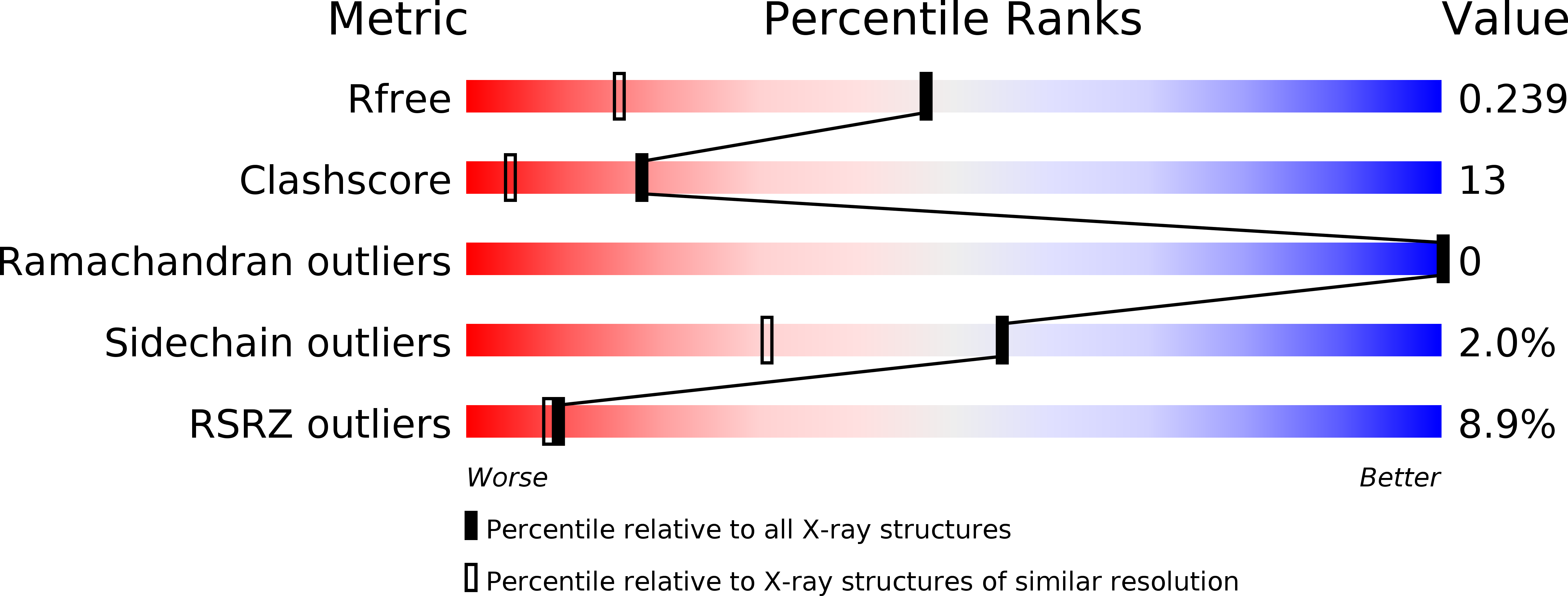
1.60 Å
R-Value Free:
0.24
R-Value Work:
0.20
R-Value Observed:
0.20
Space Group:
P 1
Macromolecular Entities
Structures with similar UniProt ID
Protein Blast
Polymer Type:polypeptide(L)
Molecule:Tax1-binding protein 3
Gene (Uniprot):TAX1BP3
Chain IDs:A, B
Chain Length:112
Number of Molecules:2
Biological Source:Homo sapiens
Ligand Molecules
Primary Citation
Sequence Engineering at Non-motif Modulator Residues Yields a Peptide That Effectively Targets a Single PDZ Protein in a Disease-relevant Cellular Context.
J.Mol.Biol. 438 169597 169597 (2026)
PMID: 41419168 DOI: 10.1016/j.jmb.2025.169597

Abstact

PDZ interaction networks are finely-tuned products of evolution. These widespread binding domains recognize short linear motifs (SLiMs), usually at the C-terminus of their interacting partners, and are involved in trafficking and signaling pathways, the formation of tight junctions, and scaffolding of the post-synaptic density of neurons, amongst other roles. Typically, a single PDZ domain binds multiple targets; conversely, each PDZ-binding protein engages several PDZ domains, dependent on cellular conditions. Historical PDZ binding motifs rely on two key positions for binding. However, previous insights on modulator, or non-motif, selectivity preferences reveal that these limited motifs are insufficient to describe PDZ-mediated interactomes, consistent with the observation that the degree of promiscuity is much more limited than predicted by defined binding classes. Here, we use these principles to engineer and test a peptide-based inhibitor capable of interacting with a single PDZ domain-containing protein in a disease-relevant cellular system. We first interrogate a previously developed sequence selective for cystic fibrosis transmembrane conductance regulator (CFTR)-Associated Ligand (CAL), one of five PDZ domains known to bind the CFTR C-terminus, probing for off-target PDZ partners. Once identified, we use parallel biochemical and structural refinement to eliminate these interactions and introduce a CAL PDZ inhibitor with unprecedented PDZ domain selectivity. We test and verify specificity using relevant cellular PDZ target networks in a mass spectrometry-based approach. Our resultant selective inhibitor enhances chloride efflux when applied to polarized patient bronchial epithelial cells, as well as confirms that engineering an effectively single-PDZ peptide is possible when modulator preferences are applied.

Legend

Protein

Chemical

Disease

Primary Citation of related structures
Feedback Form
Name
Email
Institute
Feedback