4NHG image
Deposition Date 2013-11-05
Release Date 2014-02-26
Last Version Date 2024-11-27
Entry Detail
PDB ID:
4NHG
Keywords:
Title:
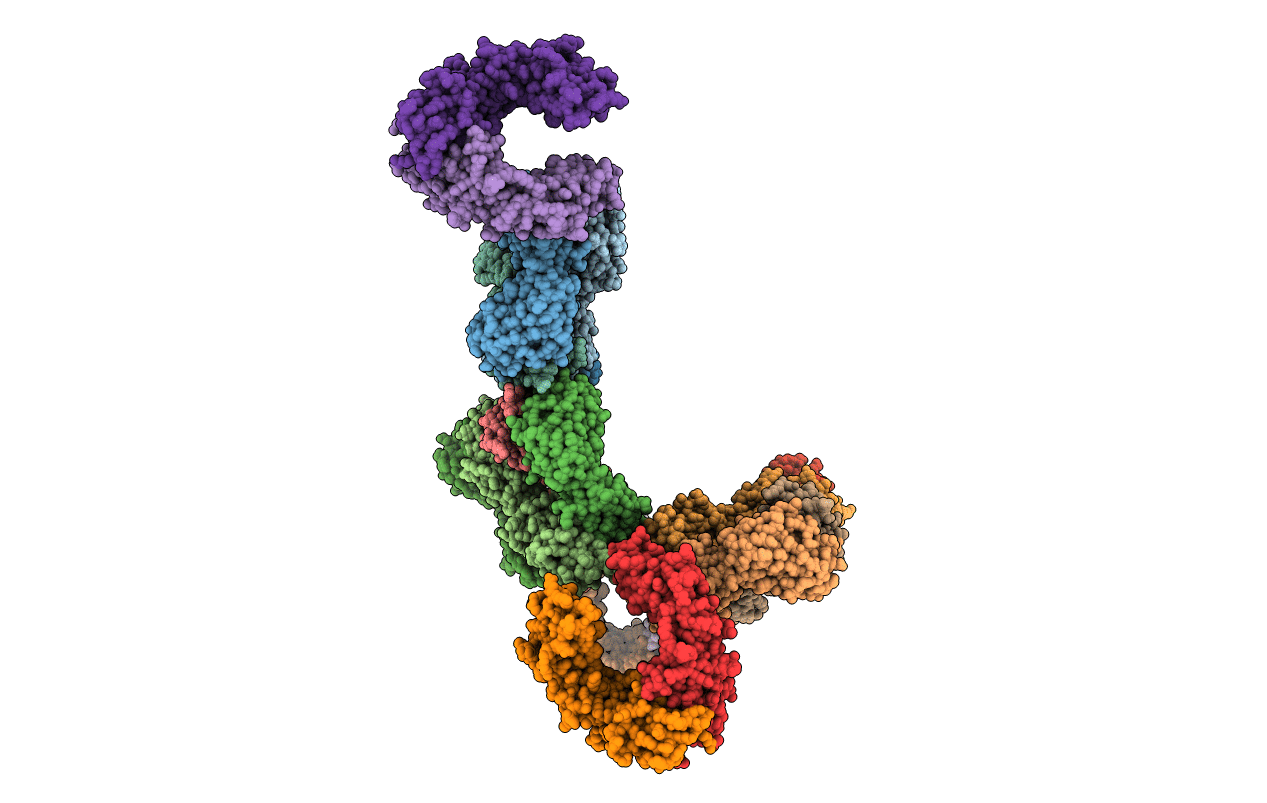
Crystal Structure of 2G12 IgG Dimer
Biological Source:
Source Organism:
Homo sapiens (Taxon ID: 9606)
Host Organism:
Method Details:
Experimental Method:
Resolution:
8.00 Å
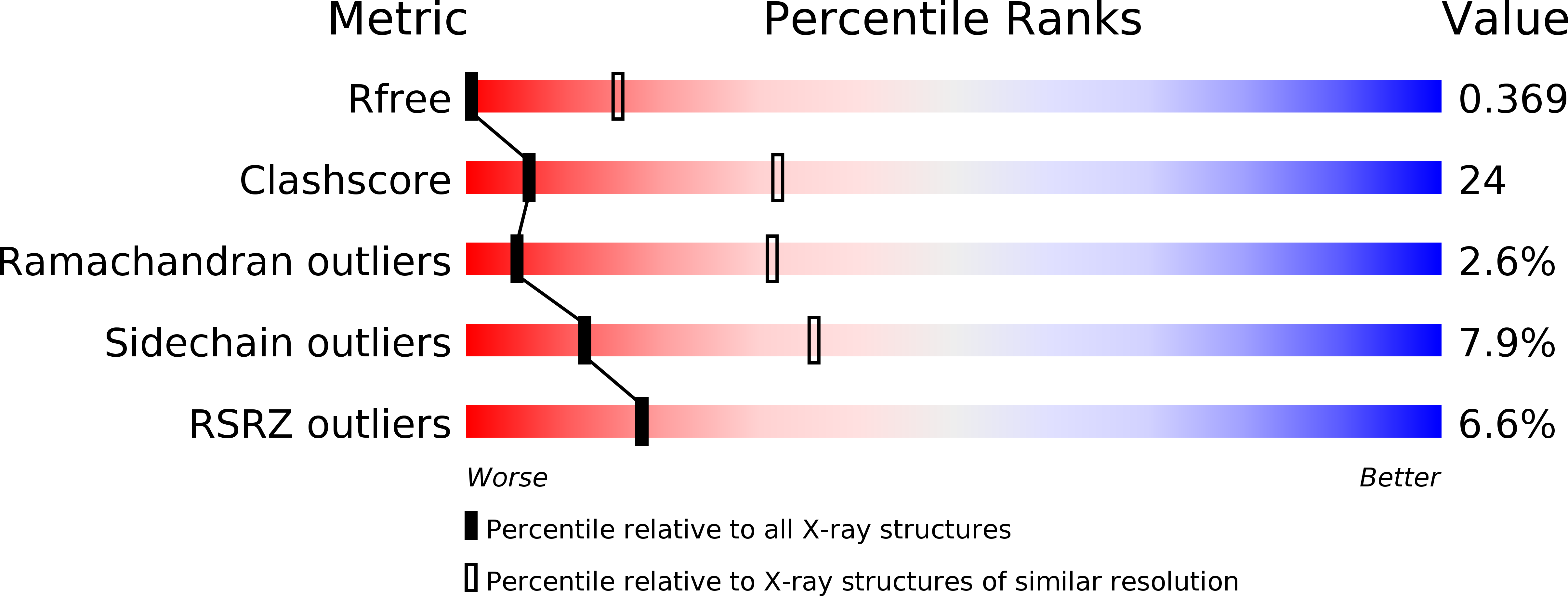
R-Value Free:
0.36
R-Value Work:
0.35
R-Value Observed:
0.35
Space Group:
P 61 2 2
Macromolecular Entities
Polymer Type:polypeptide(L)
Molecule:2G12 IgG dimer heavy chain
Chain IDs:A, D, E, H (auth: I), M (auth: H), P (auth: M)
Chain Length:243
Number of Molecules:6
Biological Source:Homo sapiens
Polymer Type:polypeptide(L)
Molecule:2G12 IgG dimer light chain
Chain IDs:B, C, F, G, N (auth: K), O (auth: L)
Chain Length:213
Number of Molecules:6
Biological Source:Homo sapiens
Structures with similar UniProt ID
Protein Blast
Polymer Type:polypeptide(L)
Molecule:Hepatitis B virus receptor binding protein
Chain IDs:I (auth: J), J (auth: N), K (auth: X), L (auth: Y), Q (auth: O), R (auth: P)
Chain Length:211
Number of Molecules:6
Biological Source:Homo sapiens
Ligand Molecules
Primary Citation
Structural basis for enhanced HIV-1 neutralization by a dimeric immunoglobulin G form of the glycan-recognizing antibody 2G12.
Cell Rep 5 1443 1455 (2013)
PMID: 24316082 DOI: 10.1016/j.celrep.2013.11.015

Abstact

The human immunoglobulin G (IgG) 2G12 recognizes high-mannose carbohydrates on the HIV type 1 (HIV-1) envelope glycoprotein gp120. Its two antigen-binding fragments (Fabs) are intramolecularly domain exchanged, resulting in a rigid (Fab)2 unit including a third antigen-binding interface not found in antibodies with flexible Fab arms. We determined crystal structures of dimeric 2G12 IgG created by intermolecular domain exchange, which exhibits increased breadth and >50-fold increased neutralization potency compared with monomeric 2G12. The four Fab and two fragment crystalline (Fc) regions of dimeric 2G12 were localized at low resolution in two independent structures, revealing IgG dimers with two (Fab)2 arms analogous to the Fabs of conventional monomeric IgGs. Structures revealed three conformationally distinct dimers, demonstrating flexibility of the (Fab)2-Fc connections that was confirmed by electron microscopy, small-angle X-ray scattering, and binding studies. We conclude that intermolecular domain exchange, flexibility, and bivalent binding to allow avidity effects are responsible for the increased potency and breadth of dimeric 2G12.

Legend

Protein

Chemical

Disease

Primary Citation of related structures
Feedback Form
Name
Email
Institute
Feedback