4NGN image
Deposition Date 2013-11-02
Release Date 2014-06-18
Last Version Date 2024-11-13
Entry Detail
PDB ID:
4NGN
Title:
Crystal Structure of Glutamate Carboxypeptidase II in a complex with urea-based inhibitor
Biological Source:
Source Organism:
Homo sapiens (Taxon ID: 9606)
Method Details:
Experimental Method:
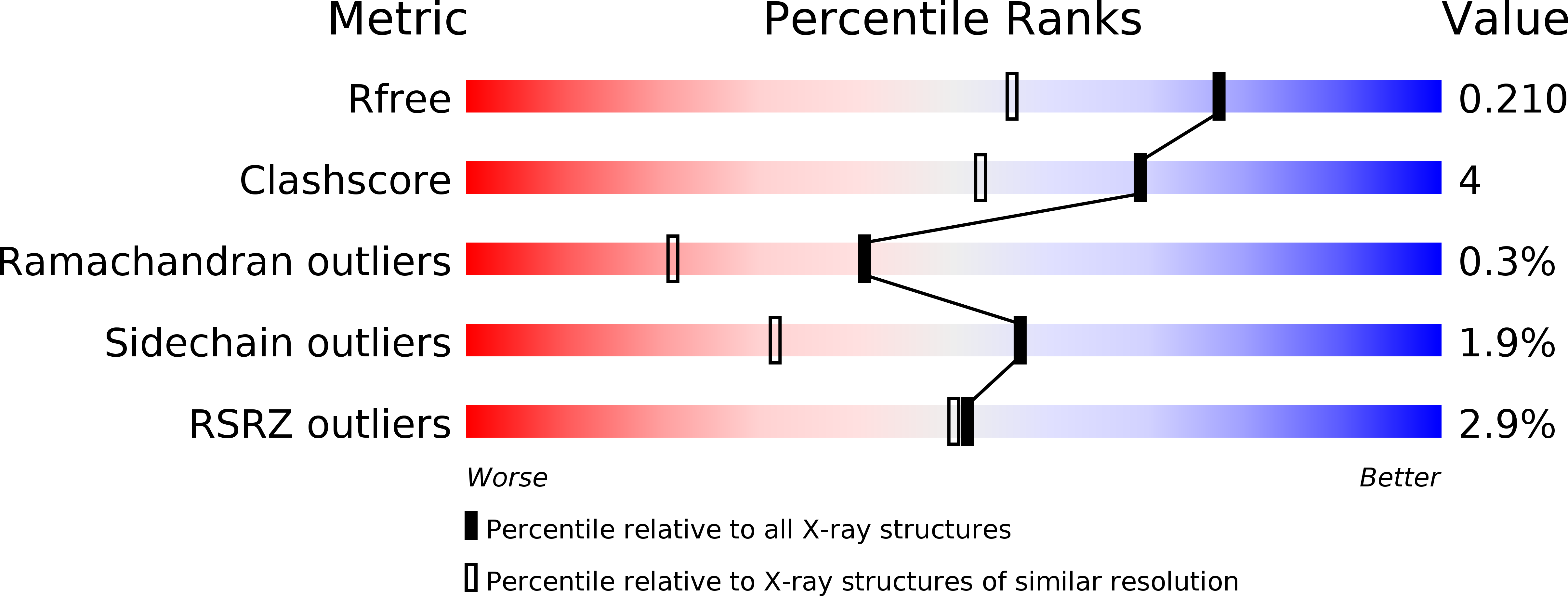
Resolution:
1.64 Å
R-Value Free:
0.21
R-Value Work:
0.18
Space Group:
I 2 2 2
Macromolecular Entities
Structures with similar UniProt ID
Protein Blast
Polymer Type:polypeptide(L)
Molecule:Glutamate carboxypeptidase 2
Gene (Uniprot):FOLH1
Chain IDs:A
Chain Length:739
Number of Molecules:1
Biological Source:Homo sapiens
Modified Residue
Compound ID Chain ID Parent Comp ID Details 2D Image
ASN A ASN GLYCOSYLATION SITE
Primary Citation
Rational design of urea-based glutamate carboxypeptidase II (GCPII) inhibitors as versatile tools for specific drug targeting and delivery.
Bioorg.Med.Chem. 22 4099 4108 (2014)
PMID: 24954515 DOI: 10.1016/j.bmc.2014.05.061

Abstact

Glutamate carboxypeptidase II (GCPII), also known as prostate specific membrane antigen (PSMA), is an established prostate cancer marker and is considered a promising target for specific anticancer drug delivery. Low-molecular-weight inhibitors of GCPII are advantageous specific ligands for this purpose. However, they must be modified with a linker to enable connection of the ligand with an imaging molecule, anticancer drug, and/or nanocarrier. Here, we describe a structure-activity relationship (SAR) study of GCPII inhibitors with linkers suitable for imaging and drug delivery. Structure-assisted inhibitor design and targeting of a specific GCPII exosite resulted in a 7-fold improvement in Ki value compared to the parent structure. X-ray structural analysis of the inhibitor series led to the identification of several inhibitor binding modes. We also optimized the length of the inhibitor linker for effective attachment to a biotin-binding molecule and showed that the optimized inhibitor could be used to target nanoparticles to cells expressing GCPII.

Legend

Protein

Chemical

Disease

Primary Citation of related structures
Feedback Form
Name
Email
Institute
Feedback