4N8X image
Deposition Date 2013-10-18
Release Date 2014-03-12
Last Version Date 2023-09-20
Entry Detail
PDB ID:
4N8X
Title:
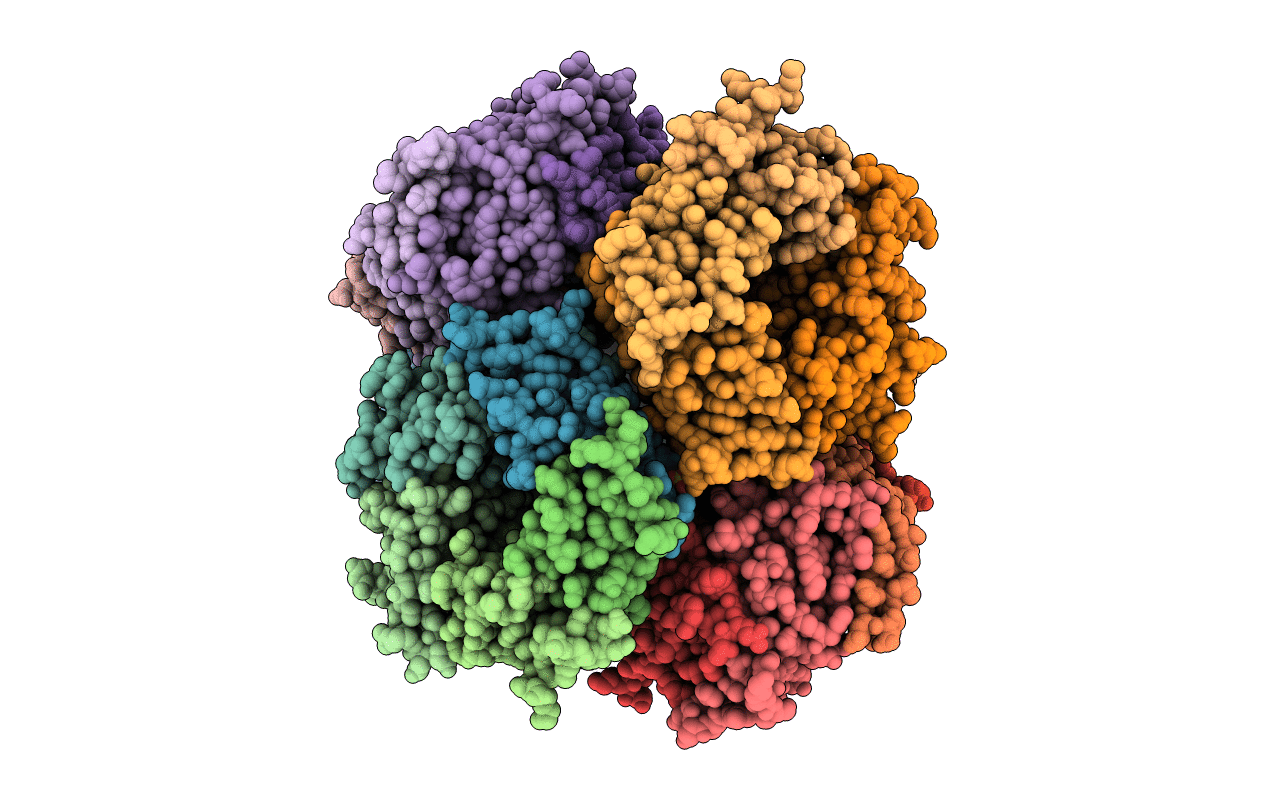
The structure of Nostoc sp. PCC 7120 CcmL
Biological Source:
Source Organism:
Nostoc sp. (Taxon ID: 103690)
Host Organism:
Method Details:
Experimental Method:
Resolution:
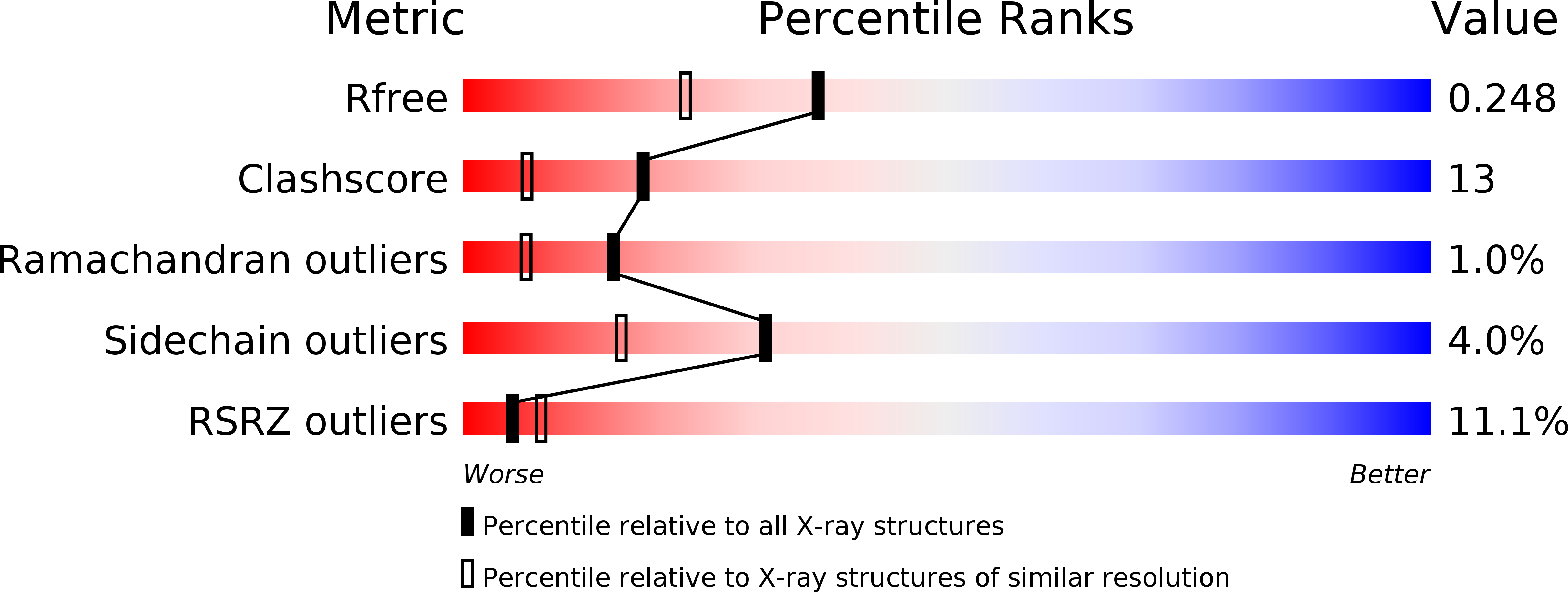
1.93 Å
R-Value Free:
0.24
R-Value Work:
0.20
R-Value Observed:
0.20
Space Group:
P 21 21 21
Macromolecular Entities
Structures with similar UniProt ID
Protein Blast
Polymer Type:polypeptide(L)
Molecule:Carbon dioxide concentrating mechanism protein
Gene (Uniprot):ccmL
Chain IDs:A (auth: 1), B (auth: 2), C (auth: 3), D (auth: 4), E (auth: A), F (auth: B), G (auth: C), H (auth: D), I (auth: E), J (auth: F), K (auth: G), L (auth: H), M (auth: I), N (auth: J), O (auth: K), P (auth: L), Q (auth: M), R (auth: N), S (auth: O), T (auth: P), U (auth: Q), V (auth: R), W (auth: S), X (auth: T), Y (auth: U), Z (auth: V), AA (auth: W), BA (auth: X), CA (auth: Y), DA (auth: Z)
Chain Length:109
Number of Molecules:30
Biological Source:Nostoc sp.
Ligand Molecules
Primary Citation
Interactions and structural variability of beta-carboxysomal shell protein CcmL.
Photosynth.Res. 121 125 133 (2014)
PMID: 24504539 DOI: 10.1007/s11120-014-9973-z

Abstact

CcmL is a small, pentameric protein that is argued to fill the vertices of β-carboxysomal shell. Here we report the structures of two CcmL orthologs, those from Nostoc sp. PCC 7120 and Thermosynechococcus elongatus BP-1. These structures broadly resemble those previously reported for other strains. However, the Nostoc CcmL structure shows an interesting pattern of behavior where two loops that map to the base of the pentamer adopt either an out or in conformation, with a consistent (over six pentamers) out-in-out-in-in pattern of protomers. The pentamers in this structure are also consistently organized into a back-to-back decamer, though evidence suggests that this is likely not present in solution. Förster resonance energy transfer experiments were able to show a weak interaction between CcmL and CcmK2 when CcmK2 was present at >100 μM. Since CcmK2 forms defined bodies with approximately 200 nm diameter at this concentration, this would support the idea that CcmL can only interact with CcmK2 at rare defect points in the growing shell.

Legend

Protein

Chemical

Disease

Primary Citation of related structures
Feedback Form
Name
Email
Institute
Feedback