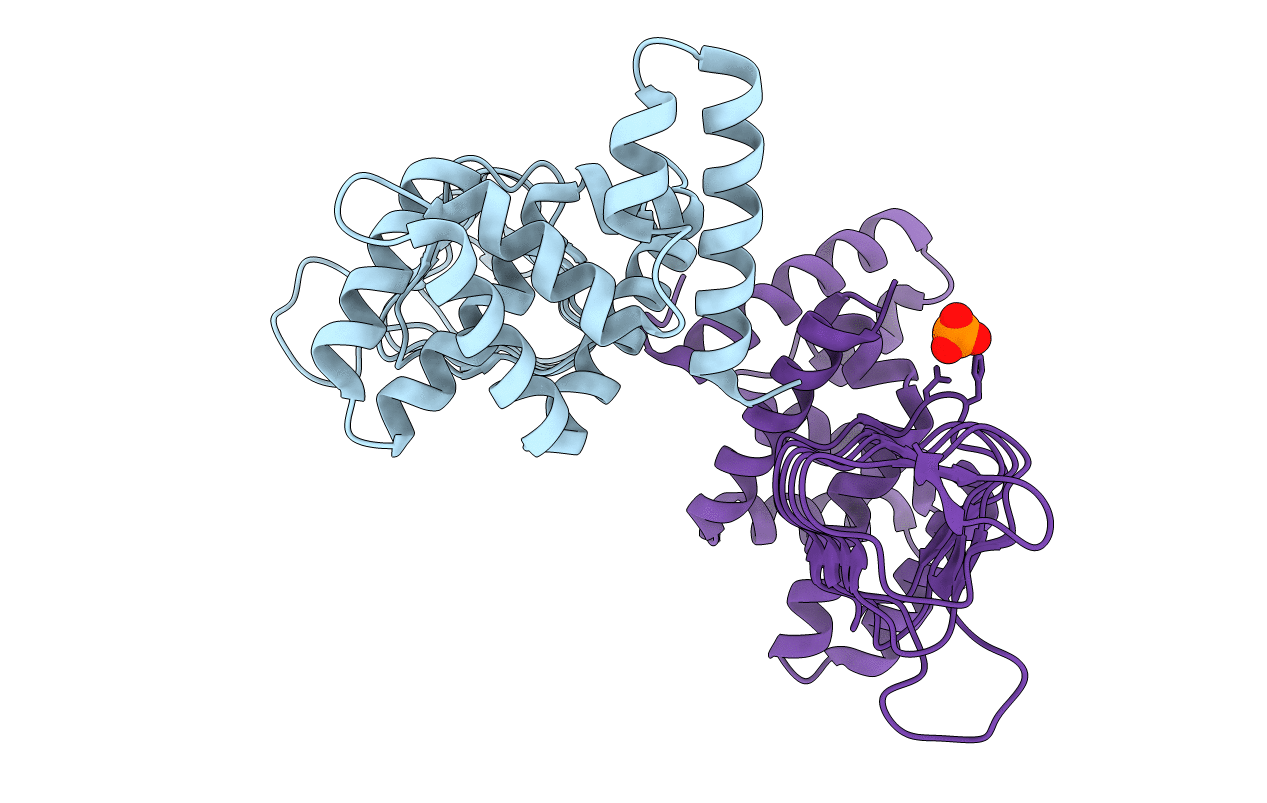
4N6A image
Deposition Date 2013-10-11
Release Date 2013-11-13
Last Version Date 2024-02-28
Entry Detail
PDB ID:
4N6A
Keywords:
Title:
Soybean Serine Acetyltransferase Apoenzyme
Biological Source:
Source Organism:
Glycine max (Taxon ID: 3847)
Host Organism:
Method Details:
Experimental Method:
Resolution:
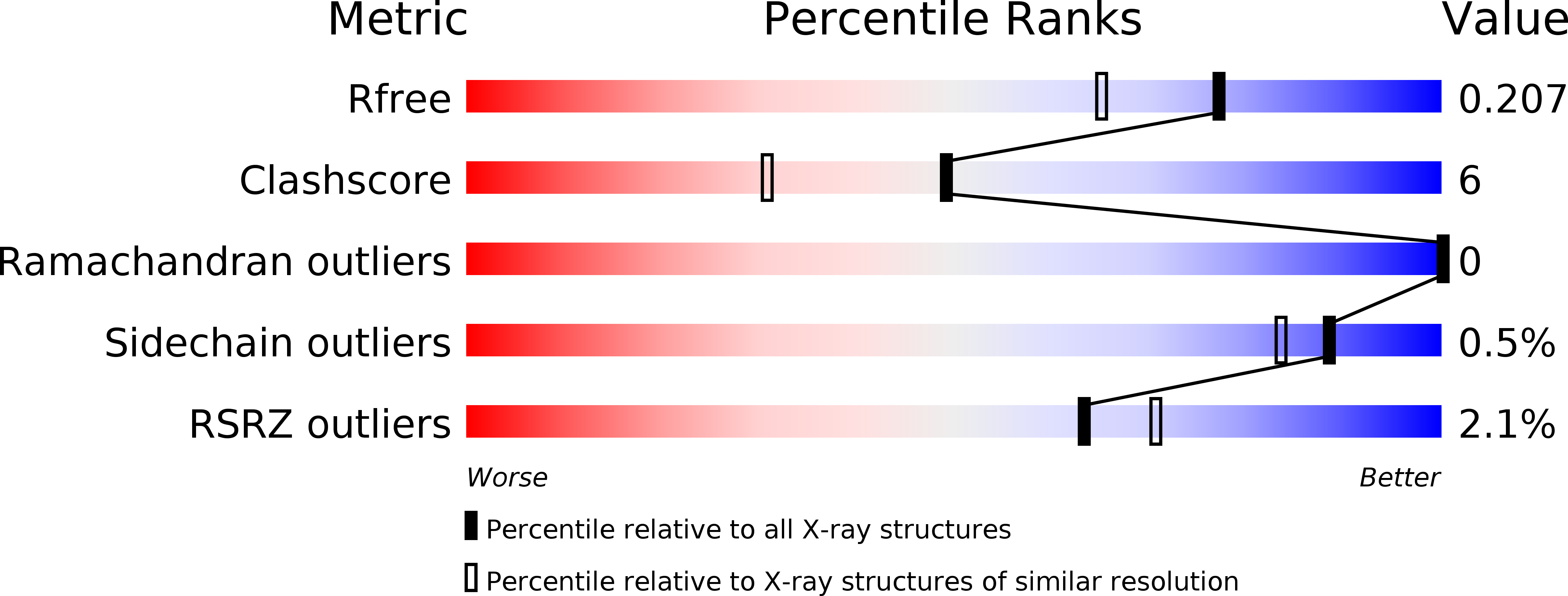
1.75 Å
R-Value Free:
0.20
R-Value Work:
0.18
R-Value Observed:
0.18
Space Group:
H 3
Macromolecular Entities
Structures with similar UniProt ID
Protein Blast
Polymer Type:polypeptide(L)
Molecule:Serine Acetyltransferase Apoenzyme
Gene (Uniprot):LOC100815091
Chain IDs:A, B
Chain Length:286
Number of Molecules:2
Biological Source:Glycine max
Ligand Molecules
Primary Citation
Structure of soybean serine acetyltransferase and formation of the cysteine regulatory complex as a molecular chaperone.
J.Biol.Chem. 288 36463 36472 (2013)
PMID: 24225955 DOI: 10.1074/jbc.M113.527143

Abstact

Serine acetyltransferase (SAT) catalyzes the limiting reaction in plant and microbial biosynthesis of cysteine. In addition to its enzymatic function, SAT forms a macromolecular complex with O-acetylserine sulfhydrylase. Formation of the cysteine regulatory complex (CRC) is a critical biochemical control feature in plant sulfur metabolism. Here we present the 1.75-3.0 Å resolution x-ray crystal structures of soybean (Glycine max) SAT (GmSAT) in apoenzyme, serine-bound, and CoA-bound forms. The GmSAT-serine and GmSAT-CoA structures provide new details on substrate interactions in the active site. The crystal structures and analysis of site-directed mutants suggest that His(169) and Asp(154) form a catalytic dyad for general base catalysis and that His(189) may stabilize the oxyanion reaction intermediate. Glu(177) helps to position Arg(203) and His(204) and the β1c-β2c loop for serine binding. A similar role for ionic interactions formed by Lys(230) is required for CoA binding. The GmSAT structures also identify Arg(253) as important for the enhanced catalytic efficiency of SAT in the CRC and suggest that movement of the residue may stabilize CoA binding in the macromolecular complex. Differences in the effect of cold on GmSAT activity in the isolated enzyme versus the enzyme in the CRC were also observed. A role for CRC formation as a molecular chaperone to maintain SAT activity in response to an environmental stress is proposed for this multienzyme complex in plants.

Legend

Protein

Chemical

Disease

Primary Citation of related structures
Feedback Form
Name
Email
Institute
Feedback