4MZ2 image
Deposition Date 2013-09-28
Release Date 2013-12-04
Last Version Date 2024-10-30
Entry Detail
PDB ID:
4MZ2
Title:
Crystal structure of the voltage-gated sodium channel beta 4 subunit extracellular domain
Biological Source:
Source Organism:
Homo sapiens (Taxon ID: 9606)
Host Organism:
Method Details:
Experimental Method:
Resolution:
1.72 Å
R-Value Free:
0.22
R-Value Work:
0.18
R-Value Observed:
0.18
Space Group:
P 32 2 1
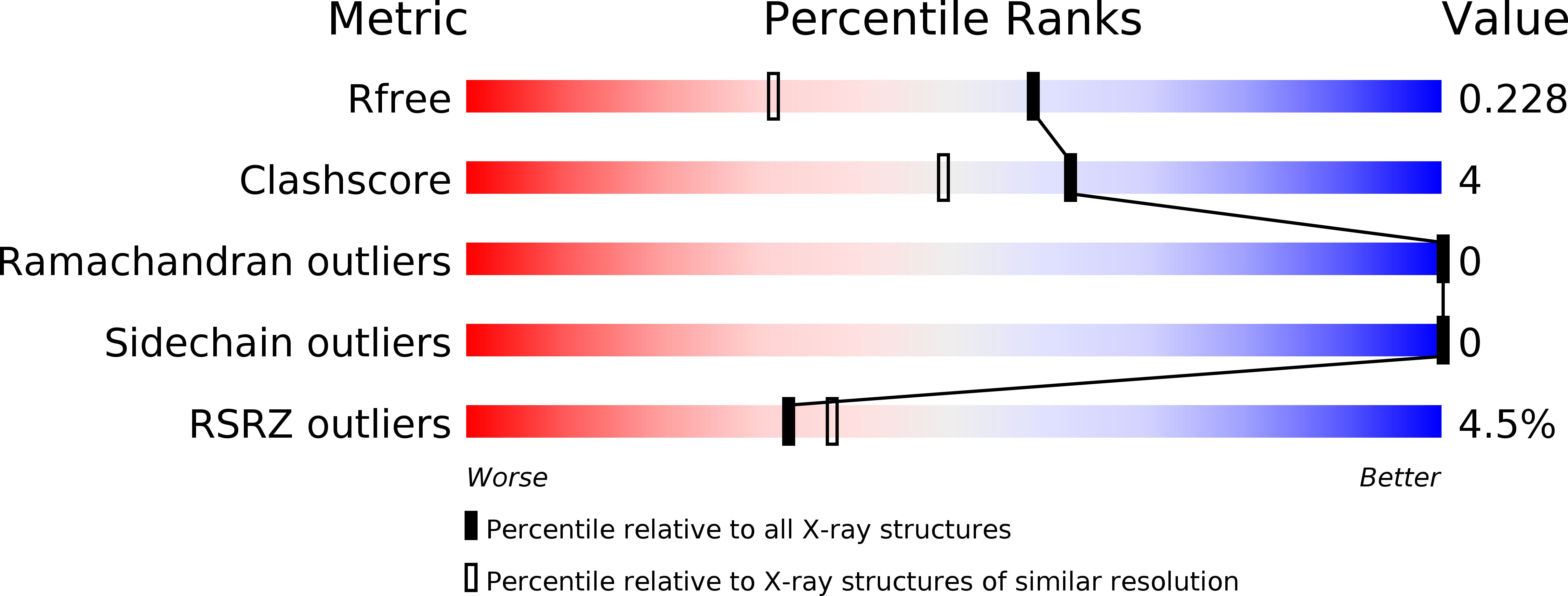
Macromolecular Entities
Structures with similar UniProt ID
Protein Blast
Polymer Type:polypeptide(L)
Molecule:Sodium channel subunit beta-4
Gene (Uniprot):SCN4B
Chain IDs:A
Chain Length:129
Number of Molecules:1
Biological Source:Homo sapiens
Primary Citation
Crystallographic insights into sodium-channel modulation by the beta 4 subunit.
Proc.Natl.Acad.Sci.USA 110 E5016 E5024 (2013)
PMID: 24297919 DOI: 10.1073/pnas.1314557110

Abstact

Voltage-gated sodium (Nav) channels are embedded in a multicomponent membrane signaling complex that plays a crucial role in cellular excitability. Although the mechanism remains unclear, β-subunits modify Nav channel function and cause debilitating disorders when mutated. While investigating whether β-subunits also influence ligand interactions, we found that β4 dramatically alters toxin binding to Nav1.2. To explore these observations further, we solved the crystal structure of the extracellular β4 domain and identified (58)Cys as an exposed residue that, when mutated, eliminates the influence of β4 on toxin pharmacology. Moreover, our results suggest the presence of a docking site that is maintained by a cysteine bridge buried within the hydrophobic core of β4. Disrupting this bridge by introducing a β1 mutation implicated in epilepsy repositions the (58)Cys-containing loop and disrupts β4 modulation of Nav1.2. Overall, the principles emerging from this work (i) help explain tissue-dependent variations in Nav channel pharmacology; (ii) enable the mechanistic interpretation of β-subunit-related disorders; and (iii) provide insights in designing molecules capable of correcting aberrant β-subunit behavior.

Legend

Protein

Chemical

Disease

Primary Citation of related structures
Feedback Form
Name
Email
Institute
Feedback