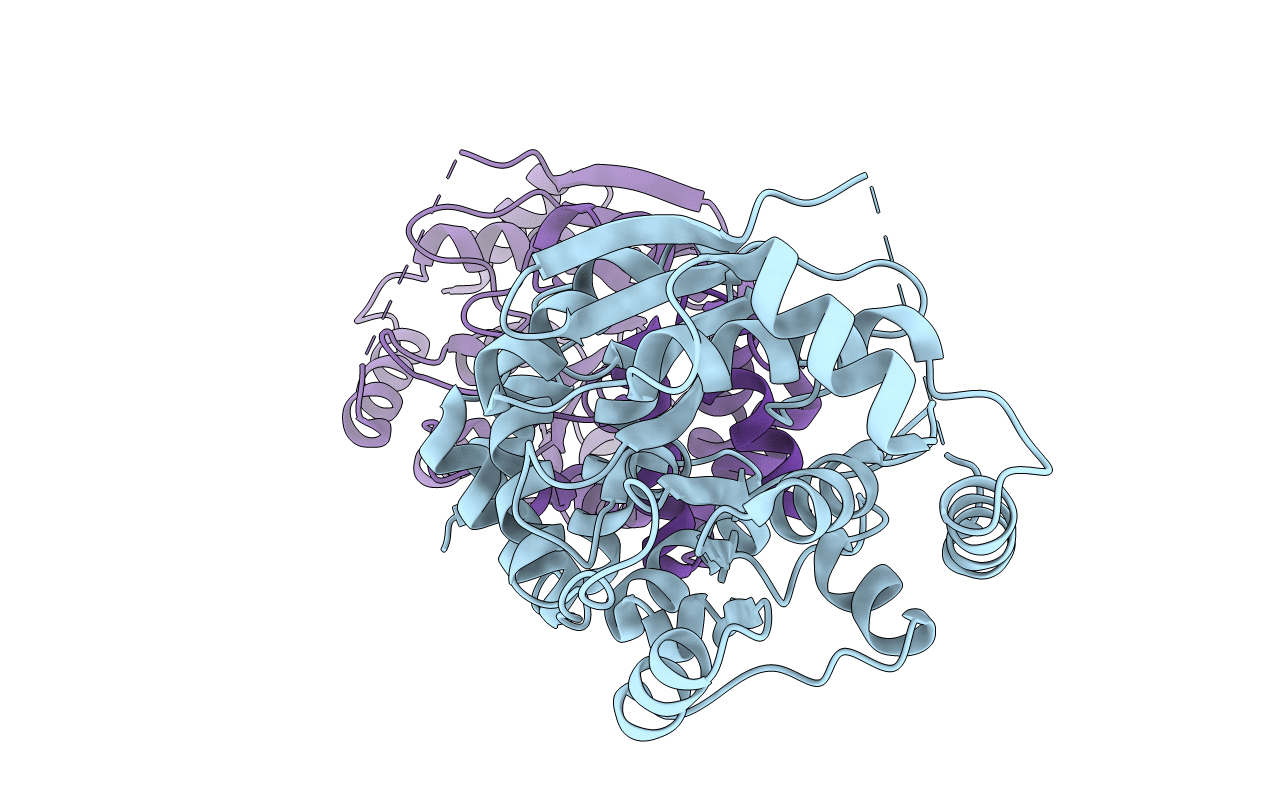
4MUO image
Deposition Date 2013-09-23
Release Date 2015-03-25
Last Version Date 2024-02-28
Entry Detail
PDB ID:
4MUO
Title:
The TrpD2 enzyme from E.coli: YbiB
Biological Source:
Source Organism(s):
Expression System(s):
Method Details:
Experimental Method:
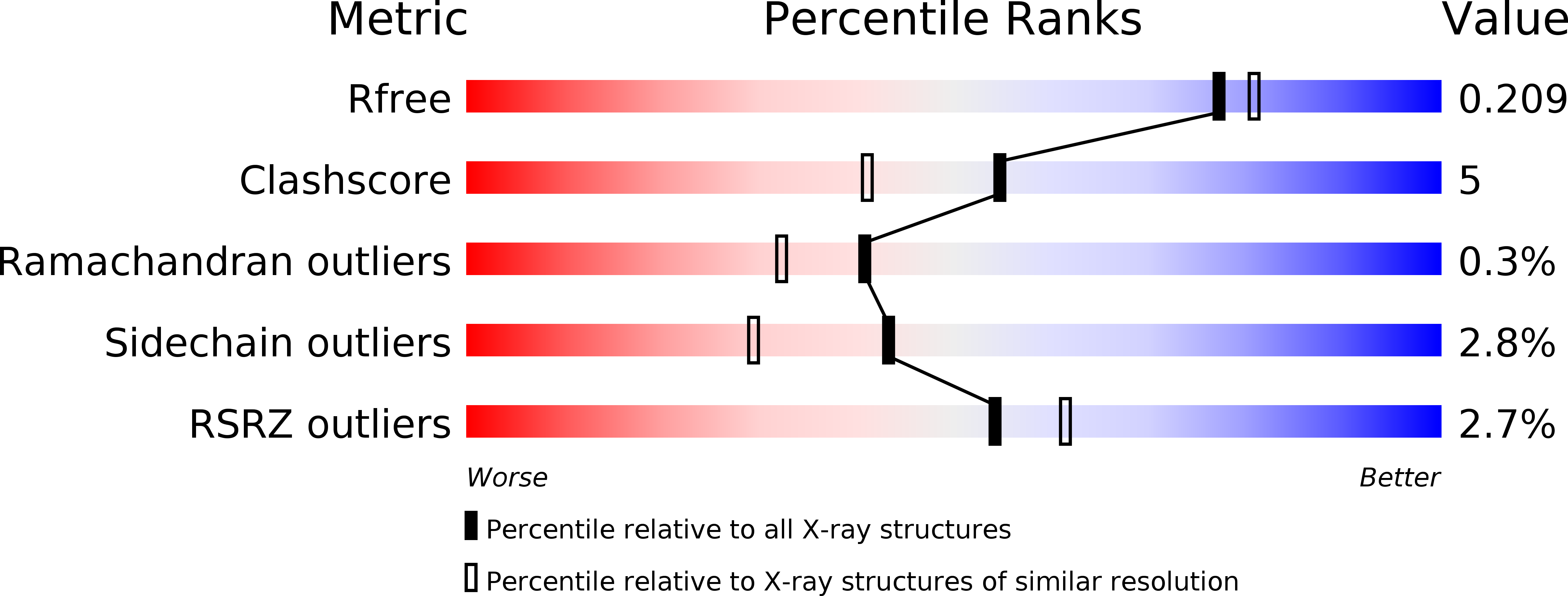
Resolution:
1.94 Å
R-Value Free:
0.21
R-Value Work:
0.17
R-Value Observed:
0.18
Space Group:
P 1 21 1
Macromolecular Entities
Structures with similar UniProt ID
Protein Blast
Polymer Type:polypeptide(L)
Molecule:Uncharacterized protein YbiB
Gene (Uniprot):ybiB
Chain IDs:A, B
Chain Length:328
Number of Molecules:2
Biological Source:Escherichia coli
Primary Citation
YbiB from Escherichia coli, the Defining Member of the Novel TrpD2 Family of Prokaryotic DNA-binding Proteins.
J.Biol.Chem. 290 19527 19539 (2015)
PMID: 26063803 DOI: 10.1074/jbc.M114.620575

Abstact

We present the crystal structure and biochemical characterization of Escherichia coli YbiB, a member of the hitherto uncharacterized TrpD2 protein family. Our results demonstrate that the functional diversity of proteins with a common fold can be far greater than predictable by computational annotation. The TrpD2 proteins show high structural homology to anthranilate phosphoribosyltransferase (TrpD) and nucleoside phosphorylase class II enzymes but bind with high affinity (KD = 10-100 nM) to nucleic acids without detectable sequence specificity. The difference in affinity between single- and double-stranded DNA is minor. Results suggest that multiple YbiB molecules bind to one longer DNA molecule in a cooperative manner. The YbiB protein is a homodimer that, therefore, has two electropositive DNA binding grooves. But due to negative cooperativity within the dimer, only one groove binds DNA in in vitro experiments. A monomerized variant remains able to bind DNA with similar affinity, but the negative cooperative effect is eliminated. The ybiB gene forms an operon with the DNA helicase gene dinG and is under LexA control, being induced by DNA-damaging agents. Thus, speculatively, the TrpD2 proteins may be part of the LexA-controlled SOS response in bacteria.

Legend

Protein

Chemical

Disease

Primary Citation of related structures
Feedback Form
Name
Email
Institute
Feedback