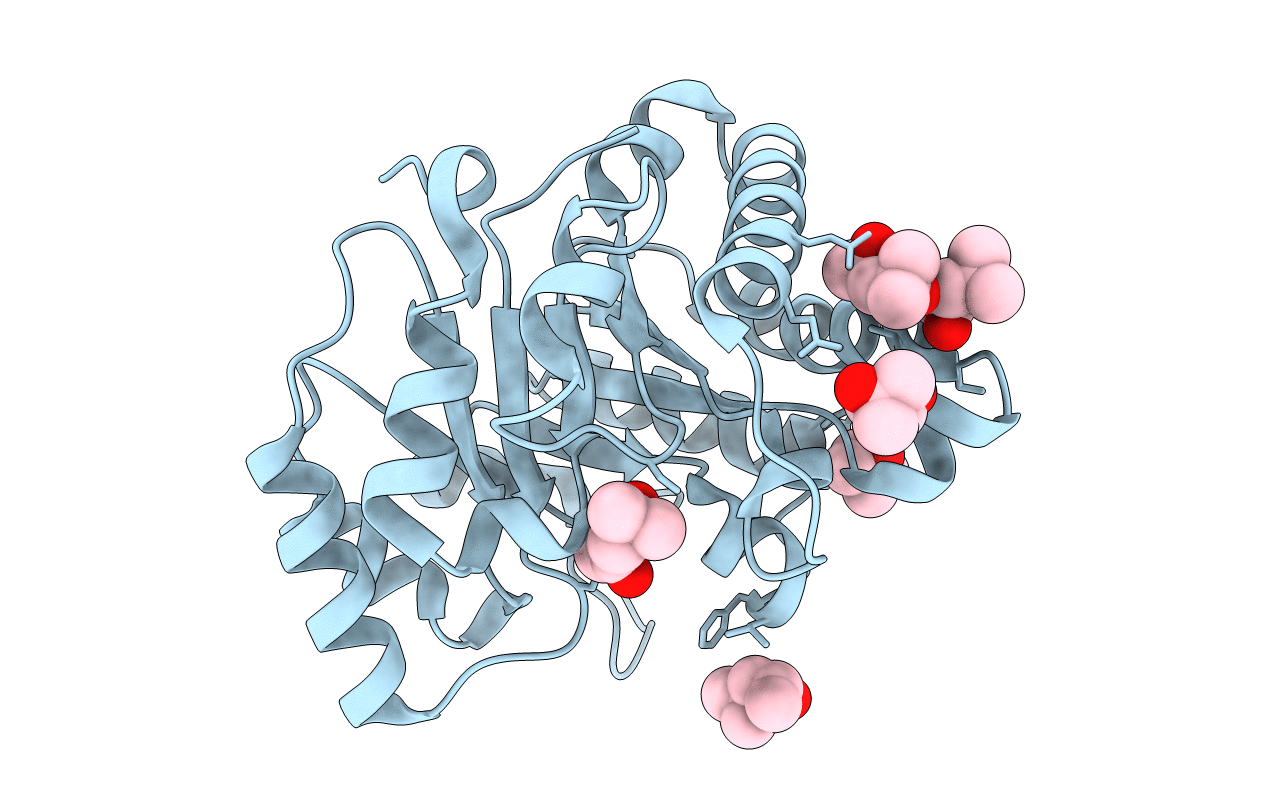
4MKN image
Deposition Date 2013-09-05
Release Date 2014-01-01
Last Version Date 2023-09-20
Entry Detail
PDB ID:
4MKN
Keywords:
Title:
Crystal structure of chloroplastic triosephosphate isomerase from Chlamydomonas reinhardtii at 1.1 A of resolution
Biological Source:
Source Organism:
Host Organism:
Method Details:
Experimental Method:
Resolution:
1.10 Å
R-Value Free:
0.17
R-Value Work:
0.16
R-Value Observed:
0.16
Space Group:
C 2 2 21

Macromolecular Entities
Structures with similar UniProt ID
Protein Blast
Polymer Type:polypeptide(L)
Molecule:Triosephosphate isomerase
Gene (Uniprot):TIM
Chain IDs:A
Chain Length:270
Number of Molecules:1
Biological Source:Chlamydomonas reinhardtii
Primary Citation
High-Resolution Crystal Structure and Redox Properties of Chloroplastic Triosephosphate Isomerase from Chlamydomonas reinhardtii.
Mol Plant 7 101 120 (2014)
PMID: 24157611 DOI: 10.1093/mp/sst139

Abstact

Triosephosphate isomerase (TPI) catalyzes the interconversion of glyceraldehyde-3-phosphate to dihydroxyacetone phosphate. Photosynthetic organisms generally contain two isoforms of TPI located in both cytoplasm and chloroplasts. While the cytoplasmic TPI is involved in the glycolysis, the chloroplastic isoform participates in the Calvin-Benson cycle, a key photosynthetic process responsible for carbon fixation. Compared with its cytoplasmic counterpart, the functional features of chloroplastic TPI have been poorly investigated and its three-dimensional structure has not been solved. Recently, several studies proposed TPI as a potential target of different redox modifications including dithiol/disulfide interchanges, glutathionylation, and nitrosylation. However, neither the effects on protein activity nor the molecular mechanisms underlying these redox modifications have been investigated. Here, we have produced recombinantly and purified TPI from the unicellular green alga Chlamydomonas reinhardtii (Cr). The biochemical properties of the enzyme were delineated and its crystallographic structure was determined at a resolution of 1.1 Å. CrTPI is a homodimer with subunits containing the typical (β/α)8-barrel fold. Although no evidence for TRX regulation was obtained, CrTPI was found to undergo glutathionylation by oxidized glutathione and trans-nitrosylation by nitrosoglutathione, confirming its sensitivity to multiple redox modifications.

Legend

Protein

Chemical

Disease

Primary Citation of related structures
Feedback Form
Name
Email
Institute
Feedback