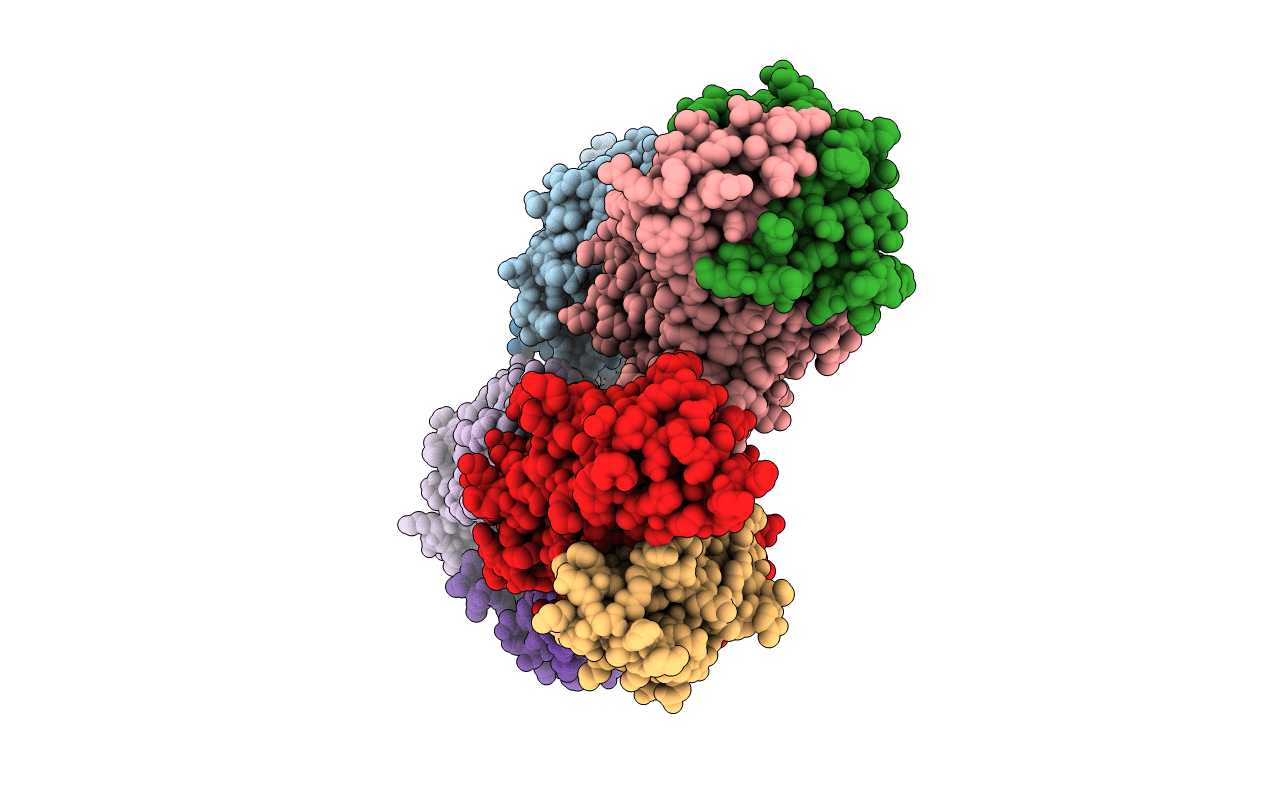
4MJI image
Deposition Date 2013-09-03
Release Date 2014-05-28
Last Version Date 2024-10-30
Entry Detail
PDB ID:
4MJI
Keywords:
Title:
T cell response to a HIV reverse transcriptase epitope presented by the protective allele HLA-B*51:01
Biological Source:
Source Organism:
Host Organism:
Method Details:
Experimental Method:
Resolution:
2.99 Å
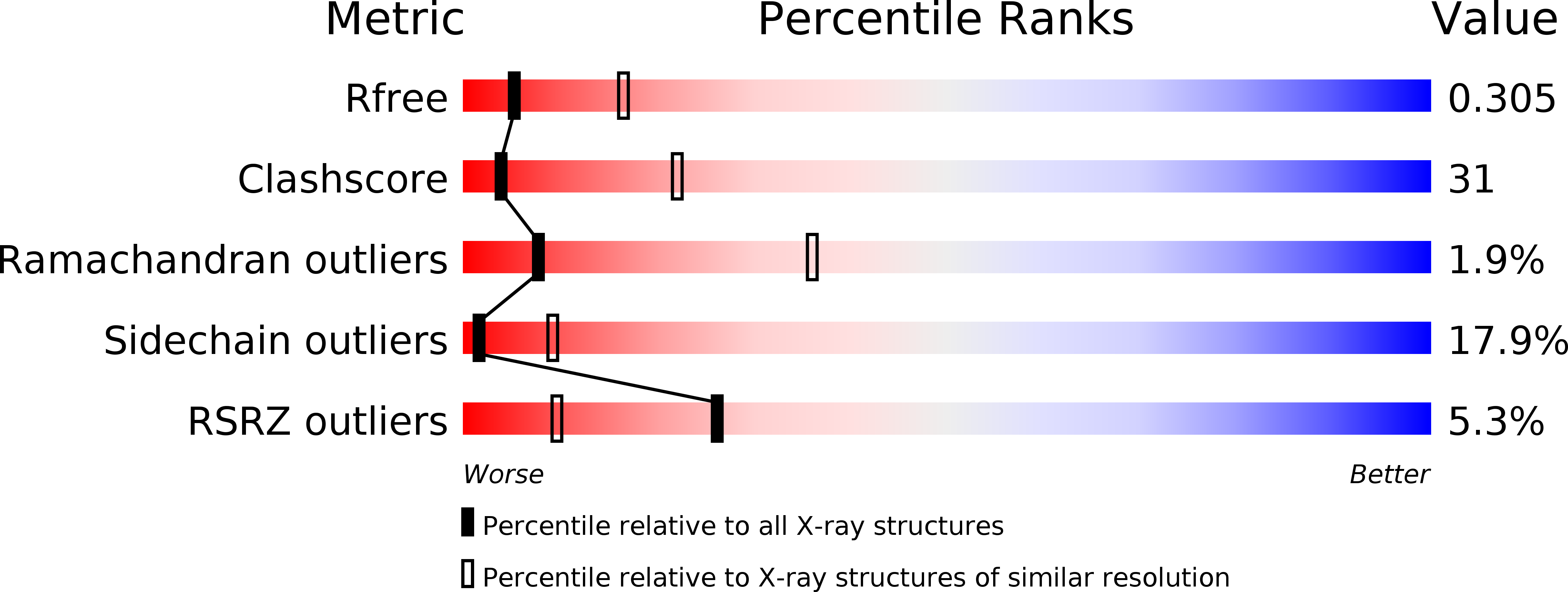
R-Value Free:
0.30
R-Value Work:
0.24
R-Value Observed:
0.24
Space Group:
P 1
Macromolecular Entities
Structures with similar UniProt ID
Protein Blast
Polymer Type:polypeptide(L)
Molecule:HLA class I histocompatibility antigen, B-51 alpha chain
Chain IDs:A, F
Chain Length:276
Number of Molecules:2
Biological Source:Homo sapiens
Structures with similar UniProt ID
Protein Blast
Polymer Type:polypeptide(L)
Molecule:Beta-2-microglobulin
Gene (Uniprot):B2M
Chain IDs:B, G
Chain Length:99
Number of Molecules:2
Biological Source:Homo sapiens
Structures with similar UniProt ID
Protein Blast
Polymer Type:polypeptide(L)
Molecule:HIV Reverse Transcriptase peptide Marker
Gene (Uniprot):pol
Chain IDs:C, H
Chain Length:8
Number of Molecules:2
Biological Source:Human immunodeficiency virus 1
Structures with similar UniProt ID
Protein Blast
Polymer Type:polypeptide(L)
Molecule:T-Cell Receptor Chain alpha
Chain IDs:D, I
Chain Length:195
Number of Molecules:2
Biological Source:Homo sapiens
Structures with similar UniProt ID
Protein Blast
Polymer Type:polypeptide(L)
Molecule:T-cell Receptor Beta chain
Chain IDs:E, J
Chain Length:242
Number of Molecules:2
Biological Source:Homo sapiens
Ligand Molecules
Primary Citation
Molecular basis of a dominant T cell response to an HIV reverse transcriptase 8-mer epitope presented by the protective allele HLA-B*51:01
J.Immunol. 192 3428 3434 (2014)
PMID: 24600035 DOI: 10.4049/jimmunol.1302667

Abstact

CD8(+) CTL responses directed toward the HLA-B*51:01-restricted HIV-RT128-135 epitope TAFTIPSI (TI8) are associated with long-term nonprogression to AIDS. Clonotypic analysis of responses to B51-TI8 revealed a public clonotype using TRAV17/TRBV7-3 TCR genes in six out of seven HLA-B*51:01(+) patients. Structural analysis of a TRAV17/TRBV7-3 TCR in complex with HLA-B51-TI8, to our knowledge the first human TCR complexed with an 8-mer peptide, explained this bias, as the unique combination of residues encoded by these genes was central to the interaction. The relatively featureless peptide-MHC (pMHC) was mainly recognized by the TCR CDR1 and CDR2 loops in an MHC-centric manner. A highly conserved residue Arg(97) in the CDR3α loop played a major role in recognition of peptide and MHC to form a stabilizing ball-and-socket interaction with the MHC and peptide, contributing to the selection of the public TCR clonotype. Surface plasmon resonance equilibrium binding analysis showed the low affinity of this public TCR is in accordance with the only other 8-mer interaction studied to date (murine 2C TCR-H-2K(b)-dEV8). Like pMHC class II complexes, 8-mer peptides do not protrude out the MHC class I binding groove like those of longer peptides. The accumulated evidence suggests that weak affinity might be a common characteristic of TCR binding to featureless pMHC landscapes.

Legend

Protein

Chemical

Disease

Primary Citation of related structures
Feedback Form
Name
Email
Institute
Feedback