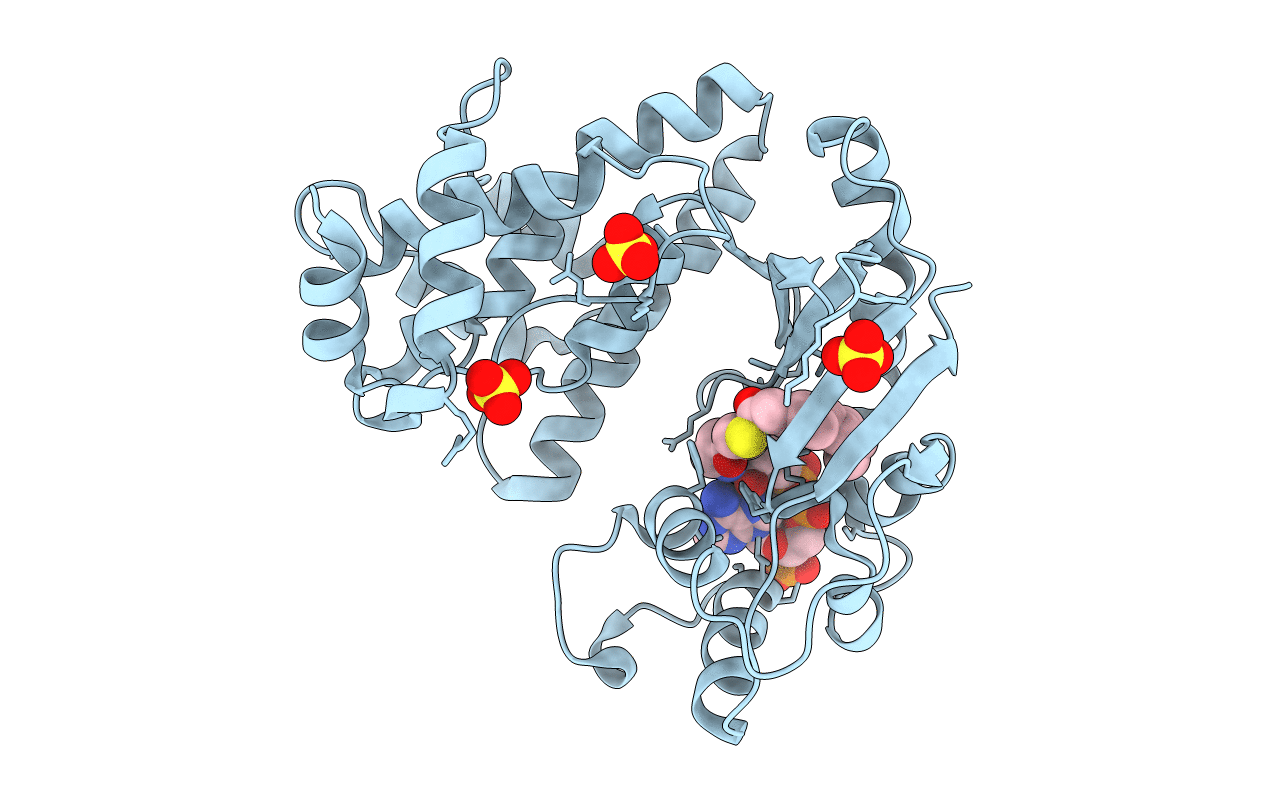
4MFK image
Deposition Date 2013-08-28
Release Date 2014-09-03
Last Version Date 2023-11-08
Entry Detail
PDB ID:
4MFK
Keywords:
Title:
The crystal structure of acyltransferase in complex with decanoyl-CoA
Biological Source:
Source Organism:
Host Organism:
Method Details:
Experimental Method:
Resolution:
1.90 Å
R-Value Free:
0.20
R-Value Work:
0.16
R-Value Observed:
0.16
Space Group:
P 65
Macromolecular Entities
Structures with similar UniProt ID
Protein Blast
Polymer Type:polypeptide(L)
Molecule:Putative uncharacterized protein tcp24
Gene (Uniprot):tcp24
Mutagens:H196A
Chain IDs:A
Chain Length:345
Number of Molecules:1
Biological Source:Actinoplanes teichomyceticus
Primary Citation
Multiple complexes of long aliphatic N-acyltransferases lead to synthesis of 2,6-diacylated/2-acyl-substituted glycopeptide antibiotics, effectively killing vancomycin-resistant enterococcus
J.Am.Chem.Soc. 136 10989 10995 (2014)
PMID: 25095906 DOI: 10.1021/ja504125v

Abstact

Teicoplanin A2-2 (Tei)/A40926 is the last-line antibiotic to treat multidrug-resistant Gram-positive bacterial infections, e.g., methicillin-resistant Staphylococcus aureus (MRSA) and vancomycin-resistant enterococcus (VRE). This class of antibiotics is powered by the N-acyltransferase (NAT) Orf11*/Dbv8 through N-acylation on glucosamine at the central residue of Tei/A40926 pseudoaglycone. The NAT enzyme possesses enormous value in untapped applications; its advanced development is hampered largely due to a lack of structural information. In this report, we present eight high-resolution X-ray crystallographic unary, binary, and ternary complexes in order to decipher the molecular basis for NAT's functionality. The enzyme undergoes a multistage conformational change upon binding of acyl-CoA, thus allowing the uploading of Tei pseudoaglycone to enable the acyl-transfer reaction to take place in the occlusion between the N- and C-halves of the protein. The acyl moiety of acyl-CoA can be bulky or lengthy, allowing a large extent of diversity in new derivatives that can be formed upon its transfer. Vancomycin/synthetic acyl-N-acetyl cysteamine was not expected to be able to serve as a surrogate for an acyl acceptor/donor, respectively. Most strikingly, NAT can catalyze formation of 2-N,6-O-diacylated or C6→C2 acyl-substituted Tei analogues through an unusual 1,4-migration mechanism under stoichiometric/solvational reaction control, wherein selected representatives showed excellent biological activities, effectively counteracting major types (VanABC) of VRE.

Legend

Protein

Chemical

Disease

Primary Citation of related structures
Feedback Form
Name
Email
Institute
Feedback