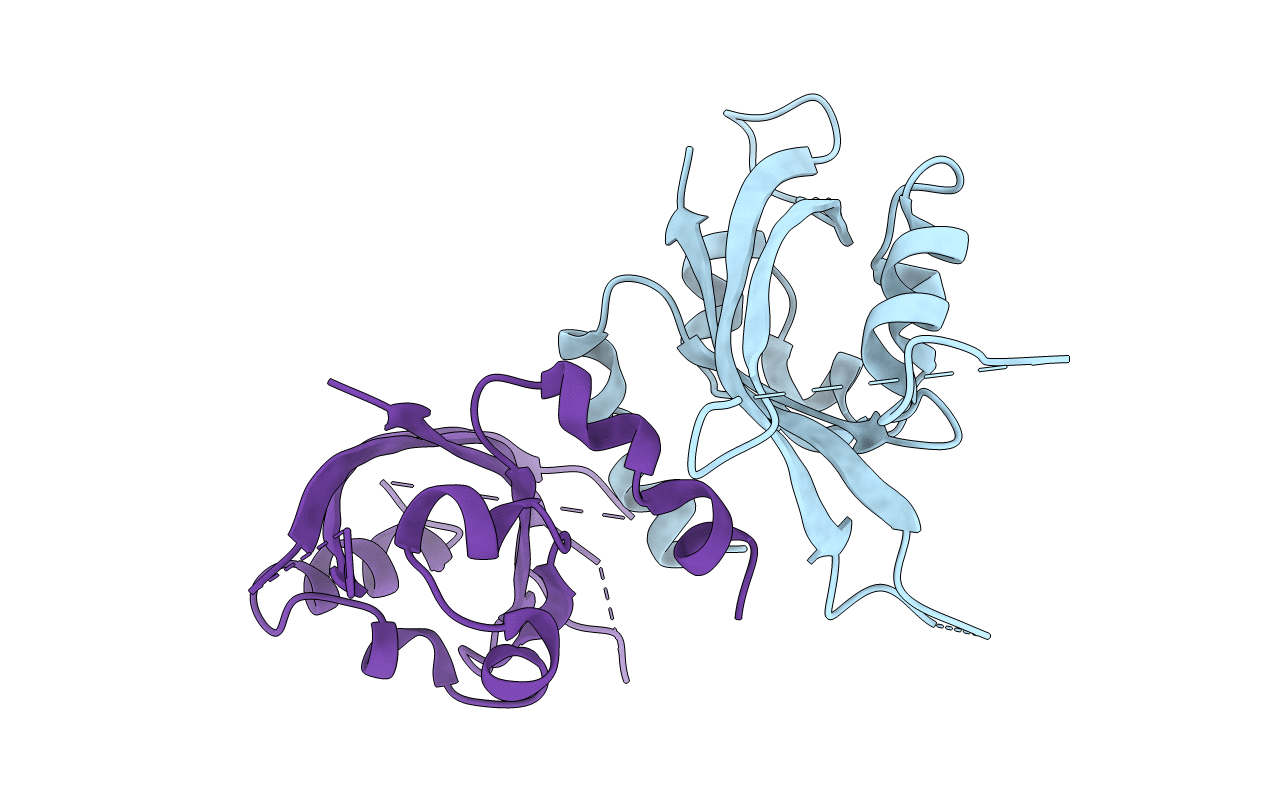
4M4X image
Deposition Date 2013-08-07
Release Date 2013-09-18
Last Version Date 2024-02-28
Entry Detail
PDB ID:
4M4X
Keywords:
Title:
Structure and Dimerization Properties of the Aryl Hydrocarbon Receptor (AHR) PAS-A Domain
Biological Source:
Source Organism:
Mus musculus (Taxon ID: 10090)
Host Organism:
Method Details:
Experimental Method:
Resolution:
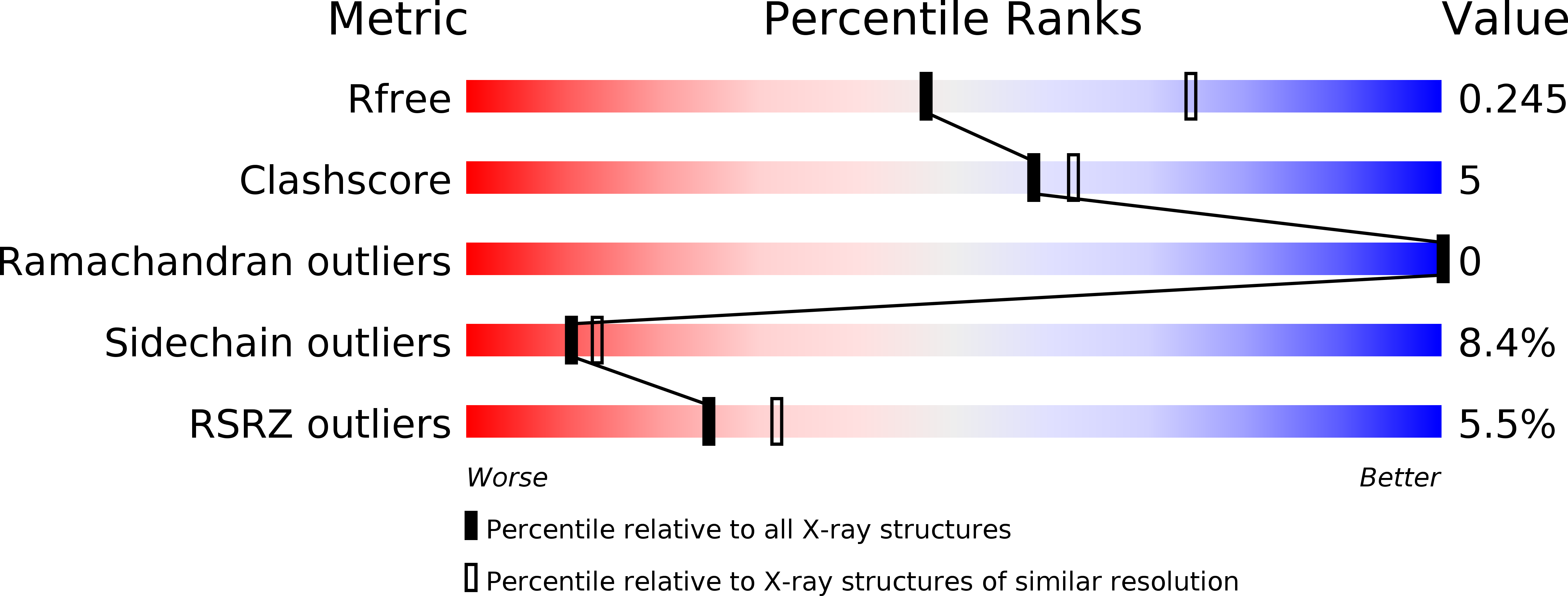
2.55 Å
R-Value Free:
0.24
R-Value Work:
0.20
R-Value Observed:
0.20
Space Group:
P 41 21 2
Macromolecular Entities
Structures with similar UniProt ID
Protein Blast
Polymer Type:polypeptide(L)
Molecule:Aryl hydrocarbon receptor
Gene (Uniprot):Ahr
Chain IDs:A, B
Chain Length:187
Number of Molecules:2
Biological Source:Mus musculus
Primary Citation
Structure and dimerization properties of the aryl hydrocarbon receptor PAS-A domain.
Mol.Cell.Biol. 33 4346 4356 (2013)
PMID: 24001774 DOI: 10.1128/MCB.00698-13

Abstact

The aryl hydrocarbon receptor (AHR) is a ligand-dependent transcription factor that binds to xenobiotics and responds by regulating the expression of gene programs required for detoxification and metabolism. AHR and its heterodimerization partner aryl hydrocarbon receptor nuclear translocator (ARNT) belong to the basic helix-loop-helix (bHLH)-PER-ARNT-SIM (PAS) family of transcription factors. Here we report the 2.55-Å-resolution crystal structure of the mouse AHR PAS-A domain, which represents the first AHR-derived protein structure. The AHR PAS-A domain forms a helix-swapped homodimer in the crystal and also in solution. Through a detailed mutational analysis of all interface residues, we identified several hydrophobic residues that are important for AHR dimerization and function. Our crystallographic visualization of AHR PAS-A dimerization leads us to propose a mode of heterodimerization with ARNT that is supported by both biochemical and cell-based data. Our studies also highlight the residues of other mammalian bHLH-PAS proteins that are likely involved in their homo- or heterodimerization.

Legend

Protein

Chemical

Disease

Primary Citation of related structures
Feedback Form
Name
Email
Institute
Feedback